Uzbekistan – Republic of Korea: On the Path to Shared Prosperity
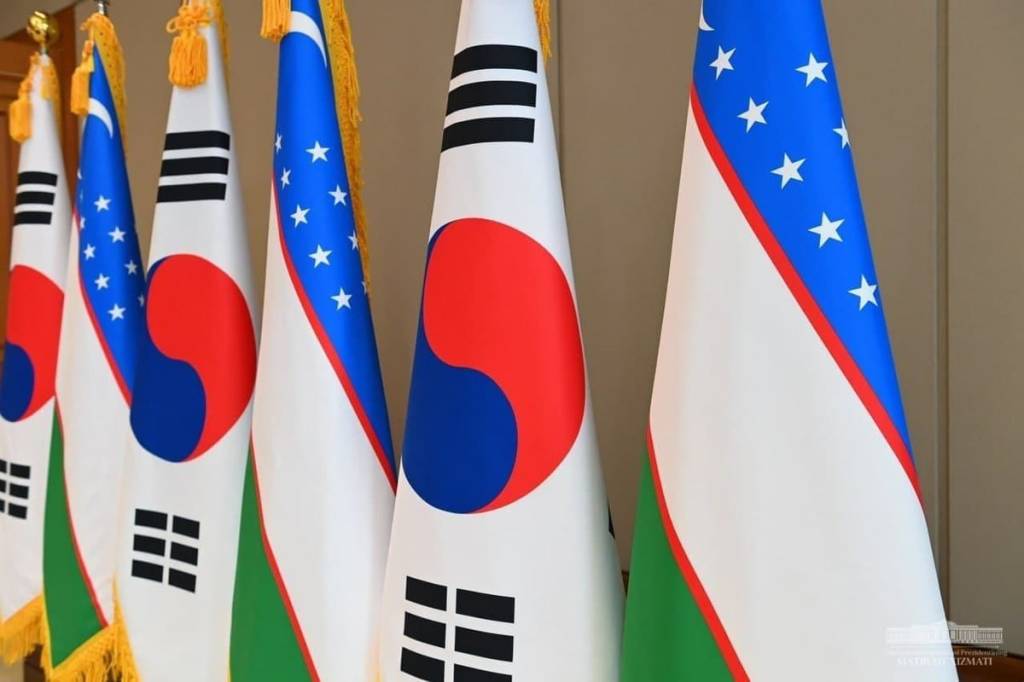
Diplomatic relations between the Republic of Korea and Uzbekistan were officially established on January 29, 1992. This event was an important milestone in both countries’ histories, marking the beginning of many years of cooperation and strengthening mutually beneficial ties in various fields.
However, the historical ties between these peoples have deeper roots. The first Koreans appeared on the territory of Uzbekistan in the second half of the 19th century, and mass migration occurred in 1937, when more than 172 thousand Koreans were deported from the Far East to Kazakhstan and Uzbekistan. Despite the harsh conditions and difficulties the Koreans faced in their new environment, they could adapt and contribute significantly to developing the national economy. Currently, the Korean diaspora in Uzbekistan is one of the largest in Central Asia and actively participates in the country’s cultural, scientific, and economic life.
Despite their geographical distance, the Republic of Korea and Uzbekistan share many similarities in culture and traditions that help strengthen mutual understanding and friendly ties between people.
The Importance of Family Values
Family values play a central role in the cultures of both countries. In Korea, traditional ways are the main aspects of life. The family plays a vital role in raising children and supporting each member. In Uzbekistan, the emphasis on family values is also very strong. Mutual assistance and respect for elders form the basis of social interaction. Both cultures instill in children a sense of duty to family, which helps maintain and strengthen social ties.
Culinary Traditions
The culinary traditions of these two countries are characterized by their diversity and uniqueness. South Korean cuisine is known for its unique dishes, such as kimchi, bulgogi, and samgyeopsal. Their recipes have become popular not only in Asia, but throughout the world.
Our culinary virtuosos are famous for their unprecedented skill in preparing traditional dishes such as pilaf, kebab, lagman, and many others. These masterpieces decorate holiday tables and are becoming increasingly popular outside the country, attracting the attention of gourmets and tourists.
National Holidays and Festivals
The Republic of Korea and Uzbekistan are rich in traditional holidays and festivals that reflect their cultural heritage. In the Republic of Korea, Chuseok (Harvest Day) and Seollal (Korean New Year) are essential family celebrations accompanied by traditional rituals and food. In Uzbekistan, Navruz, Qurban Hayit, and others are significant. These dates are celebrated throughout the country on a grand scale, observing national traditions.
Trading Markets
Both countries are proud of their markets and significant cultural and economic centers. Namdaemun and Dongdaemun markets in Seoul are popular in South Korea. Here, you can find everything from fresh products to clothing and accessories. These places attract not only residents of the country but also tourists who want to plunge into the atmosphere of local culture.
In Uzbekistan, the Chorsu market in Tashkent and the Siab bazaar in Samarkand are famous. These sites have become centers of trade and culture, offering traditional products, spices, handicrafts, and textiles, creating a unique flavor of national life.
The historic ties between the two countries, based on shared values and a commitment to development, continue strengthening, opening up new opportunities for cooperation and prosperity.
Economy
Economic cooperation between the two countries demonstrates stable and confident growth, reflected in a significant increase in mutual trade and investment. In 2023, trade turnover grew by an impressive 24 percent.
This state occupies an essential place among Uzbekistan's foreign economic partners. The volume of Korean capital in our economy has exceeded $7 billion. These investments are actively directed to various sectors and contribute to their development and modernization. About 1,000 joint ventures in our country, with the participation of Korean capital, have created many new jobs.
One key project is the creation of an automobile assembly cluster in Jizzakh. Korean companies will invest $235 million in this project, which will increase car production to 200,000 units annually.
In October this year, the Ministry of Transport of the Republic of Uzbekistan and the Uzbekistan Railways plan to enter into a contract with Hyundai Rotem to supply six high-speed trains. The contract will be financed with 185 million euros from the EDCF at 0.1 percent per annum for 35 years, as provided by the Presidential resolution of October 10, 2023.
In addition, the Republic of Korea supports the development of healthcare in Uzbekistan. As part of this support, it is planned to build a multidisciplinary clinic in Tashkent worth $160 million. The project will be implemented with the financial support of South Korean partners and will significantly improve the quality of medical services in the country.
Digitalization and Biotechnology
Technological and innovative cooperation between Uzbekistan and the Republic of Korea is developing dynamically and covers a wide range of areas, including digitalization, biotechnology, and environmental projects. One of the key areas is the implementation of the “Electronic Parliament” project, which is supported by the Korea International Cooperation Agency (KOICA).
This project, for which $6.6 million has been allocated, will significantly increase the transparency and efficiency of the Legislative Chamber of the Oliy Majlis. A real-time broadcasting system will be created as part of the initiative, and infrastructure for rebroadcasting parliamentary sessions will be developed.
In addition, KOICA actively supports projects in education and ecology. One such project aims to build capacity for greening cities and forests using smart technologies. This project, implemented jointly with the Forestry Agency of Uzbekistan, is designed for 2023-2028 and aims to create sustainable forestry and a business model for landscaping.
Green Projects
An important aspect of cooperation is the implementation of projects aimed at improving the environmental situation and developing a green economy in Uzbekistan. One of them concerns the disposal of medical waste and the collection of landfill gas. As part of the project, it is planned to construct landfill gas collection facilities with a capacity of 500 kW – 1 MW and install facilities for incinerating medical waste with a capacity of 5-10 tons per day. The total project budget is $6.6 million.
Also worth noting is the opening of the Global Green Growth Institute (GGGI) office in Tashkent, which will serve as a regional center for all Central Asian states. The GGGI office, together with KOICA, is implementing a project worth $5.6 million to improve the ecosystem of the Aral Sea region. It is aimed at curbing climate change processes and introducing green technologies.
Infrastructure Development and Transport
An important component of cooperation between the two countries is the development of transport infrastructure. During a recent visit to Seoul, a delegation led by the Minister of Transport of Uzbekistan, Ilkhom Mahkamov, got acquainted with the work of the Transport Information Service (TOPIS), created under the Seoul City Administration. The center is engaged in operational management of the system, projects of unmanned vehicles, and real-time analysis of traffic and road data.
During the visit, our delegation also studied a wide range of reforms in public transport in the South Korean capital. Particular attention was paid to innovations such as bus corridors (BRT), an integrated electronic payment system (T-Money), a revenue-sharing system among carriers (Pool), and provisions for vulnerable populations in public transport infrastructure. This knowledge and experience will become the basis for reforming the Tashkent public transport system.
In addition, Uzbekistan and the Republic of Korea cooperate in road infrastructure management. During negotiations with the South Korean companies Saman and Korea Engineering Consultants Corp (KECC), issues of developing a comprehensive public-private partnership plan were discussed. The focus was on long-term planning, management guidelines, quality control standards, capacity building, and legal framework for these projects.
A grant project worth $1 million has also been initiated. It aims to assess the existing road infrastructure in Uzbekistan in depth and develop guidelines for the operation, repair, and maintenance of roads. These guidelines play a key role in ensuring the long-term sustainability of the road network, which is an important element for developing the country’s transport infrastructure.
All these achievements and plans prove that Uzbekistan and the Republic of Korea are confidently moving along the path of strengthening and expanding their strategic partnership. Such steps will contribute to the further development and prosperity of both states.
Analyzing the current dynamics of relations, it is safe to say that these two countries demonstrate a serious intention to develop and deepen multilateral ties. This is evidenced by the upcoming state visit of the President of the Republic of Korea Yoon Suk Yeol to Uzbekistan.
Abduaziz Khidirov, UzA