Uzbekistan – Oman: from historical ties to economic cooperation
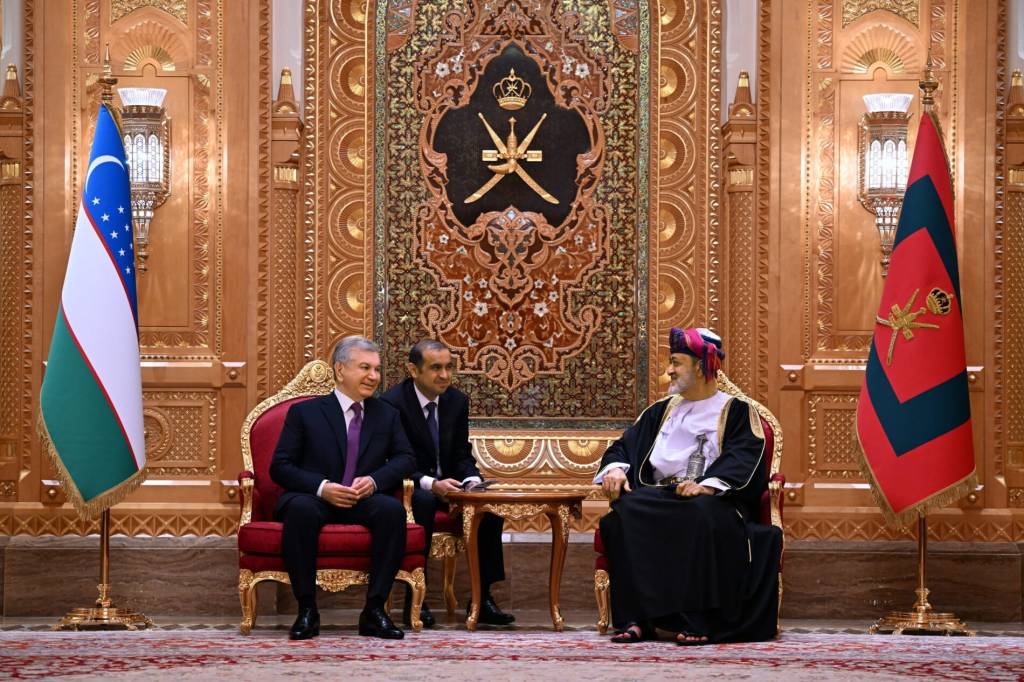
Uzbekistan and Oman are separated by thousands of kilometers, yet relations between the two countries have roots stretching back centuries. The scholarly legacy of thinkers from Mawarannahr, the architectural traditions of Samarkand and Bukhara, and ancient trade routes have long connected their peoples. Today, these historical ties are reflected in political dialogue, investment, trade and cultural exchanges.
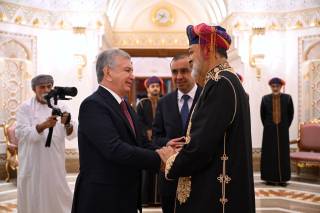
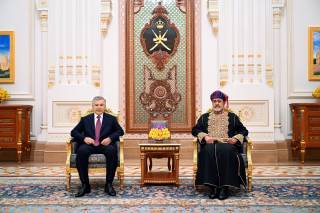
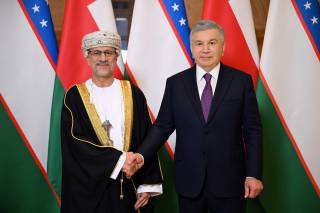
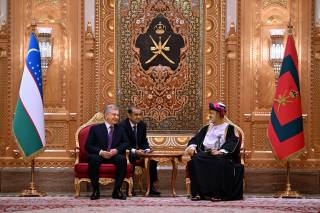
President of the Republic of Uzbekistan Shavkat Mirziyoyev is currently paying a state visit to the Sultanate of Oman.
Diplomatic relations between the two countries were established on April 22, 1992. An important milestone in the development of bilateral ties was the state visit of Uzbekistan’s First President to Oman in October 2009, which resulted in the signing of 19 intergovernmental and interagency documents. Today, the legal framework governing bilateral relations comprises 23 agreements and other instruments.
Political dialogue has intensified significantly in recent years. Oman opened its embassy in Tashkent in April 2010, while Uzbekistan’s embassy in Muscat began operating in July 2018, expanding opportunities for regular diplomatic engagement. Meetings took place in 2024-2025 at the level of foreign ministers, parliamentary representatives and government officials. On March 4, 2026, President Shavkat Mirziyoyev and Sultan of Oman Haitham bin Tariq Al Said held a telephone conversation, while the ninth round of political consultations between the two countries’ foreign ministries took place in Muscat in June-July.
Regular dialogue is creating favorable conditions for expanding trade and economic ties. Bilateral trade stood at $2.3 million in 2025, while in January-September 2026 it reached $3.2 million, including $2.1 million in Uzbek exports to Oman and $1.1 million in imports.
Despite the relatively modest volume of bilateral trade, investment cooperation is developing rapidly. Eight enterprises with Omani capital currently operate in Uzbekistan. The UzOmanCapital investment company has financed 15 projects totaling $255.7 million. Following a visit by the Uzbekistan delegation to Muscat in September-October 2026, a portfolio of trade, economic and investment projects worth $5.3 billion was developed.
The Joint Intergovernmental Commission plays an active role in coordinating bilateral economic cooperation. Its fifth meeting was held in Tashkent on June 12, 2025, where participants reviewed projects in trade, investment and industry and met with representatives of the two countries’ business communities.
On August 19-20 this year, a delegation led by Uzbekistan’s Minister of Investment, Industry and Trade Laziz Kudratov visited Muscat, where it held talks with senior officials from Oman’s Ministry of Commerce, Industry and Investment Promotion, the Oman Investment Authority and major companies.
Contacts between women entrepreneurs also expanded in 2025. Business forums bringing together businesswomen from both countries were held in Muscat in February and Tashkent in October, providing opportunities for in-depth discussions on entrepreneurial initiatives, joint projects and cooperation between enterprises.
These figures point to considerable prospects for partnership. However, the portfolio of proposed initiatives does not mean that the investment funds have already been fully disbursed. The main challenge is to translate the agreements reached into concrete projects, establish new enterprises and ensure that their products gain access to the markets of both countries.
Transport and logistics connectivity plays a key role in achieving these objectives. Uzbekistan and Oman are parties to the Ashgabat Agreement, which provides for a transport corridor linking Central Asia to seaports via transit routes through Iran and Oman. For landlocked Uzbekistan, such corridors are strategically important for diversifying foreign trade and increasing freight volumes.
The launch of direct flights between Muscat and Tashkent on July 3, 2026, has created additional opportunities for strengthening bilateral ties. Oman Air’s twice-weekly flights have made travel considerably easier for businesspeople, tourists and citizens of both countries.
Alongside economic interests, a shared historical and spiritual heritage remains a strong foundation for relations between the two countries. Historical ties between the regions are reflected in the travel accounts of Abdurazzoq Samarqandi. The renowned historian and diplomat of the Timurid era reached the coast of Muscat while traveling to India in 1442. Due to a ship malfunction, he spent several months in Oman, documenting the natural environment and way of life of the local population in detail.
Another noteworthy historical connection concerns the 11th-century Omani scholar Ibn al-Dhahabi, who is mentioned in historical sources as a student of the great thinker Abu Ali ibn Sina (Avicenna). Ibn al-Dhahabi’s work Kitab al-Ma (The Book of Water) is a comprehensive medical encyclopedia arranged alphabetically, in which the author highly praised Ibn Sina’s scholarly legacy.
Today, bilateral relations have all the necessary foundations for a major economic breakthrough. A structured political dialogue has been established, a substantial portfolio of promising investment projects has been developed, and transport and humanitarian ties continue to expand. The current state visit of the President of Uzbekistan to Oman is intended to give these developments strong political momentum and turn existing agreements into concrete action.
Historical ties provide a solid foundation for mutual trust, while high-level dialogue and joint economic projects will determine the partnership’s future success.
Dilshod Hakimov, UzA