

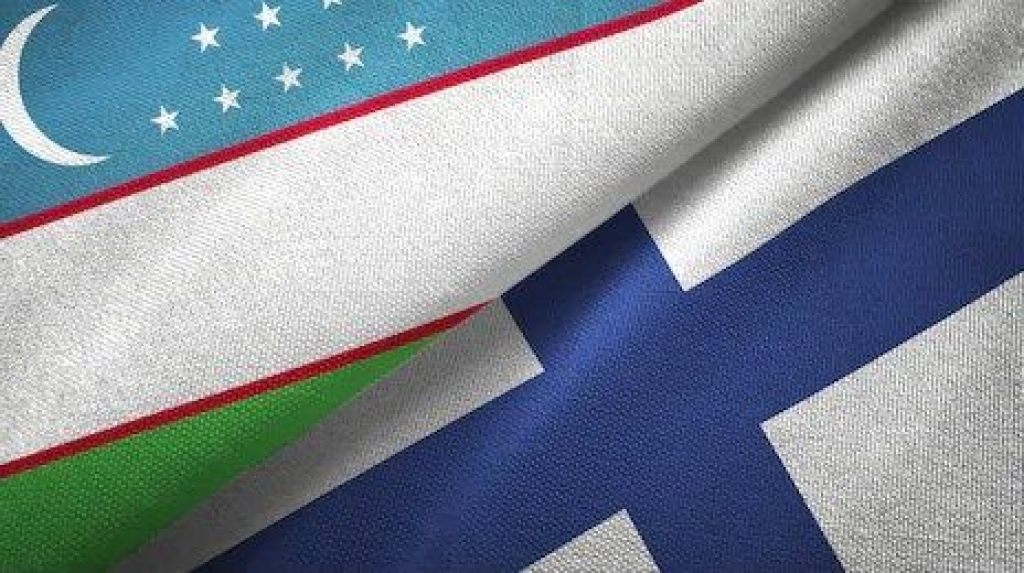
Diplomatic relations between Uzbekistan and Finland were officially established on February 26, 1992 – shortly after Finland recognized Uzbekistan’s independence at the end of 1991. From the very beginning, bilateral relations have been built on friendship and mutual respect.
In the first decades, contacts remained relatively limited due to geographic distance and differing foreign policy priorities on both sides. Nevertheless, both countries consistently reaffirmed their commitment to developing cooperation and maintained a positive tone in their relations. In 1992, the first historic visit of Finnish President Mauno Koivisto to Tashkent took place.
Since 2016 – following the election of President Shavkat Mirziyoyev and the announcement of an active foreign policy and reform agenda – the partnership between Uzbekistan and Finland has gained new momentum. Mechanisms of dialogue that had previously functioned only sporadically were reactivated. For instance, in 2018, the two sides agreed to revive the Intergovernmental Commission on Trade and Economic Cooperation, the previous session of which had taken place back in 2002. This step signaled a renewed commitment to dialogue and the search for new areas of collaboration.
Overall, during the period 2016-2020, the intensity of political contacts increased noticeably, the legal and institutional framework of bilateral relations expanded, and new areas of cooperation began to take shape. The absence of a resident Finnish diplomatic mission in Tashkent (a non-resident ambassador represents its interests, while the Honorary Consulate of Finland operates in Uzbekistan) did not hinder the growth of exchanges through mutual delegation visits and meetings on international platforms.
Political Aspects and International Positions
In recent years, regular consultations have been held between the foreign ministries, inter-parliamentary exchanges have been maintained, and high-level dialogue has been established. In June 2025, the incumbent OSCE Chairperson-in-Office, Finnish Minister for Foreign Affairs Elina Valtonen, paid an official visit to Uzbekistan. During talks with President Shavkat Mirziyoyev and Minister of Foreign Affairs Bakhtiyor Saidov, the parties discussed the strengthening of cooperation, including within the “Uzbekistan – OSCE” format.
It was noted that cooperation with the Organization is developing constructively: with the OSCE’s support, Uzbekistan is modernizing its electoral system, ensuring media freedom, promoting gender equality and youth policy, and advancing the green agenda. Finland, chairing the OSCE in 2025, reaffirmed its support for reforms in Uzbekistan and emphasized the need to prioritize sustainable development and climate security.
Overall, the Finnish government highly values Tashkent’s policy of liberalization and openness and provides diplomatic support for Uzbekistan’s integration into international structures. A landmark event in this regard was President Shavkat Mirziyoyev’s visit to Brussels on October 23-24 of the current year, during which the historic Enhanced Partnership and Cooperation Agreement (EPCA) between Uzbekistan and the European Union was signed. This document, which replaces the 1996 Partnership and Cooperation Agreement, covers more than 20 areas of cooperation – from trade and investment to education, digitalization, and critical raw materials.
The Agreement was signed in the presence of the President of the European Council António Costa, the President of the European Commission Ursula von der Leyen, and the EU High Representative for Foreign Affairs and Security Policy Kaja Kallas. During the visit, President Shavkat Mirziyoyev also met with King Philippe of the Belgians, who highly appreciated the results of the talks with the EU leadership and expressed readiness to expand cooperation between Uzbekistan and Belgium. In addition, a roundtable was held with representatives of leading European companies and financial institutions, where joint projects worth over €10 billion in the fields of energy, transport, and innovation were discussed.
On the multilateral stage, cooperation between the two countries is also gaining momentum. Finland supports Uzbekistan’s initiatives within the UN and OSCE frameworks, particularly those related to the stability of Central Asia and assistance to Afghanistan. Tashkent serves as a regional hub and mediator in peacebuilding, promoting Afghanistan’s involvement in regional economic projects. Finland, with its extensive diplomatic experience, welcomes these efforts. Both countries consistently advocate for the peaceful settlement of conflicts and for adherence to international law.
In the global economy, the positions of the two countries largely coincide. As an EU member state, Finland supports Uzbekistan’s aspiration to integrate into the international trading system. It is noteworthy that Tashkent aims to join the World Trade Organization by 2026, and European partners, including Finland, are providing advisory assistance in this process. In October 2025, Uzbekistan successfully concluded its WTO accession negotiations with the European Union in Brussels.
Furthermore, Finland has included Uzbekistan among the priority countries in its Development Cooperation Programme for 2021-2024, which aims to support projects that strengthen the rule of law, promote sustainable economic growth, and ensure effective management of natural resources. The total aid budget for Uzbekistan, Kyrgyzstan, and Tajikistan under this program amounts to approximately €25 million. Such support helps address specific development goals – for instance, Finland contributed €1 million to the UN Multi-Partner Human Security Trust Fund for the Aral Sea Region, and also reflects Helsinki’s confidence in Uzbekistan’s ongoing reform agenda.
Trade and Economy: Priority Sectors
Economic cooperation between Uzbekistan and Finland has been steadily expanding in recent years. Although the overall volume of mutual trade remains relatively modest, the growth dynamics are impressive. In 2024, bilateral trade turnover increased by 24 percent compared to the previous year.
Finland’s exports to Uzbekistan have grown significantly. In 2023, they reached a record level of €90.7 million, an increase of 86.5 percent over the previous year, the highest figure since 2002. In 2024, export volume amounted to €41.4 million. The decline was due to the high comparison base in 2023, when major deliveries of industrial equipment occurred.
Finland primarily supplies Uzbekistan with machinery, filtration equipment, electric motors, transmission shafts, and products of the chemical and paper industries. At the same time, Uzbek exports to Finland, though still modest in volume, have been growing at a high rate: in 2023, they totaled €4.8 million, and in 2024, they more than tripled, exceeding €15 million, driven by exports of petroleum products, copper, metal goods, and inorganic chemicals.
Both countries have identified several sectors where cooperation appears particularly promising. Priority areas include energy (including renewables), green technologies and environmental protection, agriculture and the food industry, geology and mineral extraction, transport and digital infrastructure, and the chemical industry.
Investment cooperation is also gaining momentum. After 2017, when Uzbekistan launched large-scale reforms to improve its business environment, Finnish entrepreneurs began to show greater interest in the country’s market. In February 2023, a major Team Finland delegation, led by Minister for Development Cooperation and Foreign Trade Ville Skinnari, visited Tashkent. During the visit, a meeting of the Intergovernmental Commission was held, with relevant ministers in attendance, along with special sessions on cooperation in education, mining, water resources, clean technologies, energy, logistics, and digitalization.
All of this demonstrates that economic relations are moving beyond simple trade and evolving toward industrial cooperation and joint investment.
Cooperation in Education and Innovation
The field of education has become one of the key areas of cooperation between Uzbekistan and Finland. In particular, education and innovation stand out as priority spheres: Uzbekistan has shown great interest in Finland’s advanced educational practices, while Finland is renowned for its high standards in this field.
A landmark project was the opening of the Nordic International University in Tashkent in September 2022 – the first private Uzbek-Finnish higher education institution operating under the Finnish educational model. The university was established in partnership with Finnish organizations, led by Karelia University of Applied Sciences, and offers programs featuring Finnish lecturers, including dual-degree programs (for example, “2+2” and “3+1” schemes, under which part of the studies takes place in Finland). Since its establishment in 2022, the university has been functioning successfully and serves as a cluster uniting Finnish companies and educational institutions to facilitate knowledge transfer.
In addition to the Nordic International University in Tashkent, another joint higher education project has been implemented. Since the 2021/22 academic year, the Uzbek-Finnish Pedagogical Institute has been operating under the Samarkand State University. The educational process there is organized according to Finnish curricula and teaching technologies, in partnership with the University of Turku and other specialized Finnish institutions. The institute’s mission is to train a new generation of teachers proficient in modern teaching and upbringing methods, and to conduct professional development courses for educators.
Active exchanges are also taking place among administrators and teachers. The Finnish side regularly conducts training programs and internships for Uzbek educators, methodologists, and education administrators, enabling them to apply Finnish experience in local schools. At the same time, other joint initiatives are being implemented; for example, Finland is assisting Uzbekistan in developing inclusive education and improving English-language instruction.
Thus, a comprehensive “bridge” of cooperation is being built – from schools to universities and educational governance bodies – ensuring the integration of the Finnish experience at all levels of the education system. Cooperation in education has become one of the hallmarks of the partnership between Uzbekistan and Finland, combining humanitarian benefits with long-term economic advantages.
Diplomatic Mechanisms of Cooperation
Personal interaction between the heads of state plays a special role. From October 29 to November 1, 2025, the first-ever official visit by the President of Finland, Alexander Stubb, to Uzbekistan will take place. Earlier, in September 2025, the two presidents held a telephone conversation during which they discussed specific projects, emphasized the strategic nature of the partnership, and exchanged views on international issues.
During this historic visit, President Stubb will hold talks with President Shavkat Mirziyoyev in Tashkent. The leaders will discuss the full spectrum of bilateral relations between Finland and Uzbekistan, regional geopolitical developments affecting Europe and Central Asia, the situation in Ukraine, and cooperation to strengthen the multilateral system.
In addition to high-level talks, President Stubb will take part in the Uzbekistan – Finland Business Forum, deliver a lecture at the University of World Economy and Diplomacy, and meet with foreign policy experts. The Finnish delegation will be headed by Ville Skinnari, Member of Parliament and Chair of the Parliamentary Friendship Group with Uzbekistan, and will include representatives of Finnish trade and industry.
During the visit, the parties are expected to discuss new framework agreements and the prospects of opening a Finnish trade representative office or a cultural center in Uzbekistan.
Thus, the combination of multi-level mechanisms – from intergovernmental commissions and political consultations to business forums and direct contacts between leaders – ensures steady and effective development of cooperation between Uzbekistan and Finland. The well-structured architecture of interaction allows not only the advancement of joint initiatives but also the timely resolution of potential differences through diplomatic means.
Prospects for the Development of Relations
Given the progress achieved and current trends, the outlook for relations between Uzbekistan and Finland appears highly promising. In the coming years, further expansion of trade and economic cooperation is expected. The economies of the two countries are largely complementary: Uzbekistan offers a growing market, abundant natural resources, and a young labor force, while Finland contributes advanced technologies, investments, and managerial expertise.
Several new joint projects are already being implemented, demonstrating the deepening of cooperation. For example, the Uzbek operator Perfectum, with the support of the Finnish export credit agency Finnvera and equipment supplied by Nokia, is building the first nationwide 5G network in Central Asia. The commercial launch of the network in Tashkent took place at the end of 2024, followed by a phased expansion aimed at covering 50 percent of Uzbekistan’s population by the end of 2025.
In the energy sector, the Finnish company Wärtsilä (also supported by Finnvera) is supplying equipment and software for the modernization of Uzbekistan’s power plants, implementing projects jointly with Aksa Enerji in Tashkent and Bukhara regions. In the mining and metallurgical industry, cooperation with the Finnish group Metso is expanding. Several contracts have been signed for the supply of technologies for the construction of a copper smelting cluster in Almalyk, enabling Uzbekistan to increase copper production in an environmentally sustainable manner.
In the medium term, cooperation between Uzbekistan and the European Union will play an important role, with Finland potentially becoming one of the key “advocates” of Uzbekistan’s interests within the EU. The EPCA, signed in October 2025, opens new opportunities for large-scale investment and technology transfer from Europe. Finnish companies, which have established themselves as pioneers in Uzbekistan, will be able to confidently expand their activities, serving as conduits for broader European initiatives under the EU’s Global Gateway strategy aimed at developing infrastructure connectivity between Europe and Asia.
On the international stage, Uzbekistan and Finland can further strengthen coordination on regional issues. Within the OSCE framework, Uzbekistan will continue to act as an active participant and initiator of programs, while Finland will remain one of the key donors and moderators of these initiatives. In the face of today’s security challenges, such a dialogue format between the West and Central Asia, through the lens of successful cooperation between Helsinki and Tashkent, helps foster mutual trust and serves as a kind of “bridge”.
Thus, it can be confidently stated that the partnership between Uzbekistan and Finland will continue to grow stronger. Both sides are committed to expanding cooperation, as evidenced by concrete joint projects and a high level of political dialogue.
Abduaziz Khidirov, UzA