The relationship between Uzbekistan and China is not just a historical footnote, but a living, breathing fabric of history. It’s a multi-layered tapestry, where each patch represents an episode of cultural and trade exchanges that have been rooted in the deep past and continue to shape the present.

The people of the two countries living on opposite sides of the Great Silk Road have always found ways to interact and learn from each other, absorbing and rethinking unique elements of traditions, arts, and knowledge. Like the threads of ancient silks, these ties are tightly intertwined into a single pattern, reflected in today’s strong partnership between the two countries.

Uzbekistan, a country with a rich heritage of nomadic and agricultural civilizations, has permanently attached great importance to preserving customs and foundations. Chinese philosophy, emphasizing man’s and nature’s harmony, resonates in Uzbek wisdom, where nature and agriculture have always been key elements of life.

For centuries, Uzbek artisans, like Chinese masters, have passed on the secrets of their crafts from generation to generation, preserving and increasing their peoples’ cultural wealth.

However, cultural interaction between Uzbekistan and China is not limited to the past. It is actively developing today when traditions are combined with new technological and scientific achievements. It is no coincidence that today, as in ancient times, the two countries continue to seek common ground, finding them in education, science, art, and many other areas. The opening of the Confucius Institute in Uzbekistan and the active study of the Chinese language are not just symbols of modern cooperation, but steps towards mutual understanding, building a cultural bridge between people of the two countries, where everyone can share their unique experience and knowledge.

When we compare the cultural codes of the two civilizations, we find a shared desire for balance – in nature, family life, and society. In Chinese culture, harmony with the surrounding world is deeply ingrained, while in Uzbek traditions, maintaining close family ties and respect for elders are fundamental. This shared value ​​system has not only fostered mutual understanding and respect, but also served as a solid foundation for strengthening bilateral relations.

At a time when the world is facing new challenges and changing realities, Uzbekistan and China continue to demonstrate the importance of cultural and economic dialogue. Their relations are not just agreements and projects, but the path of two great nations who, overcoming millennia, have found and continue to find reliable partners and allies in each other.

Enhancing Strategic Projects

One of the most important milestones of the economic partnership was the implementation of the China-Kyrgyzstan-Uzbekistan railway construction project. In June 2024, a signing ceremony of the agreement took place in Beijing, which became a symbol of strengthening regional transport connectivity. The new transport corridor will help increase trade between the countries of Central Asia and China, providing access to the markets of South Asia and the Middle East. It is planned that annual cargo transportation along the new highway will amount to 15 million tons, and the delivery time of goods will be reduced by 7 days, which will provide significant economic advantages to the regions. 

The China-Kyrgyzstan-Uzbekistan railway project is strategic not only in terms of transport logistics, but also in terms of economic integration. Strengthening the transport infrastructure in Central Asia is in the interests of all participating countries, promoting the expansion of mutually beneficial economic ties and attracting investment in the region. This project is significant for Uzbekistan, as it contributes to the diversification of export routes and strengthens its position in international trade. 

Another key area of ​​​​bilateral cooperation has become energy projects. Chinese companies are actively involved in developing renewable energy sources in Uzbekistan. In August 2024, new agreements were signed on the construction of solar and wind power plants, which aligns with Uzbekistan’s strategy to increase the share of renewable energy to 27 GW by 2030. These projects not only strengthen Uzbekistan’s energy security, but also open up new opportunities for creating jobs and improving the environmental situation in the region.

In addition, China and Uzbekistan are actively developing infrastructure and logistics projects. In February 2024, construction of a large multimodal logistics center in Syrdarya began with the participation of Taitong International Transport Co. Ltd. This project is expected to improve the efficiency of transporting goods between China and Central Asia, which, in turn, will lead to an increase in mutual trade volumes and a decrease in the cost of delivering goods.

Growing Chinese Investments

During Shavkat Mirziyoyev’s visit to China in January 2024, more than 15 agreements were signed in various areas, including ecology, human resource development, and scientific research. China’s investments in Uzbekistan have reached $25 billion, indicating growing confidence in the country’s economy and recognition of it as a key strategic partner in Central Asia.

These agreements and investments not only strengthen economic ties, but also allow Uzbekistan to modernize its production facilities, infrastructure, and transport corridors, which meets the country’s long-term goals for sustainable economic development.

Strengthening Trade and Industrial Ties

Trade and economic cooperation between Uzbekistan and China continues to show stable growth. In July 2024, the interim results of bilateral trade for the first six months of the year were summed up: the trade turnover reached $5.9 billion. This figure indicates high growth rates, exceeding the figures of previous years. China remains the largest trading partner of Uzbekistan, which confirms the strategic importance of the Chinese market for the Uzbek economy.

Agricultural products, textiles, and natural resources are the primary goods exported from Uzbekistan to China. China exports industrial goods, electronics, and automobiles to Uzbekistan.

In September 2024, Chinese companies began implementing several new projects to create industrial enterprises in Uzbekistan. They aim to produce equipment for the energy sector, machinery, and products for the light industry. Particular attention is paid to developing agro-industrial clusters in Syrdarya region, where it is planned to create modern agricultural production and product processing systems with the support of Chinese technologies. These initiatives contribute to the diversification of the Uzbek economy and create new opportunities for attracting investment and creating jobs.

China is actively investing in developing Uzbekistan’s infrastructure, which is also reflected in implementing projects to modernize transport hubs. The signing of new agreements in September 2024 confirmed the readiness of Chinese investors to participate in the creation of logistics centers and the modernization of railway infrastructure, which will increase the competitiveness of Uzbek goods in international markets and accelerate economic integration with China and other countries in the region.

Expanding Educational and Cultural Exchange

The implementation of bilateral student and teacher exchange programs and support for joint projects in science and education continues. Chinese universities actively provide grants to Uzbekistan students, which contributes not only to strengthening bilateral ties, but also to training highly qualified specialists for the Uzbek economy.

One of the significant achievements in the educational sphere was the expansion of programs for studying the Chinese language in Uzbekistan’s schools and universities. In September 2024, several new agreements were concluded. This step aimed at deepening mutual understanding between the two countries’ peoples, which is especially important in developing long-term partnerships.

The Chinese Culture Days, held in June and August 2024, also increased cultural exchange between Uzbekistan and China. The Uzbekistan public got to know China’s traditional culture better. Such events are important because they contribute to the development of dialogue between peoples and strengthen trust and mutual respect, which is the basis for long-term and mutually beneficial cooperation.

Relations between Uzbekistan and China have stood the test of time and are now reaching a new level based on trust, mutual respect, and strategic partnership. The ancient trade routes that once connected these two great civilizations remain a symbol of strong ties, but are acquiring a new dimension in the modern world. Jointly implemented projects in transport, energy, industrial production, science, and culture reflect deeper integration processes between the two countries, where not only the economy, but also human relations play an essential role.

As noted in the speeches of the two states’ leaders, the partnership’s success lies not only in specific achievements, but also in the ability to find common interests, respect each other’s cultural values, ​​and move forward together.

Abduaziz Khidirov, UzA

English
Chinese
Turkish
Tajik
Kyrgyz
Turkmen
Japanese
Arabic
English
French
Spanish
Русский
German
Ўзбек
Oʻzbek
Қазақ
Uzbekistan – China: Strategic partnership results for the first nine months of 2024
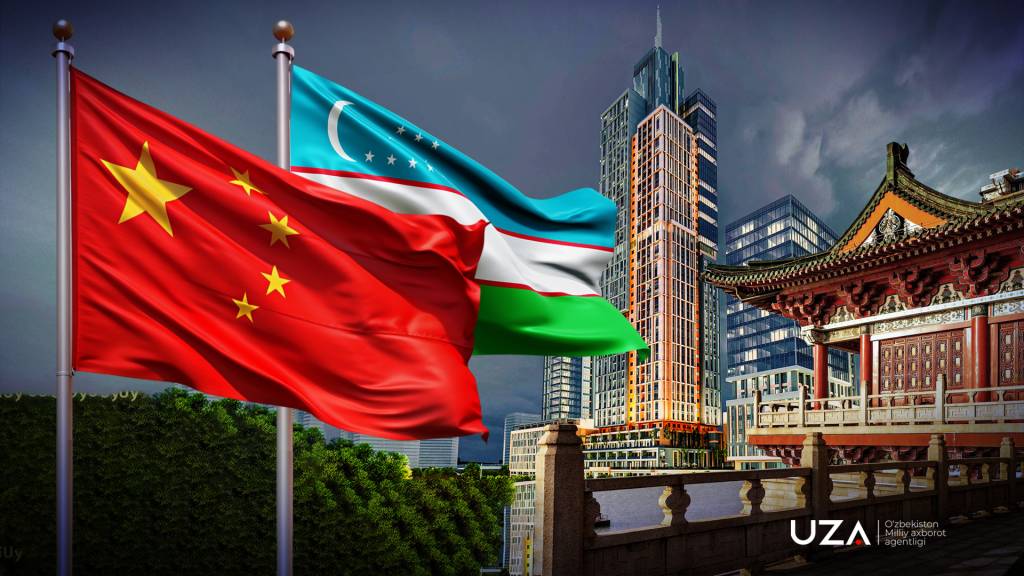
The relationship between Uzbekistan and China is not just a historical footnote, but a living, breathing fabric of history. It’s a multi-layered tapestry, where each patch represents an episode of cultural and trade exchanges that have been rooted in the deep past and continue to shape the present.

The people of the two countries living on opposite sides of the Great Silk Road have always found ways to interact and learn from each other, absorbing and rethinking unique elements of traditions, arts, and knowledge. Like the threads of ancient silks, these ties are tightly intertwined into a single pattern, reflected in today’s strong partnership between the two countries.

Uzbekistan, a country with a rich heritage of nomadic and agricultural civilizations, has permanently attached great importance to preserving customs and foundations. Chinese philosophy, emphasizing man’s and nature’s harmony, resonates in Uzbek wisdom, where nature and agriculture have always been key elements of life.

For centuries, Uzbek artisans, like Chinese masters, have passed on the secrets of their crafts from generation to generation, preserving and increasing their peoples’ cultural wealth.

However, cultural interaction between Uzbekistan and China is not limited to the past. It is actively developing today when traditions are combined with new technological and scientific achievements. It is no coincidence that today, as in ancient times, the two countries continue to seek common ground, finding them in education, science, art, and many other areas. The opening of the Confucius Institute in Uzbekistan and the active study of the Chinese language are not just symbols of modern cooperation, but steps towards mutual understanding, building a cultural bridge between people of the two countries, where everyone can share their unique experience and knowledge.

When we compare the cultural codes of the two civilizations, we find a shared desire for balance – in nature, family life, and society. In Chinese culture, harmony with the surrounding world is deeply ingrained, while in Uzbek traditions, maintaining close family ties and respect for elders are fundamental. This shared value ​​system has not only fostered mutual understanding and respect, but also served as a solid foundation for strengthening bilateral relations.

At a time when the world is facing new challenges and changing realities, Uzbekistan and China continue to demonstrate the importance of cultural and economic dialogue. Their relations are not just agreements and projects, but the path of two great nations who, overcoming millennia, have found and continue to find reliable partners and allies in each other.

Enhancing Strategic Projects

One of the most important milestones of the economic partnership was the implementation of the China-Kyrgyzstan-Uzbekistan railway construction project. In June 2024, a signing ceremony of the agreement took place in Beijing, which became a symbol of strengthening regional transport connectivity. The new transport corridor will help increase trade between the countries of Central Asia and China, providing access to the markets of South Asia and the Middle East. It is planned that annual cargo transportation along the new highway will amount to 15 million tons, and the delivery time of goods will be reduced by 7 days, which will provide significant economic advantages to the regions. 

The China-Kyrgyzstan-Uzbekistan railway project is strategic not only in terms of transport logistics, but also in terms of economic integration. Strengthening the transport infrastructure in Central Asia is in the interests of all participating countries, promoting the expansion of mutually beneficial economic ties and attracting investment in the region. This project is significant for Uzbekistan, as it contributes to the diversification of export routes and strengthens its position in international trade. 

Another key area of ​​​​bilateral cooperation has become energy projects. Chinese companies are actively involved in developing renewable energy sources in Uzbekistan. In August 2024, new agreements were signed on the construction of solar and wind power plants, which aligns with Uzbekistan’s strategy to increase the share of renewable energy to 27 GW by 2030. These projects not only strengthen Uzbekistan’s energy security, but also open up new opportunities for creating jobs and improving the environmental situation in the region.

In addition, China and Uzbekistan are actively developing infrastructure and logistics projects. In February 2024, construction of a large multimodal logistics center in Syrdarya began with the participation of Taitong International Transport Co. Ltd. This project is expected to improve the efficiency of transporting goods between China and Central Asia, which, in turn, will lead to an increase in mutual trade volumes and a decrease in the cost of delivering goods.

Growing Chinese Investments

During Shavkat Mirziyoyev’s visit to China in January 2024, more than 15 agreements were signed in various areas, including ecology, human resource development, and scientific research. China’s investments in Uzbekistan have reached $25 billion, indicating growing confidence in the country’s economy and recognition of it as a key strategic partner in Central Asia.

These agreements and investments not only strengthen economic ties, but also allow Uzbekistan to modernize its production facilities, infrastructure, and transport corridors, which meets the country’s long-term goals for sustainable economic development.

Strengthening Trade and Industrial Ties

Trade and economic cooperation between Uzbekistan and China continues to show stable growth. In July 2024, the interim results of bilateral trade for the first six months of the year were summed up: the trade turnover reached $5.9 billion. This figure indicates high growth rates, exceeding the figures of previous years. China remains the largest trading partner of Uzbekistan, which confirms the strategic importance of the Chinese market for the Uzbek economy.

Agricultural products, textiles, and natural resources are the primary goods exported from Uzbekistan to China. China exports industrial goods, electronics, and automobiles to Uzbekistan.

In September 2024, Chinese companies began implementing several new projects to create industrial enterprises in Uzbekistan. They aim to produce equipment for the energy sector, machinery, and products for the light industry. Particular attention is paid to developing agro-industrial clusters in Syrdarya region, where it is planned to create modern agricultural production and product processing systems with the support of Chinese technologies. These initiatives contribute to the diversification of the Uzbek economy and create new opportunities for attracting investment and creating jobs.

China is actively investing in developing Uzbekistan’s infrastructure, which is also reflected in implementing projects to modernize transport hubs. The signing of new agreements in September 2024 confirmed the readiness of Chinese investors to participate in the creation of logistics centers and the modernization of railway infrastructure, which will increase the competitiveness of Uzbek goods in international markets and accelerate economic integration with China and other countries in the region.

Expanding Educational and Cultural Exchange

The implementation of bilateral student and teacher exchange programs and support for joint projects in science and education continues. Chinese universities actively provide grants to Uzbekistan students, which contributes not only to strengthening bilateral ties, but also to training highly qualified specialists for the Uzbek economy.

One of the significant achievements in the educational sphere was the expansion of programs for studying the Chinese language in Uzbekistan’s schools and universities. In September 2024, several new agreements were concluded. This step aimed at deepening mutual understanding between the two countries’ peoples, which is especially important in developing long-term partnerships.

The Chinese Culture Days, held in June and August 2024, also increased cultural exchange between Uzbekistan and China. The Uzbekistan public got to know China’s traditional culture better. Such events are important because they contribute to the development of dialogue between peoples and strengthen trust and mutual respect, which is the basis for long-term and mutually beneficial cooperation.

Relations between Uzbekistan and China have stood the test of time and are now reaching a new level based on trust, mutual respect, and strategic partnership. The ancient trade routes that once connected these two great civilizations remain a symbol of strong ties, but are acquiring a new dimension in the modern world. Jointly implemented projects in transport, energy, industrial production, science, and culture reflect deeper integration processes between the two countries, where not only the economy, but also human relations play an essential role.

As noted in the speeches of the two states’ leaders, the partnership’s success lies not only in specific achievements, but also in the ability to find common interests, respect each other’s cultural values, ​​and move forward together.

Abduaziz Khidirov, UzA