Uzbekistan – China: A Union of Growth and Connectivity Ahead of the SCO Anniversary Summit in Tianjin
Since the beginning of 2025, relations between Uzbekistan and China have continued to develop along an upward trajectory of strategic partnership.
At the talks held on June 17, 2025, leaders Shavkat Mirziyoyev and Xi Jinping noted that friendship and a comprehensive strategic partnership between Uzbekistan and China have reached an unprecedentedly high level in recent years. The agreements reached during Shavkat Mirziyoyev’s state visit to China (January 2024) were reaffirmed, and new joint plans were outlined.
The parties launched a regular strategic dialogue at the ministerial level (including a visit by the foreign ministers in April 2025) and held the Second Regions Forum in Samarkand in June 2025. At the same time, business and cultural-humanitarian exchanges have intensified: for example, in January, the Uzbekistan – China Business Forum (with more than 400 participants) was held, where new investment projects, infrastructure plans, and the expansion of tourist flows were discussed.
At meetings with Chinese representatives, mutual respect for fundamental interests has been emphasized. As noted in the article by the President published in “China Daily” on August 29, 2025, the Leader of Uzbekistan reaffirmed the country’s firm commitment to the “One China” principle and expressed gratitude to Beijing for its support of regional initiatives. Chinese officials, in turn, highly praised Tashkent’s liberal policy and the expansion of cooperation.
For example, on April 25, 2025, Wang Yi, Secretary of the CPC Central Committee, stated in Almaty that, with the personal involvement of the leaders, mutual trust and exchanges have grown, resulting in increased trade turnover. The number of investment projects has increased, visa-free agreements have been introduced, and the Year of Uzbekistan Tourism in China has been announced. The Minister of Foreign Affairs of Uzbekistan noted that the President fully supports China’s role as chair of the SCO and is confident in the success of the summit in Tianjin.
Trade and Investment

Economic cooperation remains a key driver of bilateral relations. By 2024, trade turnover had reached $14 billion, three times the level of 2017, with a near-term target of $20 billion. Over the same period, $24.6 billion in Chinese investments were attracted into the country.
At the same time, the portfolio of joint projects has been steadily growing: following the leaders’ meeting in Astana in June, it exceeded $60 billion (this figure reflects ongoing and prepared initiatives, distinct from already attracted investments). Priority areas include green energy, petrochemicals, pharmaceuticals, metallurgy, mining, textiles and food industry, logistics, smart agriculture, AI, and digitalization.
Industrial cooperation has also taken on a concrete shape: in 2024, Uzbekistan launched Central Asia’s first BYD electric vehicle production facility, and in Tashkent, the Luban Workshop was opened as a platform for applied vocational training.
The financial foundation of cooperation was strengthened by the opening of the regional office of China EximBank in Tashkent on November 22, 2024, established to support projects across eight countries in the region. In 2025, the National Bank of Uzbekistan reported financing over 280 investment projects worth more than $1.5 billion and organizing the delivery of 1,575 buses from China to upgrade public transportation.
Business deal-making activity is also on the rise. On May 23-26, 2025, more than 20 investment and trade agreements were signed in Tashkent with a delegation from Fujian Province, covering construction materials, the mining industry, textiles, automotive components, and other sectors. At the same time, a memorandum was signed with the organizers of the CIFIT fair to promote Uzbekistan’s projects, and the country received an official invitation to participate with a national pavilion at the 25th CIFIT (September 8-11, 2025, Xiamen).
This integrated framework – a large-scale project portfolio, localized production (BYD), vocational training (Luban Workshop), and access to long-term financing (EximBank, NBU) – ensures sustainable growth in trade and investment while advancing cooperation toward a more technological and innovative model.
Transport and Logistics
The development of transport infrastructure is a separate priority in bilateral cooperation. The main breakthrough occurred on December 27, 2024, in Jalal-Abad, where the construction of the China – Kyrgyzstan – Uzbekistan railway was officially launched. On April 29, 2025, construction began on three key tunnels along the Kyrgyz section (Fergana, Norin-1, and Koshtoba), reinforcing the course toward establishing the shortest route between Xinjiang (XUAR) and Fergana Valley.
Logistical connectivity is also being strengthened through regular container services: in May 2025, the first direct train of the year departed from Tianjin Port to Tashkent, carrying 50 containers of auto components, equipment, construction materials, and household appliances, further consolidating the “North China – Central Asia” corridor.
Freight trucking and air connections are expanding in parallel with the liberalization of travel. On June 1, 2025, a mutual 30-day visa-free regime between Uzbekistan and China came into force; the Uzbek side officially confirmed the agreement’s effective date, while the Chinese press has reported a noticeable increase in travel since its introduction.
New routes and increased frequencies are appearing in the aviation sector: on July 22, 2025, Air China launched direct Urumqi – Tashkent – Urumqi flights. In total, 61 passenger flights operate between the two countries per week (Beijing, Urumqi, Xi’an, Chengdu, Hangzhou, Guangzhou, Shanghai, Sanya, and Haikou), significantly facilitating business and tourist travel.
Urban public transport is also being renewed: in July 2025, Tashkent announced the delivery of another 200 Yutong electric buses; in parallel, discussions with the Chinese side are underway on the possible purchase of up to 1,000 additional buses for the capital.
Taken together – the launch of construction works on the CKU railway, the introduction of new container services, visa liberalization, the expansion of air networks, and the renewal of the city’s transport fleet – these measures are consistently reducing transportation time and costs, creating a sustainable “southern corridor” through Tashkent and turning Central Asia into a more predictable and capacious transit hub between East and West. Additionally, Chinese companies have shown interest in road reconstruction projects along the Tashkent – Chinaz and Pap – Namangan routes, complementing the railway and aviation initiatives.
Education and Humanitarian Exchange
Education, culture, and tourism remain key areas of bilateral cooperation. On July 18, 2025, Shaanxi Province announced a grant of 13 million yuan (≈ $1.8 million) for Tashkent State Transport University. The grant covers the training of 10 PhD students, 40 master’s students, and 60 undergraduates under “1+1” and “2+2” programs. A month earlier, on June 3, 2025, the Uzbek-Chinese Faculty of Transport was officially opened in Tashkent in partnership with Chang'an University – another sustainable channel of academic mobility.
Scientific and educational cooperation is also expanding: Uzbekistan hosts a branch of China’s Northwest Agriculture and Forestry University, while an International Mathematics Center was established at Urgench State University in cooperation with Peking University. Last year, the Confucius Institute in Tashkent celebrated its 20th anniversary.
People-to-people ties have been strengthened by the introduction of mutual visa-free travel, effective from June 1, 2025. Citizens may stay up to 30 days per entry (up to 90 days within 180 days), which is already stimulating tourism and business exchanges. The Chinese side has officially confirmed the implementation of the visa agreement and the successful launch of the Year of Uzbekistan Tourism in China, emphasizing the growth in travel and exchanges.
Uzbekistan’s Role in the SCO and Contribution to Multipolarity

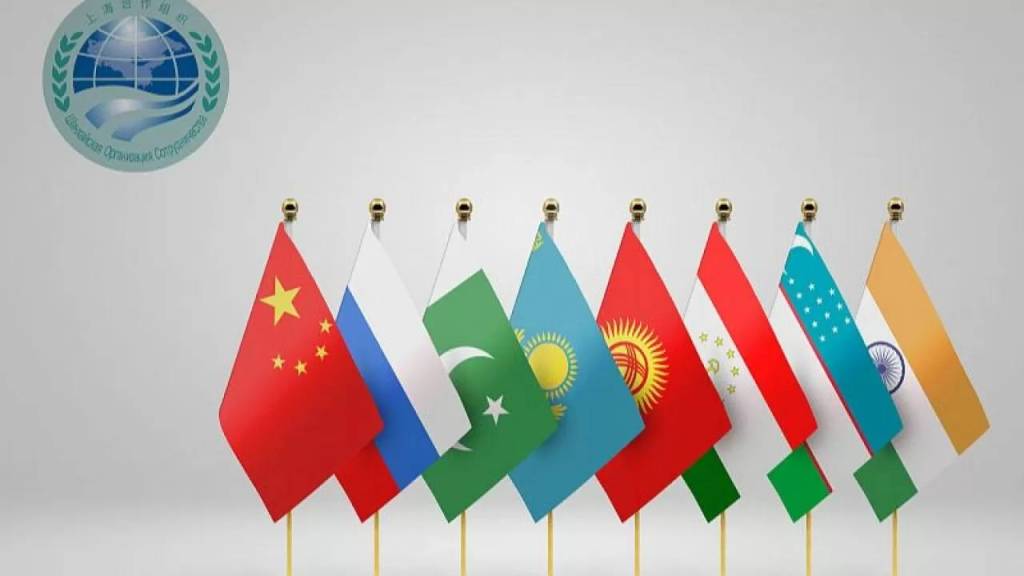
Uzbekistan is a founding member of the SCO and one of its most active participants. The country has repeatedly assumed the chairmanship, and in 2021-2022, under Uzbekistan’s chairmanship, Samarkand hosted the 22nd summit, which concluded with the results of more than 80 events held within the framework of the chairmanship year.
Uzbekistan’s agenda in the SCO is pragmatic and action-oriented, focusing on transport connectivity (including the advancement of the China – Kyrgyzstan – Uzbekistan railway as a new Eurasian corridor), digitalization, green transformation, and security. These priorities were explicitly outlined in President Shavkat Mirziyoyev’s article in “China Daily” on August 29, 2025, as well as in SCO materials on preparing digital initiatives (the “SCO Tree” project and specialist training).
In the security sphere, Uzbekistan relies on the potential of the SCO RATS Executive Committee, which is based in Tashkent and regularly hosts meetings and specialized conferences. RATS remains a permanent body of the organization, serving as a platform for coordinating joint operations and exercises among member states.
Tashkent consistently supports the expansion and institutional strengthening of the SCO. In 2023, Iran obtained full membership (New Delhi, July 4), and in 2024, Belarus became the organization’s 10th member (Astana, July 3-4; the Astana Declaration).
Ideologically, Uzbekistan promotes the SCO as a non-bloc, open platform of “mutual respect, dialogue, and joint development”, as President Shavkat Mirziyoyev emphasizes in his publication, in line with advancing multipolar and mutually beneficial cooperation.
Against this backdrop, the upcoming anniversary summit in Tianjin and the SCO Plus format logically expand partnerships and areas of cooperation, to which Tashkent attaches special importance.
Upcoming SCO Summit in Tianjin
On August 31 – September 1, 2025, Tianjin will host the 25th meeting of the SCO Council of Heads of State, chaired by Xi Jinping, with an expanded SCO Plus summit also on the agenda. The Chinese side has officially confirmed both the format and the dates.
The summit is expected to feature the largest-ever representation in the history of the SCO, with more than 20 heads of state and 10 leaders of international organizations. These figures have been repeatedly announced by China’s Ministry of Foreign Affairs and the Xinhua News Agency.
The participation of Shavkat Mirziyoyev has been confirmed in the list of invited leaders published by Xinhua, which also names the heads of other member states and guest countries.
Following the summit, the planned outcomes include: a joint declaration (the Tianjin Declaration), the adoption of the SCO Development Strategy for the next period (reports mention “the next ten years”, with some sources specifying a horizon up to 2035), as well as a package of documents on security, the economy, and humanitarian cooperation. These priorities have been outlined in advance by the Chinese side and partner media.
For Uzbekistan, the Tianjin meeting represents an opportunity to elevate to the multilateral level the bilateral initiatives launched in 2025 (connectivity, logistics, digitalization, and humanitarian exchanges) and to expand cooperation through the SCO Plus framework with observers and dialogue partners. These objectives are directly aligned with China’s chairmanship agenda.
Conclusions
In the first eight months of 2025, the Uzbek-Chinese agenda has reached a qualitatively new level: moving from decisions to tangible results. In June, the mutual 30-day visa-free regime took effect, immediately facilitating business and tourist contacts and establishing people-to-people ties as an independent driver of cooperation. At the same time, the China – Kyrgyzstan – Uzbekistan railway project entered the full construction phase. On the Kyrgyz section, work began on three key tunnels – Fergana, Norin-1, and Koshtoba – to secure the course toward the shortest land corridor between Xinjiang and Fergana Valley. In May, the first block train of 2025 (50 containers) departed from Tianjin Port to Tashkent, demonstrating how new routes strengthen overall land-sea connectivity.
The political level is keeping pace with the economic one. In his op-ed for “China Daily”, President Shavkat Mirziyoyev emphasized that cooperation between Uzbekistan and China has become a “model of pragmatic and balanced partnership”, reinforcing the SCO’s role as a platform for mutually beneficial multipolar cooperation. It is precisely this “practice of small steps” – visa-free travel, infrastructure, digital services, education – that makes integration sustainable. On this foundation, the most prominent summit in the history of the SCO will be held on August 31 – September 1 in Tianjin under the chairmanship of Xi Jinping, with an agenda that includes “SCO Plus” and a package of decisions on security, the economy, and humanitarian cooperation. The Chinese side has confirmed Shavkat Mirziyoyev’s participation; the list of invited leaders published by Xinhua highlights the breadth of representation and the growing appeal of the format for Eurasian states and the Global South.
Taken together, this is a story of reliability and scale. Reliability – because concrete mechanisms have been launched (visa-free travel, container services, aviation, and the CKU railway), which reduce transaction costs and enhance the predictability of ties. Scale – because Uzbekistan – China initiatives are being woven into the SCO architecture, setting a practical standard for regional cooperation, from logistics and green energy to digitalization and education. At the close of August 2025, this appears both coordinated and forward-looking: Tashkent and Beijing are not merely increasing bilateral figures – they are shaping a backbone framework of Eurasian connectivity which, with the decisions to be adopted in Tianjin, has the potential to give integration fresh momentum – for the economy, security, and people-to-people exchanges.
Abduaziz Khidirov, UzA