Uzbekistan and Jordan: Giving New Impetus to the Rapprochement between Central Asia and the Middle East
Against the backdrop of the transformation of international relations, partnership between Central Asia and key countries in neighboring regions, including the Middle East, is becoming increasingly important. This partnership is increasingly defined not by the volume of trade and investment, but by priorities in industrial cooperation, technological development, and the preservation of shared spiritual heritage.
In this context, the Hashemite Kingdom of Jordan holds a special place among Uzbekistan’s foreign policy priorities. Diplomatic relations between the two countries, established in February 1993, have evolved into consistent, multifaceted engagement across key areas of cooperation.
Political Rapprochement and Regional Diplomacy
The steady strengthening of relations between Uzbekistan and Jordan has been driven largely by the political will of the President of the Republic of Uzbekistan Shavkat Mirziyoyev and King Abdullah II ibn Al Hussein of the Hashemite Kingdom of Jordan. Their close and trust-based dialogue at the highest level has provided a strong impetus to the development of bilateral relations.
A historic milestone was the state visit of King Abdullah II ibn Al Hussein to Uzbekistan on August 25-26, 2025. The high-level talks between the two leaders in Samarkand marked the transition of bilateral relations to a comprehensive partnership. Following the visit, the two sides adopted a Joint Statement and signed a package of 15 bilateral documents covering investment, trade, agriculture, education, and other areas. The Samarkand summit also reaffirmed the two countries’ interest in coordinating their approaches within the United Nations, the Organization of Islamic Cooperation, and other international organizations.
At the same time, Tashkent has consistently supported Amman’s global peace and security initiatives. Among these, the Aqaba Process holds a special place: an international initiative launched by King Abdullah II in 2015 to strengthen international cooperation in combating terrorism and extremism, exchange experience, and coordinate joint security efforts.
Uzbekistan’s engagement was further demonstrated by President Shavkat Mirziyoyev’s participation in the meeting of Central Asian leaders on artificial intelligence security, held in Astana as part of the Aqaba Process in November 2026, where he proposed holding one of the initiative’s upcoming sessions in Samarkand.
The political dialogue continued on the sidelines of the UN General Assembly in September 2025, as well as through meetings between parliamentarians and representatives of the foreign policy institutions of Uzbekistan and Jordan in 2026. Such intensive contacts are laying a solid institutional foundation for practical partnership. Building on this foundation, Jordan can become an important channel for Uzbekistan to expand its engagement with the Arab world, while Tashkent can serve as a partner for Amman in Central Asia.
Economic Cooperation: From Trade to Joint Production
Trade between Uzbekistan and Jordan has grown steadily. According to official data, bilateral trade turnover increased more than tenfold between 2017 and 2025. This strong momentum reflects growing business interest in establishing direct ties. Today, 18 enterprises with Jordanian capital are operating successfully in Uzbekistan. The Business Council serves as an effective mechanism for facilitating dialogue between the two business communities.
The strategic objective today is not simply to increase the volume of bilateral trade, but to move toward high-value-added industrial cooperation. Jordan’s specialization in such sectors as pharmaceuticals, chemicals, and services complements Uzbekistan’s industrial and resource base, creating favorable conditions for jointly entering third-country markets.
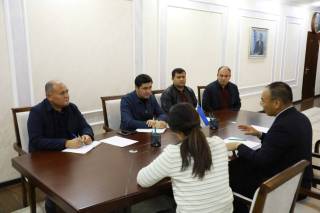
These areas and specific cooperation mechanisms were addressed in detail at the first meeting of the Joint Intergovernmental Commission in April 2026, which focused on industrialization, the agro-industrial sector, pharmaceuticals, and logistics. The sides also confirmed the launch of work on a preferential trade agreement.
The pharmaceutical sector is emerging as one of the most developed areas of partnership. The experience of Jordanian companies in manufacturing medicines in line with international standards can enable Uzbekistan to address the production of in-demand pharmaceuticals, technology transfer, import substitution, and the expansion of exports to Central Asia. The strong interest in implementing such projects was demonstrated by negotiations between the Uzbek side and Dar Al-Dawa (founded in 1975 and supplying products to more than 40 countries) in September 2025 concerning prospects for localizing production and introducing quality-control systems.
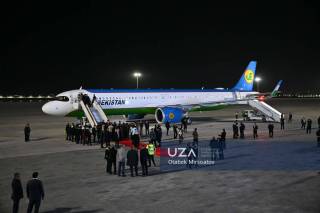
A significant step in strengthening bilateral ties was the launch of regular direct air services between Amman and Tashkent in July 2026. Royal Jordanian began operating flights twice a week, significantly facilitating connectivity for entrepreneurs, tourists, and other travelers.
However, transport cooperation between the two countries goes beyond passenger air services. For Tashkent, the search for new transit corridors remains a key long-term priority. In this context, Jordan’s Aqaba Port and the Kingdom’s extensive network of trade agreements with Arab countries may be of strategic interest to Uzbekistan. These advantages make Jordan a promising logistics hub for facilitating access for Uzbek products to the markets of the Middle East and Africa.
Overall, the potential of cooperation between Tashkent and Amman extends well beyond the bilateral agenda. Both sides can serve as reliable regional partners, helping each other expand their economic presence in neighboring regions. In particular, Uzbekistan, one of Central Asia’s rapidly developing economies, can support Jordanian businesses and provide them with broad opportunities to operate in the region.
Such synergy can gradually lay the foundations for a sustainable architecture of economic ties connecting Central Asia, the Middle East, and Africa.
Cultural Ties: A Foundation of Trust and a Dialogue between Historic Civilizations
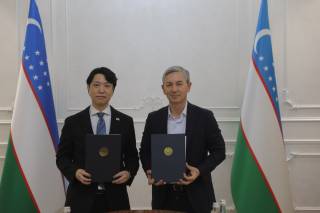
Uzbekistan and Jordan share a rich Islamic spiritual heritage, deep respect for knowledge and scholarship, and a commitment to preserving their cultural traditions. This common ground is being translated into practical cooperation between leading educational institutions. In particular, the International Islamic Academy of Uzbekistan and Jordan’s World Islamic Sciences and Education University have established a partnership through a Memorandum of Understanding.
Academic exchanges and joint projects open new opportunities to study Islamic civilization, history, and Arabic studies, bringing together the scholarly potential of researchers from both countries. This approach not only facilitates the exchange of advanced methodologies but also contributes to nurturing a new generation of researchers capable of promoting the humanistic values of Islam internationally.
Cultural dialogue is progressing just as dynamically. Jordanian artists have already participated in prestigious international festivals of maqom music and traditional applied arts in Uzbekistan.
Regular exhibitions, academic conferences, and creative exchanges can further strengthen these ties. They can serve as a living bridge between Tashkent and Amman, transforming shared historical heritage into a powerful driver of contemporary science, culture, and friendship between the peoples of Uzbekistan and Jordan.
Water Security: Partnership Based on Shared Challenges
Another area reflecting Jordan’s specific circumstances is the rational use of water resources. The Kingdom is among the countries facing the most acute freshwater scarcity. Growing demand, drought, and climate change require water-saving technologies, modernized water networks, and new solutions.
According to the International Monetary Fund, Jordan’s renewable water resources amount to only around 60 cubic meters per capita annually, compared with the threshold of 500 cubic meters for absolute water scarcity. The project to supply desalinated water from Aqaba envisages 300 million cubic meters annually and is expected to meet around 40 percent of the country’s drinking-water needs.
Uzbekistan, for its part, has considerable potential for developing and adopting water-saving technologies. In recent years, the country’s agriculture has been actively shifting from traditional irrigation methods toward modern irrigation systems. While these technologies covered 28,000 hectares in 2017, they now cover 2.8 million hectares, or around 60 percent of the country’s irrigated land. Their application enables annual water savings of nearly 5 billion cubic meters, while by 2028 the country plans to extend water-saving technologies to up to 80 percent of irrigated areas.
In this regard, combining the efforts of Uzbekistan and Jordan in water-saving technologies appears both effective and promising, as both countries have valuable experience and practices to offer.
From Agreements to Sustainable Results
The intensification of bilateral relations in 2025-2026 is shaping a partnership model based not on the scale of financial resources, but on the complementarity of the two countries’ specific advantages. Jordan brings diplomatic experience, expertise in pharmaceuticals, healthcare services, and water resource management under conditions of water scarcity, while Uzbekistan offers a growing market, production capacity, agricultural potential, and economic ties across Central Asia.
At the intersection of these opportunities, priority areas include launching joint pharmaceutical production, implementing pilot water-saving projects, developing scientific and educational programs, and coordinating initiatives in key areas of cooperation.
Thus, Uzbekistan and Jordan have all the prerequisites for building a distinctive partnership architecture in which economic cooperation is complemented by political and diplomatic dialogue, as well as engagement in water security, healthcare, and the preservation of shared spiritual heritage. The ability of the two sides to turn this potential into concrete projects will ultimately determine the sustainability and practical value of bilateral relations.
Sarvar Kamolov,
Chief Research Fellow,
Institute for Strategic and Regional Studies under the President of the Republic of Uzbekistan
UzA