Uzbekistan and India: the rising dynamics of a strategic partnership
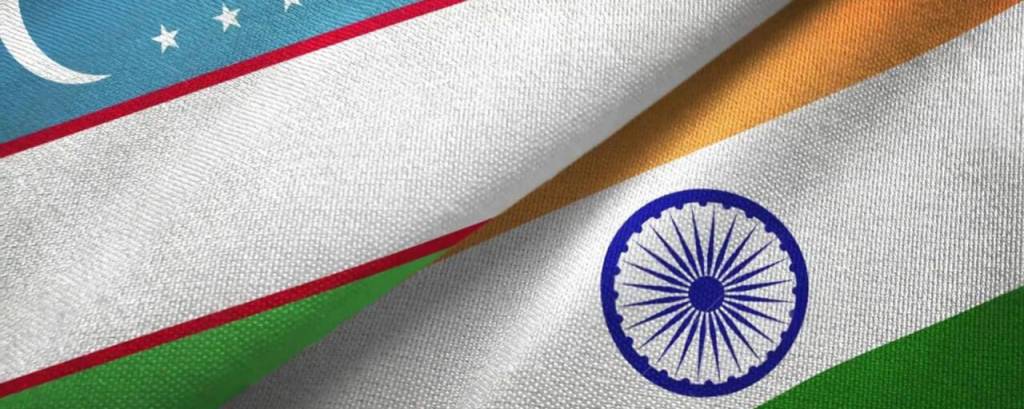
Today, relations between Uzbekistan and India have gained new momentum under the leadership of the President of the Republic of Uzbekistan Shavkat Mirziyoyev. The partnership has evolved from mainly political discussions to a broad, practical collaboration covering politics, economics, industry, healthcare, digital technology, education, security, and transportation.

At the core of these changes are the firm political will of the leaders of both states, the absence of fundamental contradictions, the historical closeness of the two nations, and the complementarity of their economies. In other words, relations have entered a period of institutional strengthening, expanded economic content, and a gradual transition toward joint value creation.
First, the political dialogue has taken on a systematic and trusting character.
Since June 2017, at least six high-level bilateral contacts have taken place in both in-person and virtual formats. Among them are the meeting between Shavkat Mirziyoyev and Narendra Modi on the sidelines of the SCO summit in Astana in 2017, the state visit of the President of Uzbekistan to India in 2018, a working visit to the state of Gujarat in 2019, the first bilateral virtual summit in 2020, a meeting on the sidelines of the Samarkand SCO summit in 2022, and a telephone conversation between the leaders in August 2025. Additional stability to the political interactions has been provided by the India – Central Asia Summit, consultations between foreign policy departments, the intergovernmental commission, and inter-parliamentary contacts.
The 2018 state visit deserves special mention as the political starting point for this new stage. The adopted documents significantly expanded the scope of the strategic partnership – spanning economics, tourism, and science, as well as defense and the fight against illicit drug trafficking. The 2020 virtual summit set a common goal of reaching $1 billion in trade. In 2025, they surpassed this benchmark.
Tashkent and New Delhi share approaches to strengthening the UN’s central role, countering terrorism, stabilizing Afghanistan, and shaping a multipolar world order.
The two countries pursue a policy of strategic autonomy, advocating cooperation free from bloc thinking. This closeness makes their relations resilient to external contingencies.
Second, trade and economic cooperation have accelerated at an unprecedented pace.
Notably, in 2016, mutual trade turnover stood at $366 million, while by the end of 2025 it reached $1.3 billion.
Thus, over the period of reforms, it has increased by approximately 3.6-fold, including a 33.3 percent increase over the past year alone. A task that was once considered ambitious has now become a surpassed milestone.
Equally important is the evolving model of interaction. The agenda is steadily shifting from importing and exporting finished goods toward localization, technology transfer, and industrial cooperation.
In August 2022, the leaders noted a fivefold increase in joint ventures over six years. As of August 2025, about 40 new joint ventures and projects had been launched, and the portfolio of promising initiatives with leading Indian companies totaled $2 billion.
Third, technological and humanitarian ties have strengthened.
Indian capital is most prominent in pharmaceuticals, healthcare, the chemical industry, energy, agriculture, construction, and information technology. Four branches of Indian universities operate in Uzbekistan: Amity in Tashkent, Sharda in Andijan, Sambhram in Jizzakh, and Acharya in Bukhara are forming the personnel foundation of the new economy. The partnership between Andijan region and the state of Gujarat, along with the expansion of air travel and tourist exchanges, has brought relations to a new and fruitful stage of cooperation.
At the same time, the level of interaction achieved does not yet reflect the enormous potential of our countries. India is one of the world’s largest markets and a global center for information technology, pharmaceuticals, engineering, and entrepreneurship. Uzbekistan is Central Asia’s most populous market, a dynamically reforming economy, and a natural hub for regional connectivity.
In this regard, the key task of the new stage is to transform the high level of political trust into a sustainable infrastructure for economic cooperation. To multiply cooperation many times over, it appears expedient to focus joint efforts on the following areas.
First – transport connectivity and logistics.
Access to Central Asia is strategically important for India.
The region has a market of over 80 million people, abundant resources, and growing demand. However, the lack of a common border and transit restrictions constrain trade. India’s trade turnover with the region’s five states remains far below its economic potential. For Uzbekistan, a doubly landlocked country, transportation costs directly determine export competitiveness.
The route “India – Chabahar Port – Iran – Turkmenistan – Uzbekistan” can serve as a practical foundation. In 2018, India began operating the Shahid Beheshti terminal. By the time a ten-year contract was signed in 2024, over 8 million tons of cargo across various categories and about 90,000 twenty-foot equivalent units (TEUs) had been handled through the terminal. New Delhi views the port as an entry point to Afghanistan and Central Asia, bypassing politically vulnerable routes, while Tashkent gains access to the Indian Ocean and one of the world’s largest markets.
Despite ongoing geopolitical turbulence in the Middle East, India has shown a firm commitment to the “North – South” trade corridor, expressing its readiness to continue directing investments toward developing the Chabahar port infrastructure, a key link in this corridor.
In this regard, launching a regular container service with a fixed schedule and a unified transport document is especially urgent. Integrating this route with the “North – South” corridor and the Ashgabat Agreement can reduce delivery times. We are not merely talking about transportation. This corridor can foster trade, industrial cooperation, and more.
Second – the digital economy, IT outsourcing, and AI.
India holds leading positions in the global digital market and has advanced technologies, extensive experience in personnel training, scaling companies, and operating in external markets.
Uzbekistan is developing a similar export-oriented strategy. According to the National Statistics Agency, Uzbekistan’s IT services exports totaled $545.3 million in January-June 2026. This is $61.8 million, or 12.8%, higher than the same period in 2025. The strategic goal for 2030 is to reach $5 billion in exports, create 300,000 jobs, and enter the top 30 countries on the UN e-government development index.
The country’s competitive advantages include a young population, relatively low operating costs, tax incentives, and convenient access to Central Asian markets.
The mutual benefit is clear. Indian companies can establish data development centers and business process outsourcing (BPO) operations in Uzbekistan, diversifying their personnel and geographic base.
In turn, Uzbekistan gains access to technologies, international standards, and global clients.
“Anchor” areas should include joint centers for artificial intelligence, fintech, and cybersecurity, as well as specialist training linked to guaranteed employment. This will enable export expansion without transport barriers and create high-productivity jobs in the regions.
Third – pharmaceuticals, biotechnology, and medical services.
India is the world’s largest supplier of generic drugs, accounting for about 20 percent of the global supply.
In 2025, Indian pharmaceutical exports reached $30.5 billion and spanned 191 countries. Medical device exports totaled $4.1 billion. India’s strengths combine scale, affordability, and experience operating in strictly regulated markets.
In Uzbekistan, where a growing population increases demand for medicines and medical services, this partnership simultaneously addresses the tasks of ensuring the availability of high‑quality drugs, import substitution, and technological modernization. For Indian companies, Uzbekistan is an important market and production base for Central Asia, while for Uzbekistan, India is essential as a source of technology, clinical expertise, and personnel training.
In our view, it is necessary to move from assembly and packaging to a full cycle: producing active pharmaceutical ingredients, vaccines, diagnostic systems, and medical equipment, along with joint research and clinical trials. Telemedicine, joint clinics, and medical tourism also hold additional potential.
Fourth, agro‑industrial cooperation and water saving.
India and Uzbekistan both have large agricultural sectors and face water shortages, climate‑related risks, and post‑harvest losses. India has extensive experience in drip irrigation, breeding, digital field monitoring, processing, and cold chain development. Uzbekistan produces in‑demand fruits, vegetables, textile raw materials, and processed products, but access to the Indian market is limited by logistics and phytosanitary procedures.
Joint projects should span the entire supply chain – from seeds and water‑saving technologies to cold storage facilities, packaging, certification, and exports. For India, this is an opportunity to establish agrotechnology companies in Central Asia and diversify food supplies, while for Uzbekistan, it is a chance to increase yields, reduce losses, and access a market of more than 1.4 billion people. A separate task should be to harmonize phytosanitary standards and create a “green corridor” for perishable products.
Fifth – critical minerals and green energy.
Rapidly growing Indian industries – electronics, batteries, electric vehicles, and renewable energy – are increasing demand for copper, uranium, and rare and critical minerals. India is seeking to diversify its supply sources and reduce dependence on a limited range of external sources. Uzbekistan has reserves of 32 types of minerals that are critically important for the transition to a green economy.
Mutual interest lies not in the simple sale of raw materials but in the formation of joint value chains, including geological exploration, processing of green metals, production of components for electronics and solar energy, and manufacturing of fertilizers and chemical products. India will gain a more stable resource base, while Uzbekistan will gain capital, technology, and steady demand. This model aligns with the main principle of the New Uzbekistan. Each investment project should bring technology, expertise, and export‑added value.
Sixth – education, science, and human capital mobility.
Four Indian university branches have already made education one of the most tangible pillars of relations. But the need is much broader.
To achieve the goals of creating 30,000 jobs in the information technology sector, localizing pharmaceutical production, and developing engineering industries, Uzbekistan needs tens of thousands of specialists with practical competencies. India has a large‑scale system of technical and medical education and experience training personnel for international companies.
The next step should be to establish joint research centers, double-degree programs, basic departments at enterprises, and mutual recognition of qualifications. For India, Uzbekistan could become an educational hub in Central Asia, while for Uzbekistan, Indian programs could accelerate the development of engineering, digital, and managerial capital. Education should bridge investment, research, and production, creating a unified ecosystem for long-term partnership.
Over the past decade, Uzbekistan and India have clearly demonstrated that historical closeness can be transformed into a modern, results-oriented strategic partnership.
There is no doubt that the consistent implementation of the outlined measures will elevate cooperation to a qualitatively new level. Today, the two countries’ trajectories are objectively converging.
Uzbekistan is becoming a center of regional cooperation, while India is becoming a key pole of the global economy and politics. The upcoming visit of the Prime Minister of India Narendra Modi to Uzbekistan will undoubtedly provide an additional impetus to bilateral interaction, allowing the consolidation of agreements reached and the determination of new priorities for the strategic partnership. The convergence of the two countries’ trajectories can make the partnership between Uzbekistan and India one of the main bridges connecting Central and South Asia.
Dilorom Mamatqulova,
Leading Research Fellow,
Institute for Strategic and Regional Studies under the President of the Republic of Uzbekistan