Two Peoples United by Poetry
For centuries, the Uzbek and Tajik peoples have lived side by side in a shared geographical area, fostering a common cultural and spiritual space, and strengthening the bonds of mutual friendship and harmony.
The literary and cultural ties between these two peoples have created a phenomenon rare not only in the history of our region but also in world literature: a unique tradition based on creating in two languages, enriching each other's spiritual worlds, and unifying literary traditions.
The roots of Uzbek and Tajik literary cooperation, first and foremost, trace back to the tradition of *zullisonaynlik*—bilingual creation. This tradition, formed over centuries, brought the literatures of the two peoples closer, exerting a profound influence on their artistic thought and spiritual worlds. Creators who equally revered both languages served as a unique spiritual bridge between the peoples.
One of the highest peaks of this literary affinity was manifested in the literary environment of Herat in the 15th century. The relationship of mentorship, friendship, and creative collaboration between the great representative of Tajik classical literature, Abdurrahman Jami, and the eminent figure of Uzbek literature, Alisher Navoi, is recognized in the history of world literature as a symbol of true literary friendship. While Navoi revered Jami as his spiritual mentor, Jami, in turn, highly praised Navoi's artistic potential and literary achievements in the Turkic language. The creative dialogue between these two great scholars played an invaluable role in the mutual enrichment of the two literary languages and the cultures of the two peoples.
The tradition of *zullisonaynlik* continued consistently in subsequent centuries. Many creators, such as Boborahim Mashrab, Nodira, and Uvaysi, produced equally beautiful works in both Uzbek and Tajik. This further strengthened the natural affinity between the literatures of the two peoples. Most importantly, this literary commonality created a solid foundation for the peoples to understand each other without translators and to directly feel each other's words and emotions.
By the beginning of the 20th century, Uzbek and Tajik literature entered a new stage of development and modernization. The Jadidist movement, the ideas of national awakening, and later a shared socio-cultural space brought the creators of both nations even closer. Ancient cities such as Samarkand and Bukhara became important spiritual centers where the literary lives of the two peoples converged.
The creative work of Sadriddin Ayni, one of the founders of modern Tajik literature, serves as a vivid example of this. While making a great contribution to the development of Tajik literature, he also played an important role in the development of Uzbek literature and press. Ayni's works in the Uzbek language and his integral ties with the literary circles of Samarkand and Bukhara demonstrate how close and shared the roots of the two peoples' literatures are.
During and after the Second World War, Uzbek-Tajik literary ties became even more active. The creative dialogue between Gafur Gulam, a major representative of Uzbek literature, and Mirzo Tursunzoda, a formidable figure in Tajik poetry, was one of the brightest pages of this period. They worked together at various literary conferences, particularly within the framework of the Afro-Asian Writers' Solidarity Movement.
During this period, literary translation was also systematically established. The works of representatives of Uzbek literature such as Abdulla Qodiriy and Cho'lpon were skillfully translated into Tajik, while the works of Mirzo Tursunzoda, Sadriddin Ayni, and other Tajik writers were masterfully translated into Uzbek. As a result, both peoples gained the opportunity to read and understand the finest examples of each other's literature in the language of their neighbor.
Although a slight slowdown in literary and cultural ties was observed in the initial years after the collapse of the Soviet system due to various political and social factors, the elevation of relations between the two countries to a new level after 2016 also breathed new life into Uzbek-Tajik literary cooperation.
As a result of the political will of the two heads of state and efforts to further strengthen the age-old friendship between the peoples, literary and cultural ties have been enriched with new substance. The relocation of the monuments to Alisher Navoi and Abdurrahman Jami to a magnificent alley in the city of Samarkand, and the establishment of the "Nizomiddin Alisher Navoi" Park of Culture and Recreation in Dushanbe with its majestic statues of Navoi and Jami, have become vivid symbols of the literary friendship between the two peoples.
In recent years, cooperation between the two countries in literary translation, book publishing, and the preparation of anthologies has intensified. A number of important projects are being implemented to translate examples of Uzbek and Tajik literature into each other's languages and deliver them to readers as anthologies and collections. While Uzbek translators have translated rare examples of Tajik literature into Uzbek and presented them to a wide readership, a number of skilled authors in Tajikistan are actively participating in promoting Uzbek literature and bringing it to Tajik readers.
The "Friendship Evenings" regularly held in Samarkand, Fergana, Bukhara, Dushanbe, and Khujand, as well as joint scholarly and literary conferences, creative meetings, and poetry readings, exemplify this cooperation. The signing of direct cooperation memorandums between the Writers' Unions of Uzbekistan and Tajikistan also indicates that the institutional foundations of literary relations are steadily strengthening.
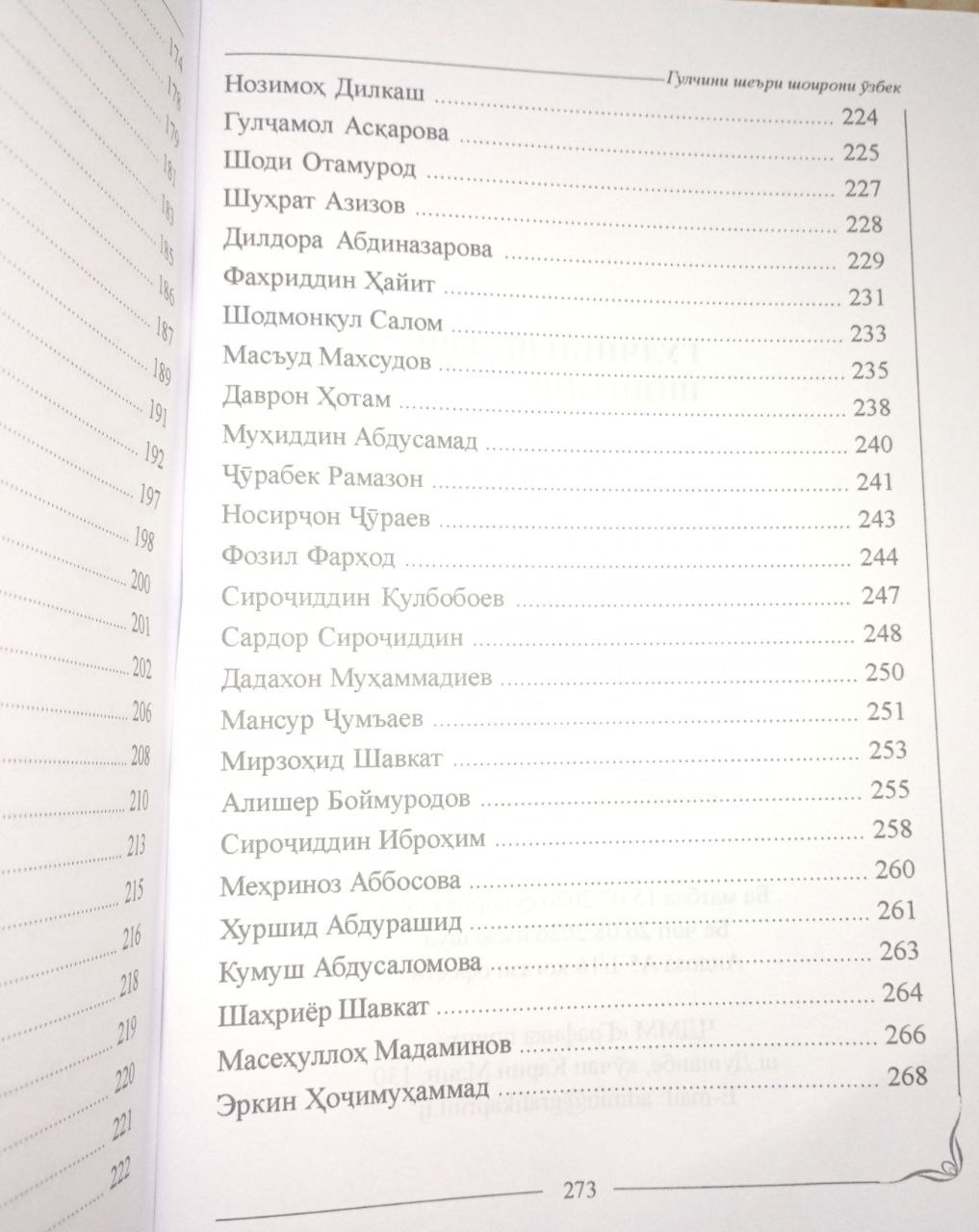
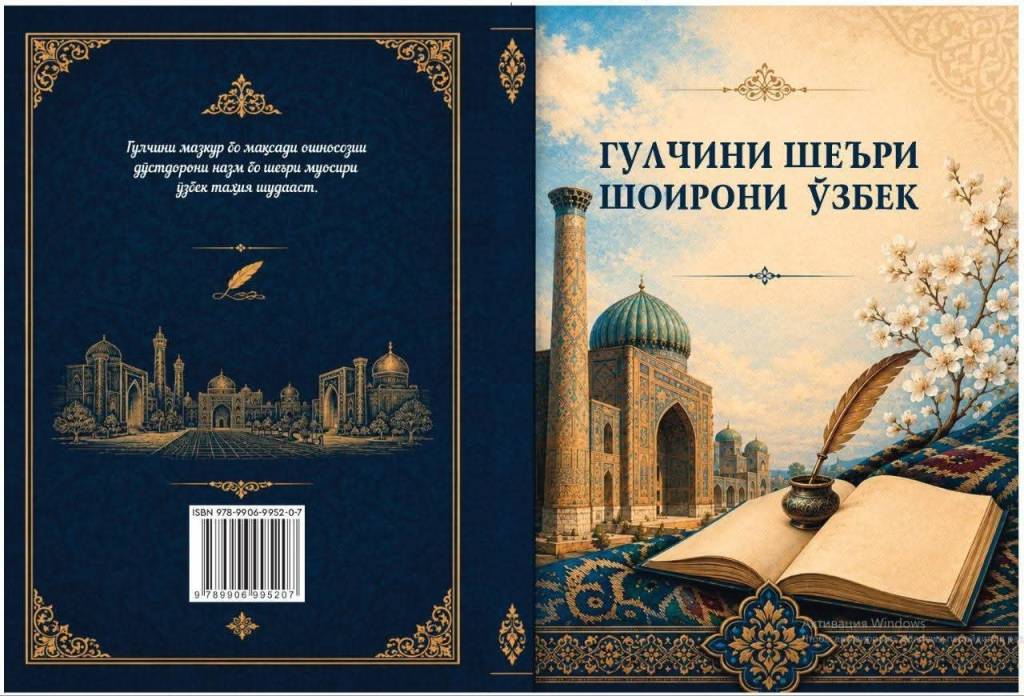
According to the renowned Uzbek poet, writer, and publicist Shahriyor Shavkat, the recent publication of the anthology "Gulchini she'ri shoironi o'zbek" in the Tajik language by the "Grafika-Print" publishing house in Dushanbe was another clear expression of the ever-strengthening literary ties between the two fraternal peoples.
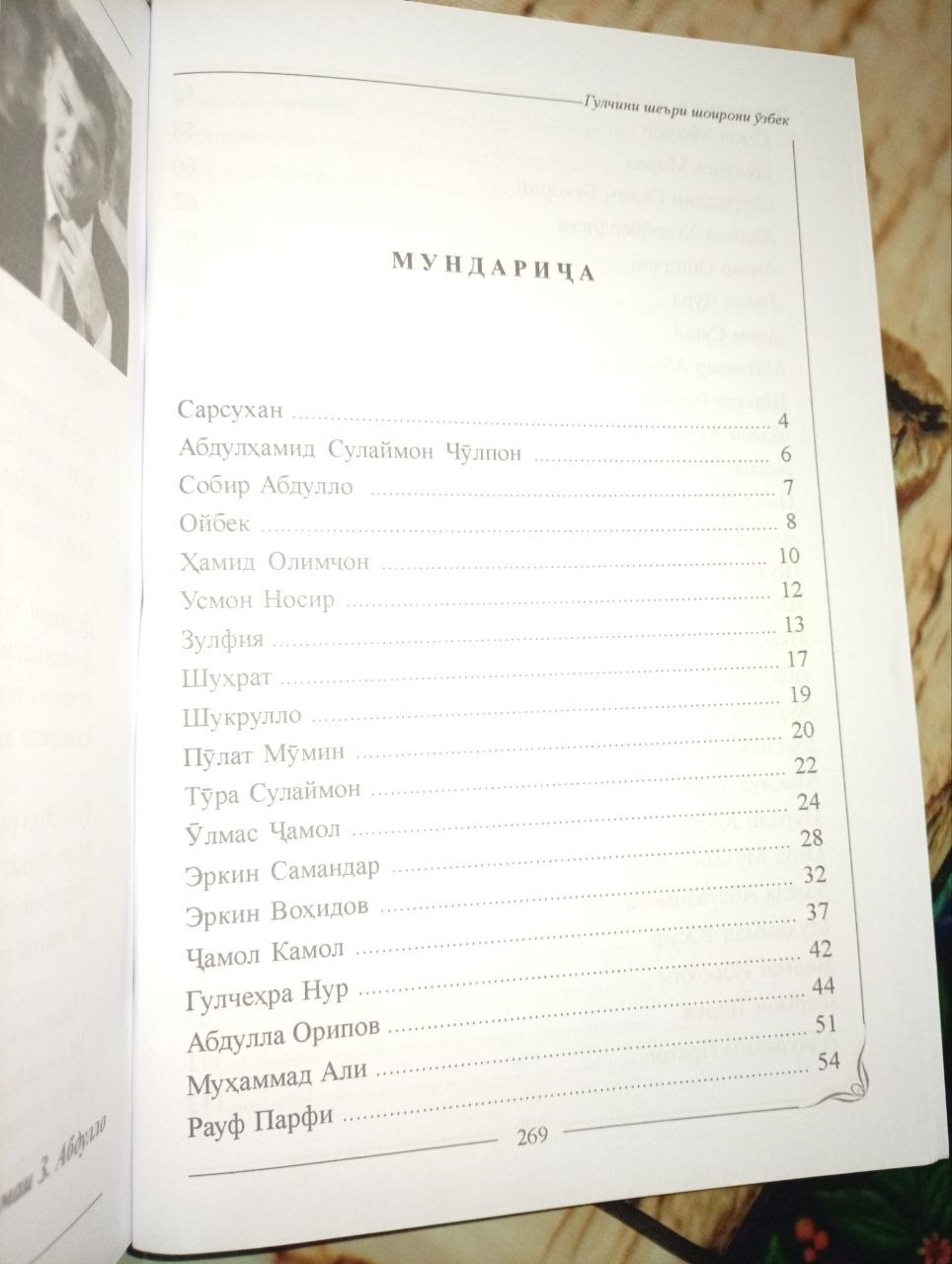
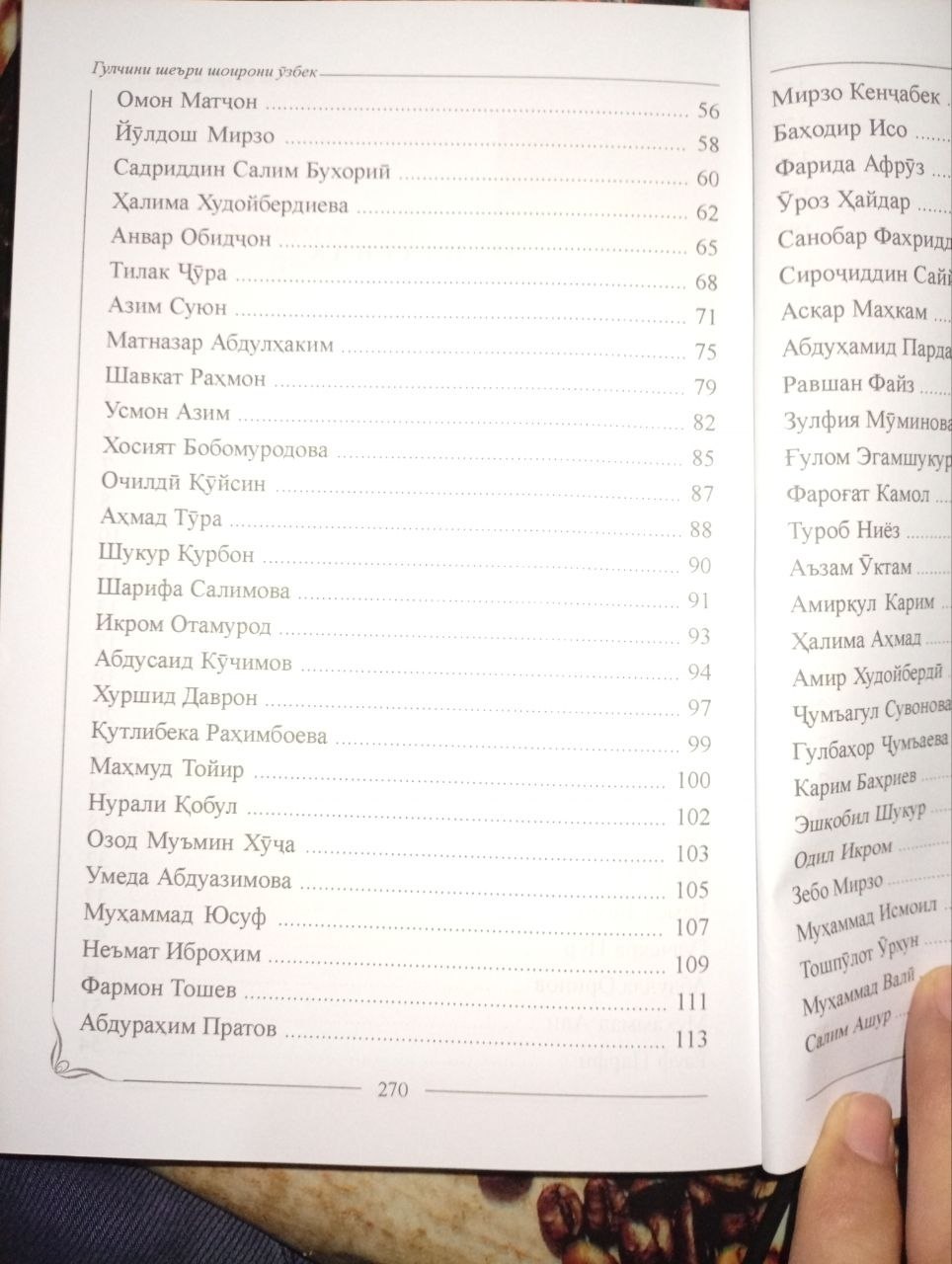
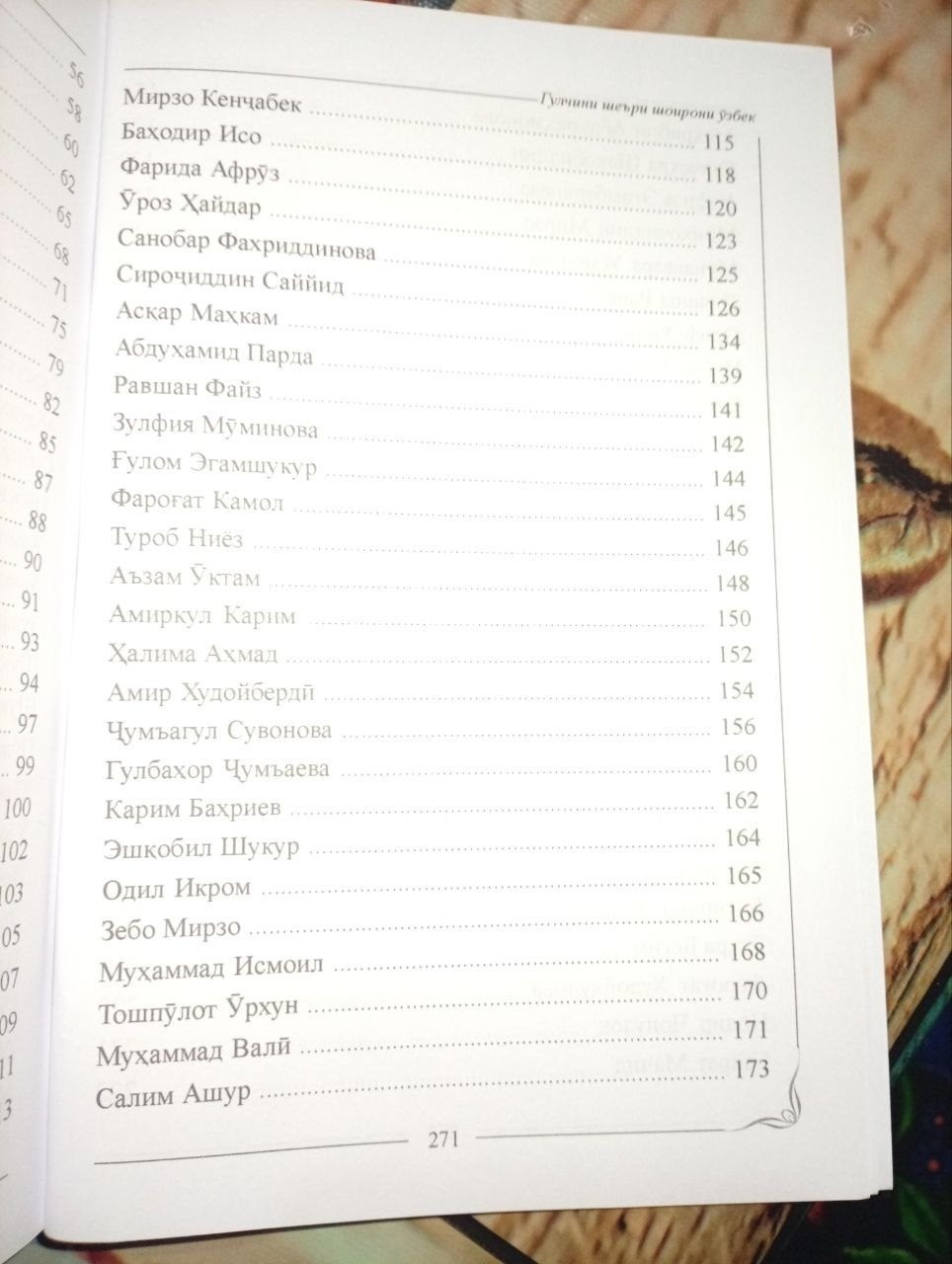
The anthology includes examples of 20th and 21st-century Uzbek poetry translated into Tajik. The collection contains selected poems by 125 Uzbek poets. Among them are Abdulhamid Sulaymon o'g'li Cho'lpon, Sobir Abdulla, Hamid Olimjon, Usmon Nosir, Zulfiya, O'lmas Jamol, Erkin Vohidov, Jamol Kamol, Abdulla Oripov, Rauf Parfi, Omon Matjon, Matnazar Abdulhakim, Usmon Azim, Shavkat Rahmon, Muhammad Yusuf, Mirzo Kenjabek, Asqar Mahkam, Sirojiddin Sayyid, Minhojiddin Mirzo, Salim Ashur, Toshpo'lat O'rxun, Sirojiddin Rauf, Iqbol Mirzo, G'ayrat Majid, Botirjon Ergashev, Shodi Otamurod, Fozil Farhod, Alisher Boymurodov, Kumush Abdusalomova, Shahriyor, Erkin Hojimuhammad, and many other poets.
The publication of this collection once again signifies the strengthening bonds of kinship and friendship between Uzbek and Tajik authors.
In this regard, a creative meeting titled "Friendship Poetry Reading" will be held on September 10, 2026, at 11:00 AM at the Samarkand Regional Library, in cooperation with the regional branch of the Writers' Union of Uzbekistan. Representatives of the Tajik Literature Section of the union branch, along with other authors, will participate and exchange views on the literary significance of this anthology, the common aspects of the two peoples' poetry, and the prospects for contemporary literary cooperation.
N.Usmonova,
UzA