


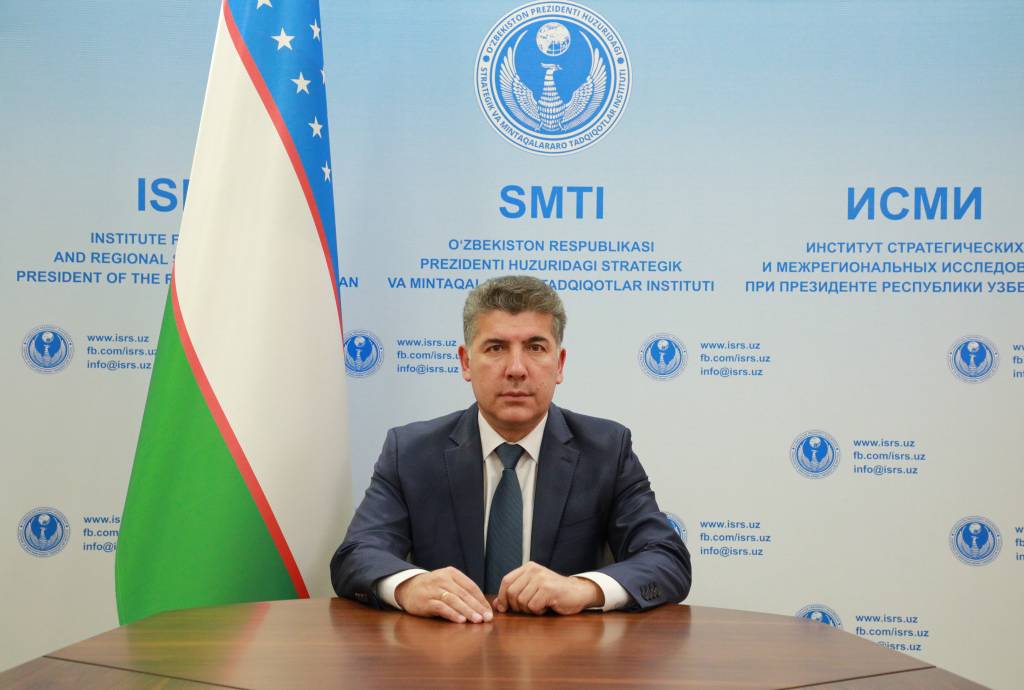
The First Deputy Director of the Institute for Strategic and Regional Studies under the President of the Republic of Uzbekistan Akramjon Nematov shared this assessment, commenting on the results of President of the Republic of Uzbekistan Shavkat Mirziyoyev’s visit to Türkiye.
According to him, the official visit of the Uzbekistan Leader to the Republic of Türkiye, which concluded on January 29, 2026, should be viewed not only as another event on the bilateral political calendar, but above all as an important milestone in strengthening the institutional relations between Uzbekistan and Türkiye. Its results convincingly confirmed that the interaction between Tashkent and Ankara, which was largely fragmented just a few years ago, has reached a qualitatively new level – the level of a comprehensive strategic partnership based on pragmatism and mutual benefit.
The personal role of President Shavkat Mirziyoyev in shaping this new quality of relations deserves special mention. His proactive policies and strategic approach have enabled bilateral cooperation to reach a systemic level, combining pragmatism with a long-term focus on sustainable development. Thanks to the President’s initiative, visits and cooperation programs have become regular and institutionalized, and the agreements reached have begun to be implemented with precise planning and measurable results, strengthening trust between the countries and creating a reliable platform for economic, humanitarian, and technological ties.
Thus, the current visit’s program, which included talks in narrow and expanded formats, as well as the fourth meeting of the High-Level Strategic Cooperation Council, demonstrated a high level of political trust and the maturity of the bilateral dialogue. While such meetings were previously held sporadically, the Strategic Cooperation Council now meets regularly, ensuring the continuity of decisions and overseeing their implementation. Symbolically, the key events took place on the eve of the holy month of Ramadan and on the 30th anniversary of the Treaty of Eternal Friendship and Cooperation, underscoring the partnership’s value-based and historical foundations.
Of fundamental importance is that constructive, pragmatic mutual approaches currently characterize cooperation between Uzbekistan and Türkiye and are grounded in an open partnership model focused on ensuring shared security and sustainable development. This is reflected in the finalization of the “4+4” format, which brings together coordination across foreign policy, defense, and law enforcement agencies. Unlike previous consultation mechanisms, this format is practical and enables a systemic response to cyber threats, cross-border crime, and other unconventional challenges.
The economic dimension of the partnership demonstrates sustained positive momentum and a high degree of complementarity. In recent years, trade has more than doubled, reaching $3 billion by the end of 2025, up from $1.5 billion at the beginning of the decade. The goal set by the heads of state to increase trade turnover to $5 billion is supported not only by declarations but also by a real investment portfolio of approximately $9 billion. The number of enterprises with Turkish capital has also increased significantly: while there were hundreds previously, over 2,100 such companies now operate in Uzbekistan, demonstrating growing business confidence and the formation of a solid material foundation for the strategic partnership. The need for further advancement of projects in industry, agriculture, social protection, and other priority areas was emphasized, including by expanding the list of goods covered by the Preferential Trade Agreement.
In preparation for the visit, new priority areas for industrial cooperation were identified and will be implemented under a separate program. Compared to previous stages of collaboration, which focused primarily on trade and construction, the current emphasis is on joint production, localization, and export-oriented industries. Particular attention is paid to developing cooperation in tourism, theater festivals, and cultural weeks, joint production of historical films, and the restoration of cultural heritage sites, reflecting the expanding humanitarian component of the partnership.
It is particularly noteworthy that the agreements reached directly address the structural challenges in Uzbekistan’s national development. The development of the Middle Corridor and the cooperation in transport and transit enshrined in the corresponding protocol are aimed at overcoming the country’s geographic isolation and diversifying external logistics routes. Compared to traditional routes, these solutions reduce delivery times and increase supply chain resilience. Agreements on industrial cooperation, the management of special economic zones, and the creation of joint clusters help reduce the economy’s reliance on raw materials and foster high-value-added production. The transfer of technological competencies, including nuclear safety and digitalization, should be viewed as part of sovereign modernization, not as technological dependence.
A fundamentally new stage has been the expansion of cooperation to the regional level. The intention to organize visits by delegations from all regions of Uzbekistan to Türkiye reflects the transition from a centralized model of interaction to a more flexible, decentralized partnership architecture. While interregional contacts were previously limited, the Action Plan for 2026-2027 envisions establishing sustainable partnerships between the regions of the two countries, launching joint projects, and developing a portfolio of local initiatives. Significant potential for implementing advanced Turkish practices in agriculture, horticulture, healthcare, and medical tourism has also been noted.
The military-technical cooperation sector deserves special attention. Compared with previous years, when interaction was limited to consultations, the signed agreements provide for deeper cooperation in military medicine, personnel training, and the implementation of surveillance systems and the use of unmanned aerial vehicles. This cooperation is exclusively defensive in nature and aimed at enhancing the professional level and technical capabilities of the Armed Forces of Uzbekistan, which is a rational contribution to strengthening national defense.
The humanitarian dimension of the partnership between Uzbekistan and Türkiye lends further depth and stability to the relationship. The implementation of the Cultural Cooperation Plan for 2026-2027, the agreement to hold the fourth Rectors’ Forum in Bukhara, and joint education projects form a long-term foundation for cooperation. Uzbekistan’s participation in the reconstruction of the earthquake-damaged Hatay province, the construction of the “Uzbekistan” residential complex, and the construction of a comprehensive school have become clear examples of practical solidarity. The start of construction of an Uzbek school in Bakırköy district of Istanbul – Uzbekistan’s first educational institution abroad – is also symbolic, reflecting a strategic focus on the humanitarian dimension of cooperation and outreach to the diaspora.
Overall, the visit to Türkiye confirmed that relations between Uzbekistan and Türkiye are developing as a pragmatic, dynamic, and responsible partnership. Compared to previous stages of bilateral cooperation, the current format is characterized by greater institutional stability, expanded economic and regional cooperation, and deepened humanitarian ties. The agreements reached create additional tools to overcome transportation and technological constraints, modernize the economy, strengthen defense capabilities, and ensure shared security, thereby forming a solid foundation for further expanding Uzbekistan’s international cooperation in a changing global environment.
UzA