The Architecture of Cooperation Between Uzbekistan and Central Asia
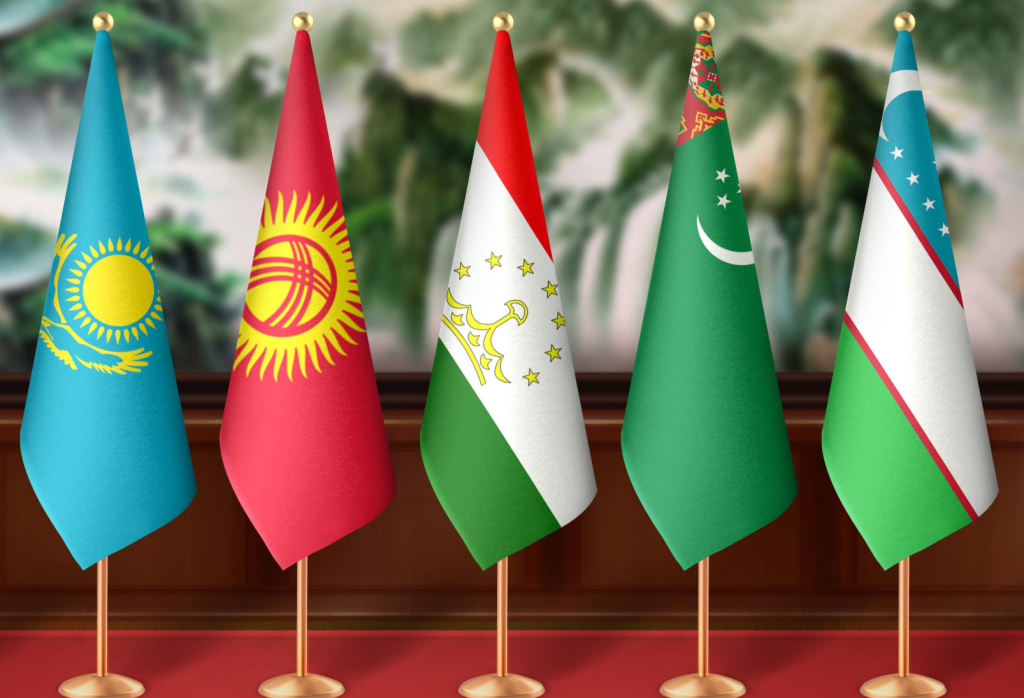
Just seven or eight years ago, broad regional cooperation seemed unimaginable: borders between neighboring countries were closed, trade, transit, business contacts, and humanitarian exchanges were virtually nonexistent – relations were, in effect, frozen. Today, however, the situation has changed dramatically.
Thanks to a new political will and spirit of openness, mutual trust has been restored among the Central Asian states, and comprehensive partnerships have been revived across all spheres. This tectonic shift has laid the foundation for the region’s security and prosperity.
A New Era of Regional Cooperation
A turning point in the regional dynamic began with the election of President Shavkat Mirziyoyev in 2016, when Uzbekistan adopted a policy of good neighborliness and mutual benefit. As a result, many long-standing disputes were resolved, border-crossing procedures were simplified, and new transport routes were opened between the Central Asian countries. These steps quickly bore fruit: intra-regional trade turnover grew significantly. Compared to the late 2010s, the total trade volume among Central Asian states nearly doubled – from $5.7 billion in 2018 to $11 billion in 2024. The growth of Uzbekistan’s trade with its closest neighbors has been particularly remarkable: between 2016 and 2021, trade volume with countries of the region increased 2.6 times, from $2.5 billion to $6.3 billion. Trade with Kyrgyzstan grew almost sixfold, with Tajikistan – threefold, and with Turkmenistan – fourfold. This progress reflects a fundamental improvement in relations, with bus services, air routes, and railway connections now restored. Joint trade and economic hubs have been created along borders, such as the International Center for Industrial Cooperation on the Uzbekistan – Kazakhstan border. A region once divided by barriers is now rapidly transforming into a common space of trust, mutually beneficial trade, and shared development.
One of the main drivers of this regional transformation has been the regular meetings of the leaders of Central Asian countries. At Uzbekistan’s initiative, a new dialogue format – the Consultative Meetings of the Heads of State of Central Asia – was launched in 2018. Held annually in the presiding country, these meetings have provided an opportunity for the leaders of the five countries to discuss shared challenges and jointly seek coordinated solutions openly. President Shavkat Mirziyoyev emphasized that the consultative meetings serve as a platform where “all pressing issues on the common agenda are addressed openly and constructively”. As a result, the countries of the region have succeeded in cultivating a new spirit of regionalism: extending from political dialogue and security cooperation to economic integration and cultural and humanitarian exchange.
Economic Growth and Investment Attraction
Uzbekistan’s significant achievements in economic development and reform in recent years have provided a solid foundation for its regional leadership. The country continues to demonstrate high growth rates: according to international institutions, GDP is expected to increase by nearly 7 percent in 2025. Since 2016, Uzbekistan’s economy has undergone a qualitative leap – over eight years, the gross domestic product has doubled, and the country has set an ambitious goal to reach a GDP of $200 billion by 2030. Just last year, investment inflows into the national economy amounted to $35 billion, while exports exceeded $27 billion – both record figures, partially reflecting Uzbekistan’s success in attracting partners and capital through platforms such as the Tashkent International Investment Forum. It is gratifying to note that Uzbekistan’s reforms are receiving global recognition: over the past five years, the country has risen 48 positions in the Index of Economic Freedom and 28 positions in Harvard’s Economic Complexity Index. Recently, S&P Global Ratings upgraded Uzbekistan’s sovereign credit outlook from “stable” to “positive”, praising the country’s macroeconomic resilience and strong reform agenda.
Particular attention is being paid to the development of green energy and environmental protection, which is essential not only for Uzbekistan but for the entire region. Within the framework of the national strategy for transitioning to a low-carbon economy, the country has attracted about $6 billion in foreign direct investment in renewable energy. In a short period, electricity generation has increased from 59 to 82 billion kWh. In the next five years, it is planned to increase output to 120 billion kWh, bringing the share of renewable sources to 54 percent. Uzbekistan is also investing in the modernization of power grids ($4 billion will be allocated for upgrading the electrical network infrastructure) and involving private businesses in managing regional power networks. These measures not only meet domestic needs but also create conditions for electricity exchange with neighboring countries, joint use of water resources, and mutual energy support during peak periods.
No less remarkable is the progress in digital development. Already this year, exports of IT services will exceed $1 billion, indicating the formation of a modern technological cluster in the country.
Uzbekistan as a Bridge Between Regions
Tashkent is consistently promoting the idea of connecting Central Asia with the rest of the world, transforming the region into a transcontinental bridge between East and West. A vivid example of this is the development of transport corridor projects. In August of this year, Uzbekistan, Turkmenistan, and Azerbaijan agreed at a summit in Avaza to expand cooperation on transit routes by integrating railways and Caspian Sea ports to accelerate cargo deliveries from Central Asia to the Caucasus and further to Europe. Memorandums were adopted on the development of logistics, coordination of the Turkmenbashi and Baku ports, joint shipbuilding, and data exchange between transport hubs. This lays the foundation for a unified East-West corridor capable of diversifying the region’s trade routes.
At the same time, Uzbekistan is participating in the North-South initiative through the construction of the Trans-Afghan railway corridor, which in the future will provide Central Asian countries with direct access to the Arabian Sea. These infrastructure projects are inseparable from regional policy: they require coordinated efforts by all states and can bring mutual benefits by strengthening Central Asia’s economic independence.
While strengthening ties with neighboring regions, the country is simultaneously developing partnerships with major global centers of influence. In April 2025, the “Central Asia – European Union” summit was held for the first time in Samarkand, demonstrating Europe’s growing interest in the region. As a result, a new partnership strategy between the European Union and Central Asia was agreed upon, and preparations began for the signing of the Enhanced Partnership and Cooperation Agreement between the EU and Uzbekistan. It is expected that later this month, President Shavkat Mirziyoyev will visit Brussels to sign this historic agreement, which is intended to elevate trade, economic, and political cooperation with Europe to a fundamentally new level. This step will consolidate the progress achieved through Uzbekistan’s accession to the GSP+ system and the growth of trade turnover with the EU, and will serve as recognition of the country’s vital role as a bridge between the European Union and the entire Central Asian region.
Dialogue with other major partners – China, Russia, and the Middle Eastern countries – is also actively developing. In June, Tashkent hosted the Second Uzbekistan – China Interregional Forum, which brought together more than 1,500 representatives of business circles and government bodies from both countries. Uzbekistan and China are implementing large-scale investment projects and expanding trade turnover – in 2024, bilateral trade reached $13.1 billion. With Russia, the implementation continues of a program to establish joint technoparks worth $3.5 billion, to localize production, and to carry out agreements providing social guarantees for labor migrants.
A Look into the Future
Experts agree that Uzbekistan has managed to give Central Asia the long-awaited momentum toward unity. Riding this wave of regional consolidation, the countries are forming a common voice on key issues and asserting themselves more confidently on the global stage. A new mechanism initiated by Uzbekistan – the Regional Contact Group on Afghanistan – has been established, within which representatives of four countries (Uzbekistan, Kazakhstan, Kyrgyzstan, and Tajikistan) are developing coordinated approaches to addressing the Afghan issue. This demonstrates the ability of Central Asian states to take responsibility for the security and stability of their surrounding environment.
With the largest population in the region and a dynamically reforming economy, Uzbekistan has objectively become the driving force behind these processes. However, its leadership is of an inclusive nature: Tashkent consistently emphasizes that the prosperity of Uzbekistan is inseparable from the prosperity of the entire region. As President Shavkat Mirziyoyev noted, “Coordinated and harmonized approaches by the Central Asian countries will make it possible to achieve common goals of development and prosperity”. In this philosophy lies the key to success: not competition, but partnership, not division, but joint progress forward.
There remains considerable work ahead to implement the agreements reached, but it is clear that Uzbekistan is firmly committed to turning regional initiatives from declarations into practical action. In the foreseeable future, Central Asia may well become one of the most cohesive and economically dynamic regions of Eurasia, a transformation to which Uzbekistan’s new, open policy has made a significant contribution.
A region once regarded as peripheral is now moving to the forefront of international politics and economics. Uzbekistan, in turn, continues to affirm its status as a reliable partner and proactive leader, capable of turning major ideas into tangible results. These very qualities are essential today for Central Asia to become a space of progress, innovation, and sustainable development on a continental scale.
Abduaziz Khidirov, UzA