


The Decree of the President of the Republic of Uzbekistan dated 30 December 2025 “On further improvement of the system for preventing and combating corruption in the Republic of Uzbekistan” enriched reforms in this field with new substance by introducing a qualitatively new institutional approach to anti-corruption policy – the anti-corruption prevention cluster.
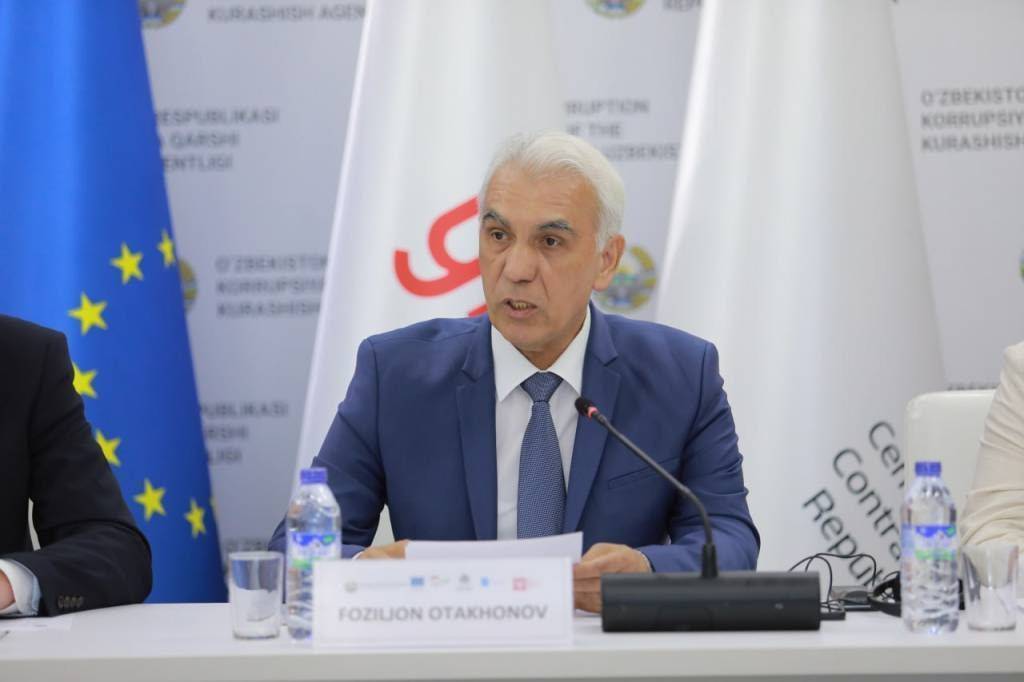
The essence and significance of this cluster were explained by the Chairman of the Public Council under the Anti-Corruption Agency, Doctor of Juridical Sciences, Professor Foziljon Otakhonov:
– The issue of combating corruption in the modern system of public administration manifests itself not only as a sphere for the application of criminal law measures, but also as a complex legal problem directly linked to ensuring the openness and transparency of state power, public participation, and institutional stability. From this perspective, improving legal mechanisms to prevent corruption is a priority direction of state policy.
This cluster is based on permanent, systematic cooperation among the Anti-Corruption Agency, law enforcement, supervisory bodies, scientific institutions, internal anti-corruption control (compliance) units, and civil society institutions. From a scientific standpoint, such an approach allows corruption to be viewed not merely as an isolated offense but as a combination of governance system defects, institutional risks, and factors undermining public trust. Accordingly, the cluster model moves away from the dominance of punitive measures and toward a preventive, systemic, and public-participation-oriented anti-corruption policy.
By its legal nature, the anti-corruption prevention cluster relies on fundamental principles enshrined in the Constitution of the Republic of Uzbekistan, such as the service of state bodies to the interests of the people, openness and transparency, and the right of citizens to participate in the management of public affairs. This implies that, in combating corruption, state bodies act not as isolated, closed entities but as open and accountable institutions that cooperate with society. In practice, the cluster strengthens interagency cooperation, enables early identification of corruption risks, and facilitates decision-making grounded in scientific analysis.
An essential component of this system is empowering civil society institutions to exercise public oversight in combating corruption. Through mechanisms such as public hearings, monitoring, and public opinion research, public oversight moves beyond a declarative principle and becomes an effective legal instrument that promotes openness, transparency, and accountability in the activities of state bodies. In academic literature, public oversight is assessed not as a means of restricting state activity, but as an institution designed to organize it effectively in line with societal interests. The Decree institutionally consolidated this approach within the national legal system.
Another significant feature of the anti-corruption prevention cluster is the participation of scientific institutions and internal anti-corruption control (compliance) units. The involvement of scientific institutions transforms anti-corruption policy into a governance model grounded in evidence and analysis. In turn, internal control (compliance) units help manage corruption risks within state bodies and organizations, strengthen service discipline, and foster a culture of institutional responsibility. This strengthens anti-corruption efforts by incorporating mechanisms of internal accountability and self-control, rather than relying solely on external oversight and legal liability.
At the same time, the norms set out in the Decree fully comply with the United Nations Convention against Corruption, particularly with respect to corruption prevention policy, the participation of civil society, and the development of cooperation between the state and society. This helps implement Uzbekistan’s international anti-corruption obligations through national legal mechanisms.
In conclusion, the anti-corruption prevention cluster envisaged by the Decree of the President of the Republic of Uzbekistan dated 30 December 2025 has established a new institutional paradigm for combating corruption. This model aims to strengthen cooperation between the state and civil society, transform public oversight into a robust legal mechanism, and build an anti-corruption policy grounded in prevention, transparency, and accountability.
As a result, the fight against corruption shifts away from a centralized, punitive approach and toward a sustainable legal system grounded in constitutional values and public participation.
Norgul Abduraimova, UzA