
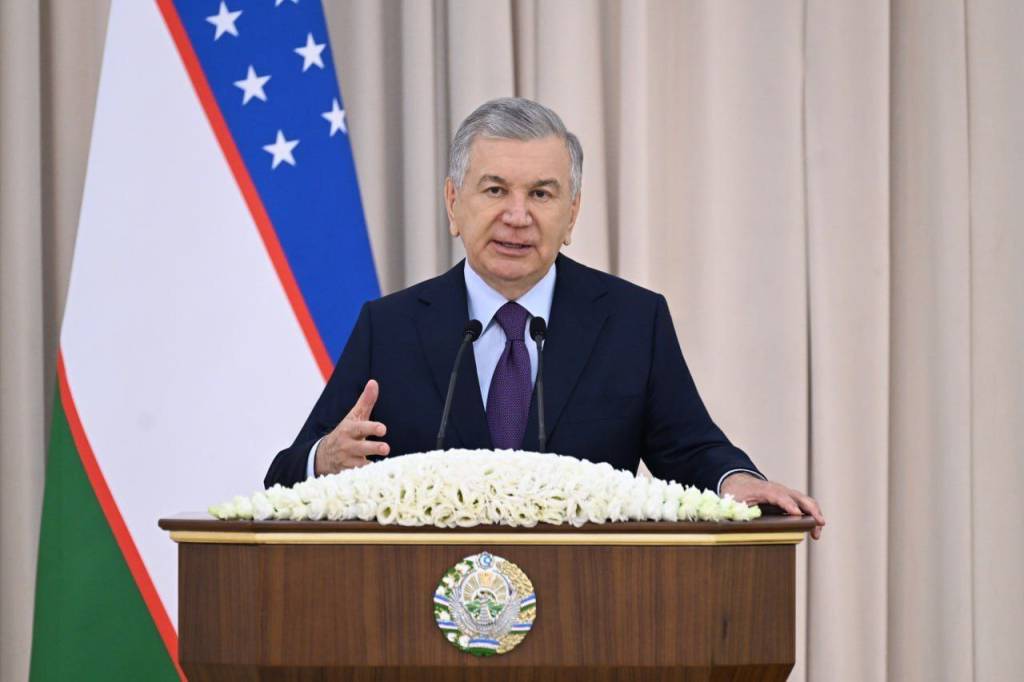
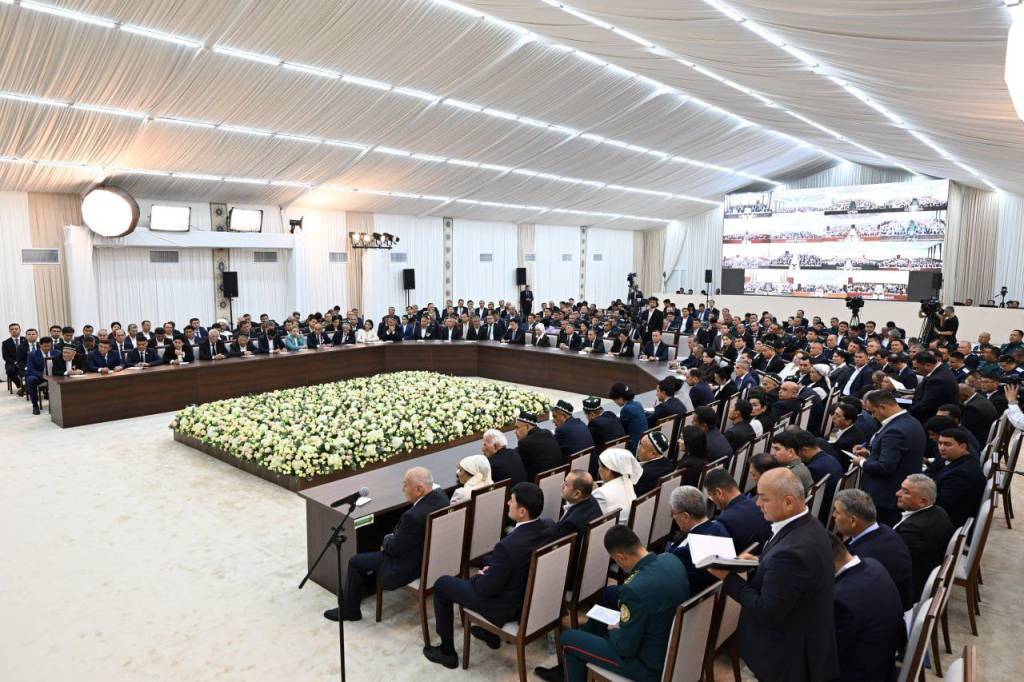
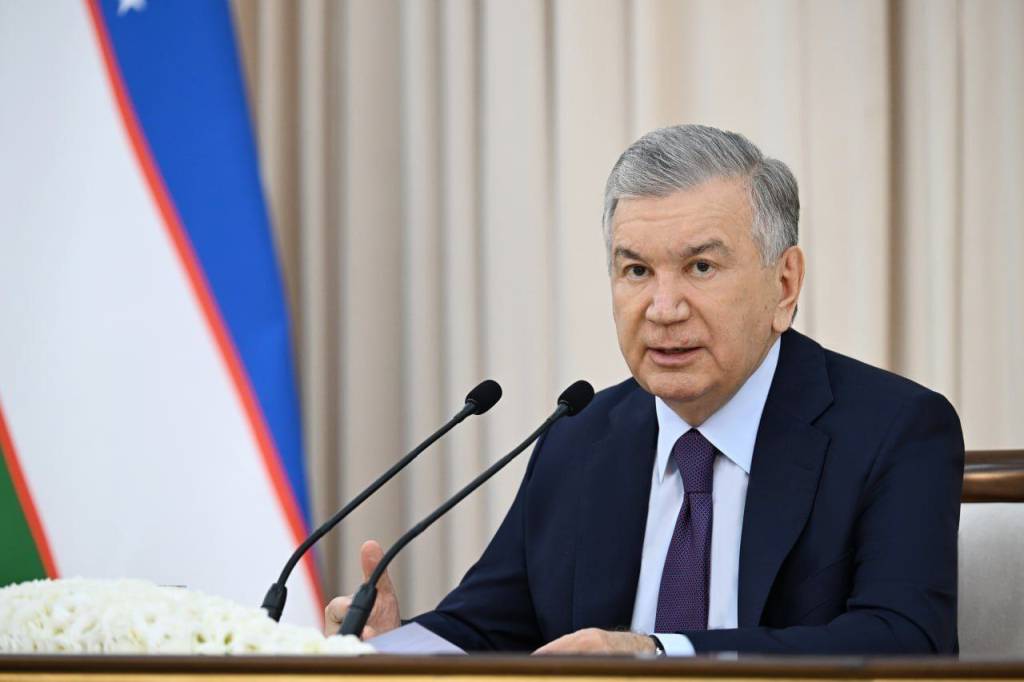
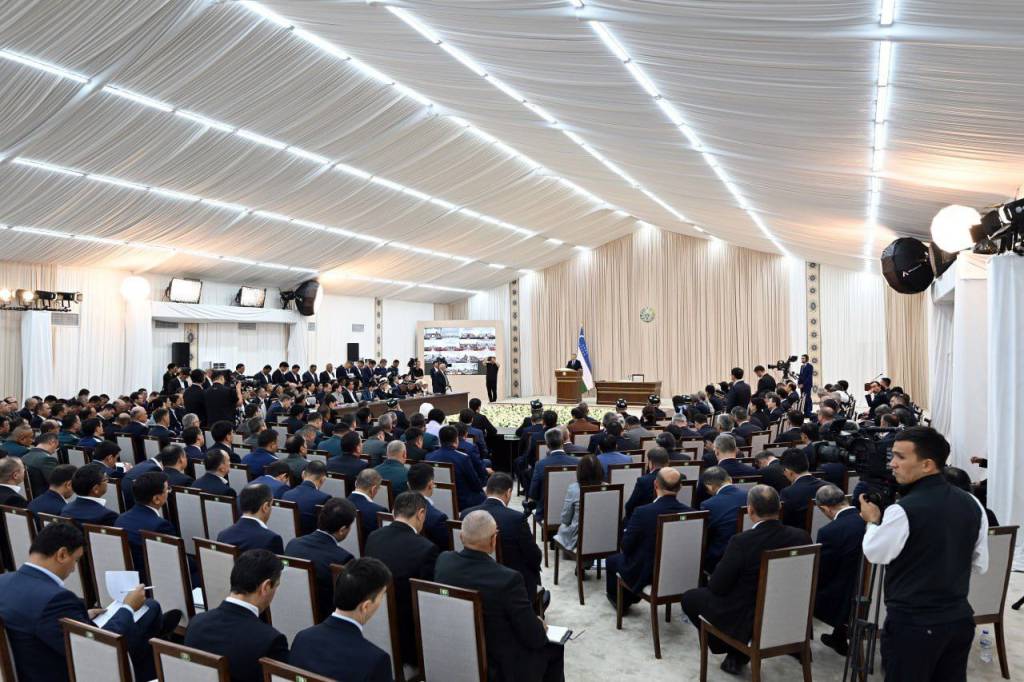
On September 16, President Shavkat Mirziyoyev chaired a meeting in Uychi district to discuss measures for the socio-economic development of Namangan region.

It was noted that significant results have been achieved in the region, reflected in economic growth and the improvement of people’s well-being. Over the past eight years, $7 billion of foreign investment has been attracted to the region, and nearly 8,000 new enterprises have been established. The range of exported products has doubled and now exceeds one thousand items.

Today, 82 percent of the working-age population is employed in small businesses and entrepreneurship. The average real income per capita has tripled. Most importantly, the residents of Namangan feel positive changes in their daily lives.

At the meeting, an analysis was conducted on ways to maintain the current pace and increase efficiency. In particular, the tasks were set to attract $4.2 billion of investments by the end of the year, raise exports to $1 billion, provide employment for 323,000 people, and lift 26,000 families out of poverty.
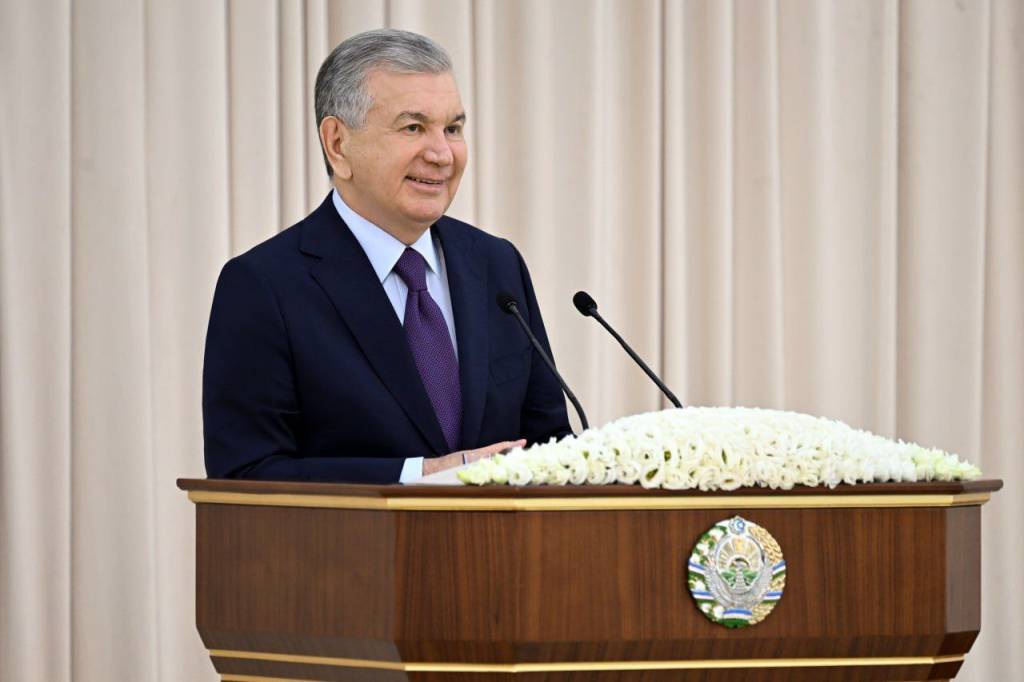
The Head of State put forward an important initiative for the improvement of mahallas. As part of this initiative, the “Place of Development and Leadership” program will be launched. It will cover 4 districts each in Fergana, Samarkand, and Tashkent regions, 2 districts in other regions, as well as 328 of the most vulnerable mahallas nationwide.

In a short time, the poverty level in Namangan has decreased by 2.5 times. Thanks to the growth of entrepreneurial activity and an increase in average wages, 62,000 migrants have returned to the region over the past two years.

The reform headquarters has been instructed to develop a master plan for the scenic areas of the region. The implementation of relevant projects will make it possible to create 50,000 new jobs and sources of income next year. For example, along 40 kilometers of rivers and canals passing through Pap, Turakurgan, Uychi, Uchkuprik, and Chust, it will be possible to build 650 service facilities and provide employment for 10,000 people.
Today, one-third of the region’s industry and half of its exports are accounted for by the textile sector. Entrepreneurs in Namangan are national leaders in working with brands. To expand investment and cooperation with international brands, a dedicated project office will be opened in the region within a month. The number of textile enterprises with international certification will be increased to 50.

Responsible officials have been instructed to establish trade houses of at least 1,000 square meters in Warsaw and London by the end of the year. Overall, textile exports from Namangan are expected to reach $500 million this year, and within two years, 25 large projects with a total value of $1 billion are planned to be launched.

Since the beginning of the year, the region has been visited by 1.2 million foreign and 2 million domestic tourists, with tourism revenues exceeding $200 million.

At the same time, it was emphasized that the potential of one of the most attractive districts of the region – Chartak – is not being fully utilized. Basic services such as online information, booking systems, and cultural and entertainment facilities are lacking. Therefore, Chartak will be transformed into a year-round tourist hub of the valley, with $50 million to be allocated for the development of its infrastructure.

In cooperation with the World Bank, as part of the Medium-Sized Cities Development Project, Furkat Park will be reconstructed and nearly doubled in size this year. Along the Chartaksay River, 11 kilometers of pedestrian and bicycle paths will be built.

As part of the comprehensive development program, 7 kilometers of the banks of the Chartaksay River and the Great Namangan Canal will be concreted, and 30 hectares of usable land will be created. Here, in harmony with the perennial orchards, large sanatorium and resort facilities will be established.

Around the Chartak Reservoir, a tourist complex with hotels, restaurants, and recreational areas will be built. In Pap district, on an area of 1,200 hectares around Lake Arashan, a large-scale tourist center will be created, designed to receive up to 1 million tourists annually.
To train personnel in the tourism sector, starting from the next academic year, a joint faculty will be established at Namangan State University in cooperation with Krems University (Austria).

The President paid special attention to issues of developing social infrastructure.

For a long time, the roads connecting the Uychi, Uchkurgan, and Naryn districts with the regional center remained congested. A new 480-meter bridge across the Naryn River is currently being built, with an investment of 63 billion UZS. In addition, reconstruction has begun on the old 180-meter bridge across the Karadarya, built 63 years ago, which connects Namangan and Andijan regions. Upon completion, the traffic capacity will double, and travel time will be reduced by 1.5 times.
The Pungan – Namangan highway, which connects the regional center with the capital, will also be reconstructed. Up to 15,000 vehicles travel this road daily. The reconstructed section will be 75 km long, expanded to four lanes with a concrete surface. The project cost amounts to $246 million.

Unresolved water supply issues persist in the region: 30 mahallas remain unconnected to the centralized system, and 21 percent of the networks require repair. Many appeals are also related to sewage. This year, 800 billion UZS have been allocated to improve the water management system. By the end of the year, 130 kilometers of water supply and sewage networks, and 11 hydraulic structures are to be completed.

The Kurashkhona water management facility, which supplies Namangan with drinking water, was built 70 years ago and today operates at less than half of its capacity. It will be reconstructed in cooperation with the European Bank for Reconstruction and Development.
Namangan will soon become a city with a population of over one million, necessitating the expansion of its preschool institution network. Previously, benefits were announced for entrepreneurs in this sector. Taking advantage of these opportunities, 5,000 new kindergarten places need to be created in Namangan this year, and 15,000 next year. International standards and dual education will be introduced in 49 vocational schools of the region.

Over the past three months, within the framework of the “Step to an Active Life” program, nearly 3,000 people in need have received care services, as a result of which 350 people have been employed. The National Agency for Social Protection has also been tasked with introducing similar services for people who have dementia and Parkinson’s disease.

“Today, together with you, we have set new goals for the development of cities and districts, and for improving the living conditions of the population. If we act jointly, we will achieve even greater results. Together with the proactive, hardworking, and enterprising people of Namangan, we will turn the region into one of the most well-maintained and prosperous in our country”, Shavkat Mirziyoyev emphasized.

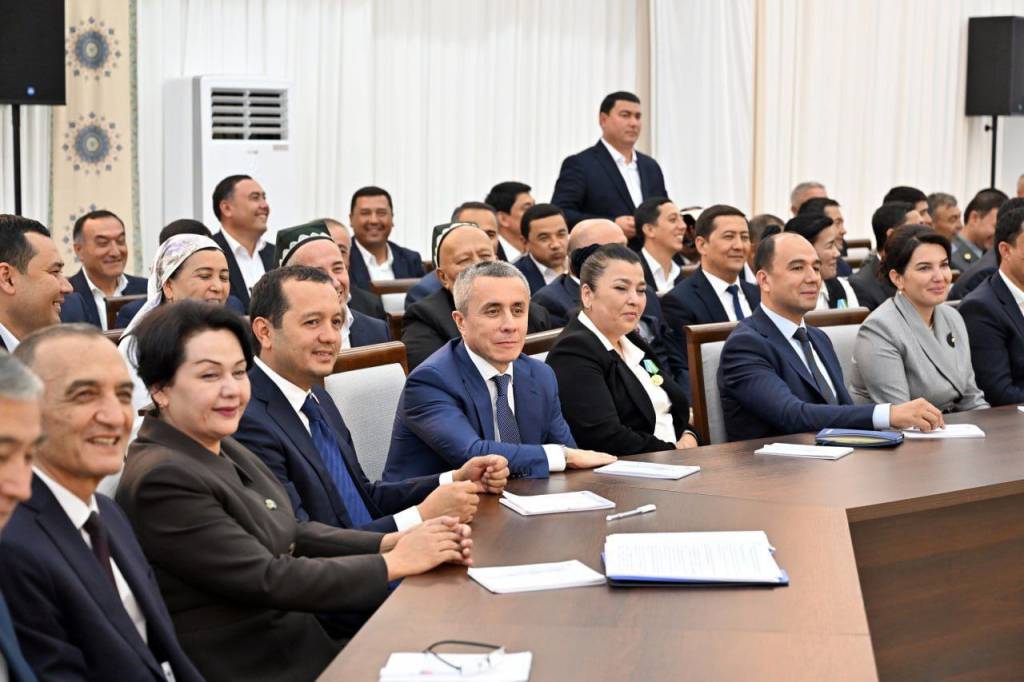
Following the meeting, reports from regional and sectoral leaders were heard, and an exchange of views took place with entrepreneurs and representatives of the public.

UzA

English
Chinese
Turkish
Tajik
Kyrgyz
Turkmen
Japanese
Arabic
English
French
Spanish
Русский
German
Ўзбек
Oʻzbek
Қазақ
Tasks defined for the development of Namangan region

On September 16, President Shavkat Mirziyoyev chaired a meeting in Uychi district to discuss measures for the socio-economic development of Namangan region.

It was noted that significant results have been achieved in the region, reflected in economic growth and the improvement of people’s well-being. Over the past eight years, $7 billion of foreign investment has been attracted to the region, and nearly 8,000 new enterprises have been established. The range of exported products has doubled and now exceeds one thousand items.

Today, 82 percent of the working-age population is employed in small businesses and entrepreneurship. The average real income per capita has tripled. Most importantly, the residents of Namangan feel positive changes in their daily lives.

At the meeting, an analysis was conducted on ways to maintain the current pace and increase efficiency. In particular, the tasks were set to attract $4.2 billion of investments by the end of the year, raise exports to $1 billion, provide employment for 323,000 people, and lift 26,000 families out of poverty.

The Head of State put forward an important initiative for the improvement of mahallas. As part of this initiative, the “Place of Development and Leadership” program will be launched. It will cover 4 districts each in Fergana, Samarkand, and Tashkent regions, 2 districts in other regions, as well as 328 of the most vulnerable mahallas nationwide.

In a short time, the poverty level in Namangan has decreased by 2.5 times. Thanks to the growth of entrepreneurial activity and an increase in average wages, 62,000 migrants have returned to the region over the past two years.

The reform headquarters has been instructed to develop a master plan for the scenic areas of the region. The implementation of relevant projects will make it possible to create 50,000 new jobs and sources of income next year. For example, along 40 kilometers of rivers and canals passing through Pap, Turakurgan, Uychi, Uchkuprik, and Chust, it will be possible to build 650 service facilities and provide employment for 10,000 people.

Today, one-third of the region’s industry and half of its exports are accounted for by the textile sector. Entrepreneurs in Namangan are national leaders in working with brands. To expand investment and cooperation with international brands, a dedicated project office will be opened in the region within a month. The number of textile enterprises with international certification will be increased to 50.

Responsible officials have been instructed to establish trade houses of at least 1,000 square meters in Warsaw and London by the end of the year. Overall, textile exports from Namangan are expected to reach $500 million this year, and within two years, 25 large projects with a total value of $1 billion are planned to be launched.

Since the beginning of the year, the region has been visited by 1.2 million foreign and 2 million domestic tourists, with tourism revenues exceeding $200 million.

At the same time, it was emphasized that the potential of one of the most attractive districts of the region – Chartak – is not being fully utilized. Basic services such as online information, booking systems, and cultural and entertainment facilities are lacking. Therefore, Chartak will be transformed into a year-round tourist hub of the valley, with $50 million to be allocated for the development of its infrastructure.

In cooperation with the World Bank, as part of the Medium-Sized Cities Development Project, Furkat Park will be reconstructed and nearly doubled in size this year. Along the Chartaksay River, 11 kilometers of pedestrian and bicycle paths will be built.

As part of the comprehensive development program, 7 kilometers of the banks of the Chartaksay River and the Great Namangan Canal will be concreted, and 30 hectares of usable land will be created. Here, in harmony with the perennial orchards, large sanatorium and resort facilities will be established.

Around the Chartak Reservoir, a tourist complex with hotels, restaurants, and recreational areas will be built. In Pap district, on an area of 1,200 hectares around Lake Arashan, a large-scale tourist center will be created, designed to receive up to 1 million tourists annually.

To train personnel in the tourism sector, starting from the next academic year, a joint faculty will be established at Namangan State University in cooperation with Krems University (Austria).

The President paid special attention to issues of developing social infrastructure.

For a long time, the roads connecting the Uychi, Uchkurgan, and Naryn districts with the regional center remained congested. A new 480-meter bridge across the Naryn River is currently being built, with an investment of 63 billion UZS. In addition, reconstruction has begun on the old 180-meter bridge across the Karadarya, built 63 years ago, which connects Namangan and Andijan regions. Upon completion, the traffic capacity will double, and travel time will be reduced by 1.5 times.

The Pungan – Namangan highway, which connects the regional center with the capital, will also be reconstructed. Up to 15,000 vehicles travel this road daily. The reconstructed section will be 75 km long, expanded to four lanes with a concrete surface. The project cost amounts to $246 million.

Unresolved water supply issues persist in the region: 30 mahallas remain unconnected to the centralized system, and 21 percent of the networks require repair. Many appeals are also related to sewage. This year, 800 billion UZS have been allocated to improve the water management system. By the end of the year, 130 kilometers of water supply and sewage networks, and 11 hydraulic structures are to be completed.

The Kurashkhona water management facility, which supplies Namangan with drinking water, was built 70 years ago and today operates at less than half of its capacity. It will be reconstructed in cooperation with the European Bank for Reconstruction and Development.

Namangan will soon become a city with a population of over one million, necessitating the expansion of its preschool institution network. Previously, benefits were announced for entrepreneurs in this sector. Taking advantage of these opportunities, 5,000 new kindergarten places need to be created in Namangan this year, and 15,000 next year. International standards and dual education will be introduced in 49 vocational schools of the region.

Over the past three months, within the framework of the “Step to an Active Life” program, nearly 3,000 people in need have received care services, as a result of which 350 people have been employed. The National Agency for Social Protection has also been tasked with introducing similar services for people who have dementia and Parkinson’s disease.

“Today, together with you, we have set new goals for the development of cities and districts, and for improving the living conditions of the population. If we act jointly, we will achieve even greater results. Together with the proactive, hardworking, and enterprising people of Namangan, we will turn the region into one of the most well-maintained and prosperous in our country”, Shavkat Mirziyoyev emphasized.

Following the meeting, reports from regional and sectoral leaders were heard, and an exchange of views took place with entrepreneurs and representatives of the public.

UzA