Tashkent’s European Hub: Which aspects of the Uzbekistan President’s visit to Belgrade are evolving from mere declarations into tangible projects
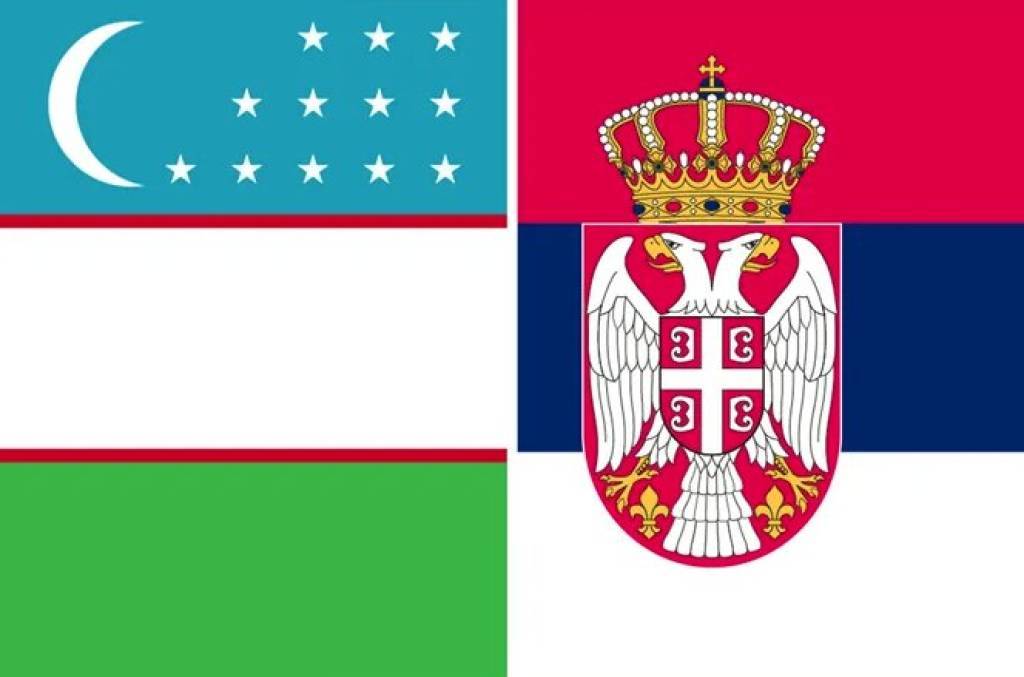
Seven centuries ago, the caravan routes of the Great Silk Road and Balkan trade routes linked Eurasia into a unified space: goods moved from Samarkand through Constantinople to the Adriatic, boosting the economies of intermediary cities. Today, Eurasia is reorganizing its routes, with Central Asia and the Balkans, two historically pivotal crossroads of civilizations, rejoining the same logistical and political system.
The first official visit of the President of Uzbekistan Shavkat Mirziyoyev to Serbia on September 6-7 should be seen in this context, marking a significant milestone in bilateral relations.
On the Serbian side, the upcoming historic visit is already being described with high praise. President Aleksandar Vučić announced the visit, calling it “a strong impetus for the further development of relations”, and affirmed the mutual willingness to strengthen the partnership. During a reception in Belgrade celebrating Uzbekistan’s 35th independence anniversary, attended by Serbian President’s spouse Tamara Vučić, National Assembly Speaker Ana Brnabić, Prime Minister Đuro Macut, and seven government officials, Uzbekistan’s Ambassador to Serbia Oybek Shakhavdinov stated: “I am confident that this historic visit will be another major milestone and will add a new strategic dimension to our relations”. Diplomatically, the selection of participants at the reception clearly reflected Serbia’s political leadership priorities.
Balance in strategic decision-making
The return visit to Belgrade will take place less than a year after Aleksandar Vučić made his first official visit to Tashkent on October 28-31, 2025. President Shavkat Mirziyoyev called the summit a historic milestone, signifying a new phase in bilateral ties. The event produced a Joint Declaration and a series of intergovernmental and interagency agreements, covering investment promotion and protection, economic collaboration, tourism, engineering, cutting-edge technologies, and artificial intelligence. They also signed a memorandum on labor migration. The parties also agreed to create an Intergovernmental Commission on Economic Cooperation.
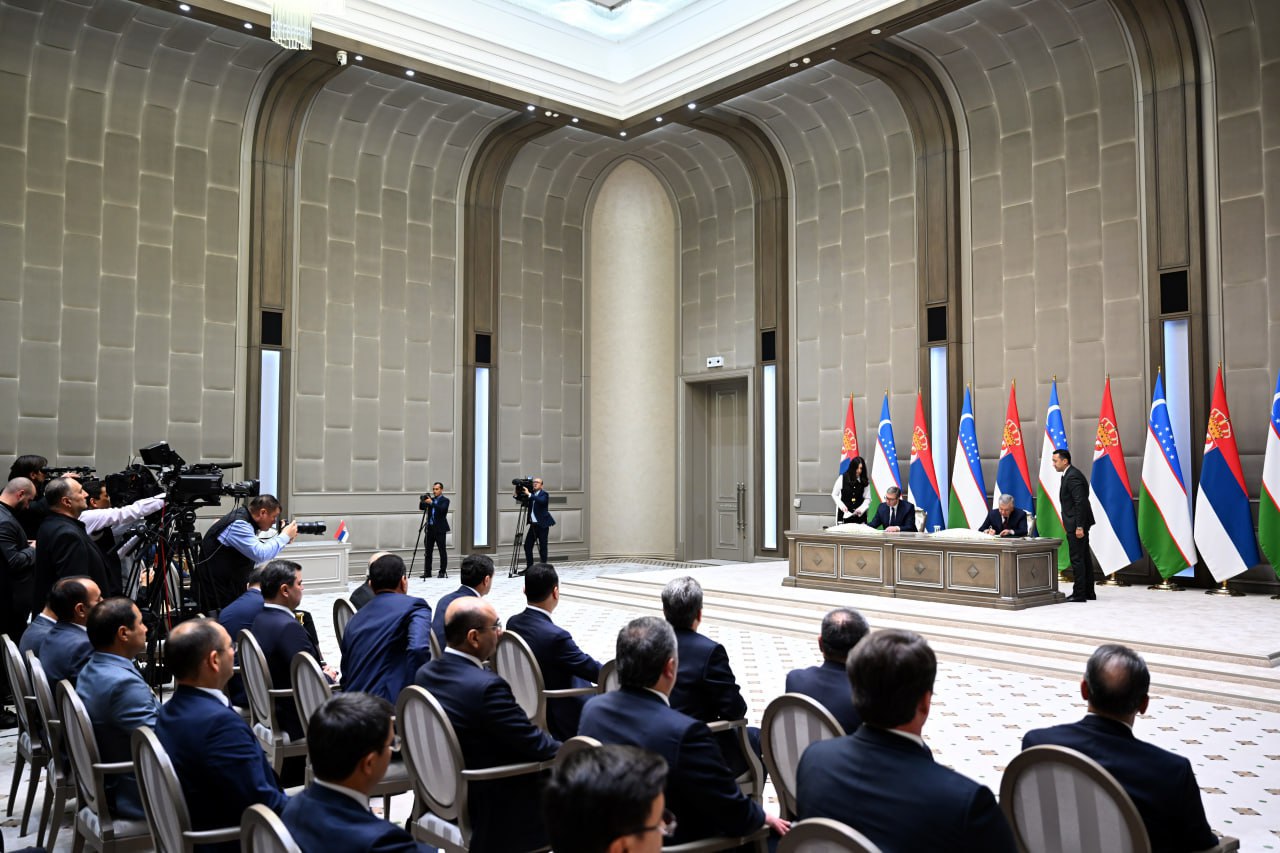
The crucial point is not just signing, but how quickly these documents become legal reality. By 2026, Uzbekistan’s President ratified two major agreements on investment protection and economic cooperation, delegating their implementation to specific government agencies. In May, Shavkat Mirziyoyev met with Serbian Foreign Minister Marko Đurić, who invited him to visit Belgrade. On July 24, the two leaders discussed upcoming contacts and preparations for the summit in a phone call. This busy schedule suggests both sides view the agenda as an investment project, complete with deadlines, responsibilities, and milestones.
Partner profile: Economy featuring a distinctive trade structure
Serbia’s significance to Uzbekistan is based not on its domestic market size but on a unique combination of three assets that no other European country has in the same arrangement.
The primary asset is its trade regime. Belgrade is connected to the EU through the Stabilisation and Association Agreement, participates in CEFTA, has a free trade agreement with the Eurasian Economic Union, and, as of July 1, 2024, with China. Products produced in Serbia enjoy duty-free or preferential access to markets in the European Union, the Western Balkans, the EAEU, and China. This presents an opportunity for Uzbek exporters to join European supply chains while maintaining their preferential status.
The second asset is the digital industry. Serbia’s ICT services exports hit a historic €4.552 billion in 2025, up 10% annually and nearly tenfold over ten years.
The third asset is infrastructure, including its position along Pan-European Transport Corridor X, the Danube River network with access to Black Sea ports, and 15 free economic zones providing tax and customs incentives. Meanwhile, the economy remains resilient: after 3.9 percent growth in 2024, GDP grew about 2 percent in 2025, with the World Bank predicting a return to growth rates of 3-4 percent.
Pragmatics of relations: Four key areas of convergence
Logistics. For landlocked Uzbekistan, transport policy is crucial for export competitiveness. Freight along the Trans-Caspian International Transport Route, also known as the Middle Corridor, rose from 840,000 tons in 2021 to an estimated 4.5-4.7 million tons by 2025. The World Bank projects the corridor’s potential at 11 million tons by 2030. Serbia serves as the western terminal: cargo crossing the Caspian and proceeding via the Danube – Black Sea network can then be distributed across EU markets. Air connectivity supports these overland routes: Air Serbia is considering direct flights to Tashkent and Samarkand, and Aleksandar Vučić has suggested establishing a preferential trade regime between the two nations, potentially leading to free trade.
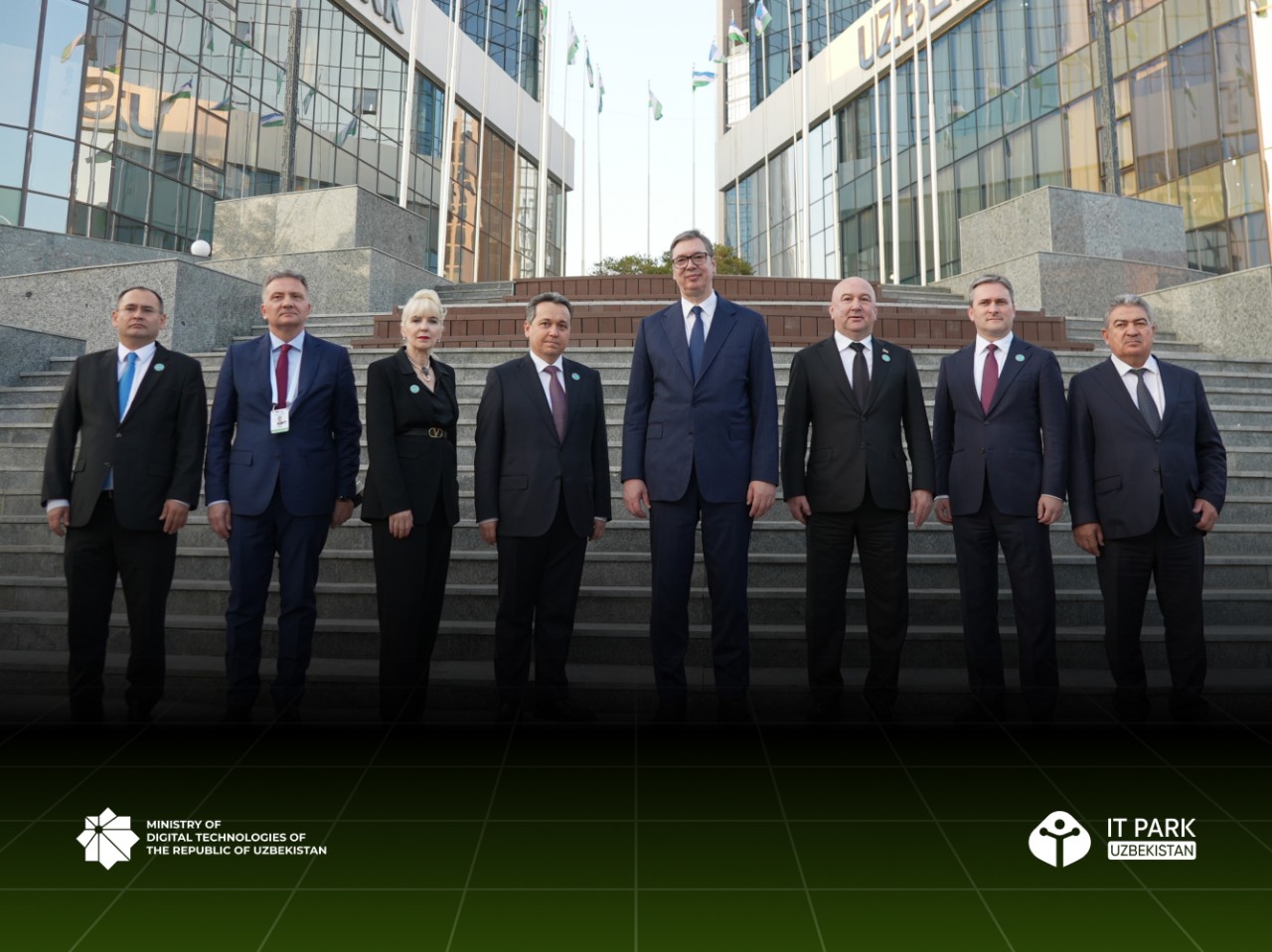
Technology offers the greatest potential for rapid expansion. During his October visit, the President of Serbia visited the Ministry of Digital Technologies and IT Park Uzbekistan. They agreed to create a joint IT venture in Serbia to carry out projects, including Uzinfocom’s Palm ID biometric system. Uzbekistan will invest in server infrastructure and engineering talent, while Serbia will handle deployment and promotion within its local market and later in the EU. A $1 million support program is also being considered for Uzbek startups in Europe and Serbian projects in Central Asia. Minister Sherzod Shermatov explained the model as follows: “Serbia’s IT sector has strong potential in Eastern Europe. We can build synergy: Serbian companies will secure contracts, and we will help them find specialists in Uzbekistan. This way, their profits will increase – as will ours. It will boost exports and create jobs”. Mihailo Jovanović, Director of Serbia’s Office for Information Technologies and eGovernment, described Serbia’s role as a gateway for Uzbek companies exporting to Western Europe and the U.S.
Labor Mobility. The Memorandum of Cooperation on Migration includes a technical protocol focused on the organized recruitment of Uzbekistan citizens, the exchange of labor market data, and collaborative efforts to prevent illegal migration. Practical mechanisms were initiated at the International Migration Forum in Tashkent on May 18-19, 2026, with Serbia’s labor minister attending. For Tashkent, this initiative aims to diversify labor migration destinations and ensure migration flows are managed within a secure legal framework.
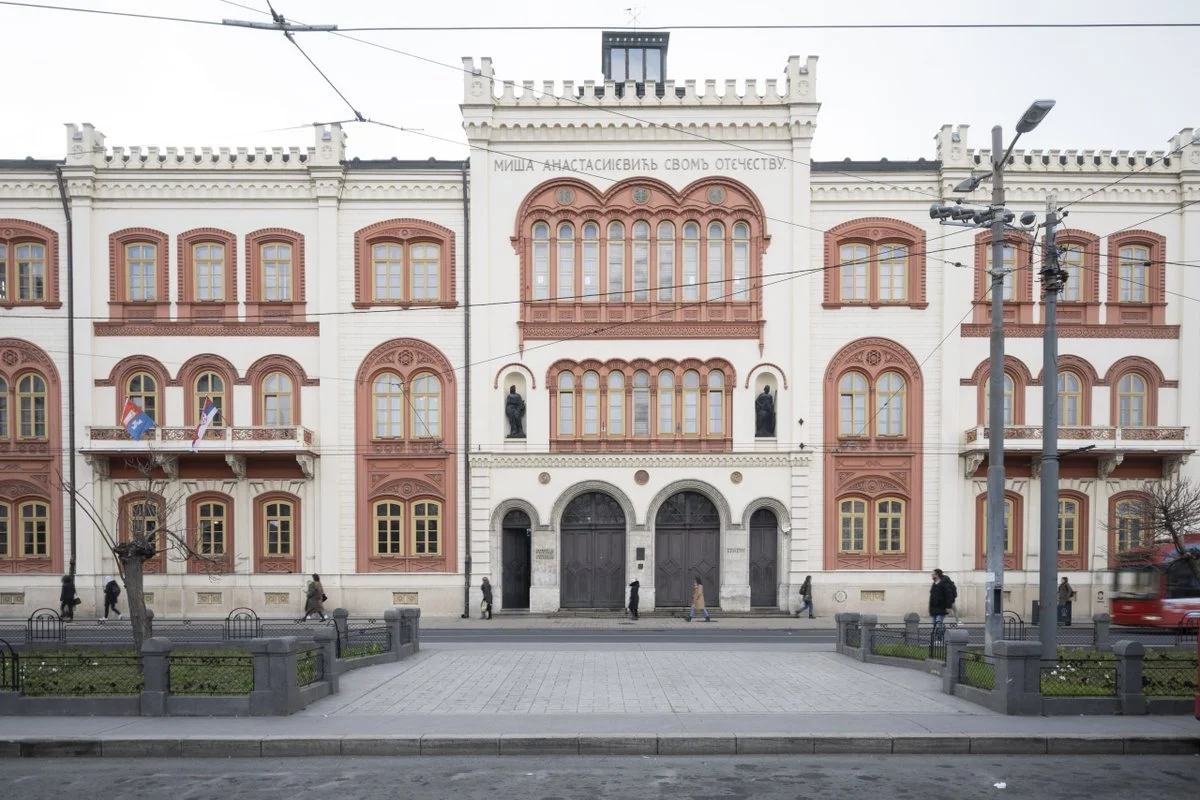
Agricultural Science and Education. Serbia’s expertise in breeding, seed production, and processing is highly relevant to Uzbekistan’s efforts to modernize its agriculture. Talks are ongoing about establishing a branch of Belgrade University in Uzbekistan, offering programs in IT, engineering, and blockchain, as well as developing joint agricultural programs with the University of Novi Sad.
Agenda ahead of the summit: from documents to mechanisms
The main reason for the visit is the discrepancy between political momentum and trade data. Bilateral trade totals tens of millions of dollars, which is less than one percent of Uzbekistan’s total foreign trade of $81.2 billion in 2025, a 20.7 percent increase. This explains why the business initiatives are being fast-tracked: in February 2026, the Uzbekistan Chamber of Commerce and Industry signed agreements to create a Business Council, establish a Trade House in Belgrade and another in Uzbekistan, host a Made in Uzbekistan exhibition in Serbia, and boost projects in electrical engineering, mechanical engineering, the food sector, and textiles.
At the same time, parliamentary ties are strengthening. A delegation from Uzbekistan’s Oliy Majlis, led by Tanzila Narbayeva, met in Belgrade with President Vučić, Deputy Prime Minister and Economy Minister Adrijana Mesarović, and Serbian Parliament Speaker Ana Brnabić. Brnabić called Uzbekistan “an important and reliable partner in Central Asia”. Ambassador Shahavdinov added that five Serbian ministers have visited Uzbekistan this year.
Strategic rationale
Uzbekistan’s economy has expanded from $55 billion to $148 billion, with exports tripling, and aims to reach $240 billion by 2030. The economy is growing strongly, with GDP up 8.7% in the first quarter of 2026. Such significant size and growth require new entry points to European markets. Serbia offers a practical solution: a jurisdiction with preferential access to the EU, EAEU, and China, a developed digital sector, free economic zones, and river-based logistics. For Serbia, Uzbekistan is Central Asia’s largest market, with around 40 million people, serving as a regional gateway.
The September 7-8 visit marks the end of a cycle that began with Uzbekistan’s first Ambassador to Serbia submitting credentials, and it moves bilateral relations into the implementation stage. The real measure of success will be how quickly existing agreements lead to contracts, direct flights, production facilities, and jobs, rather than just the number of signed documents. This pace will ultimately show Serbia’s true significance in Tashkent’s broad and pragmatic long-term foreign economic strategy.
Abduaziz Khidirov,
Master’s Student,
Academy of Public Policy and Administration under the President of the Republic of Uzbekistan
UzA