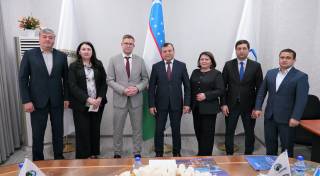
As part of the visit by the government delegation of the Republic of Belarus, a meeting of the Uzbekistan – Belarus Business Council was held in Tashkent, marking another step in the development of trade, economic, and investment cooperation between the two countries.

The event was attended by the Chairman of the Chamber of Commerce and Industry of Uzbekistan, Davron Vakhabov, the Chairman of the Belarusian Chamber of Commerce and Industry, Mikhail Myatlikov, representatives of relevant ministries and agencies, industry associations, and business circles of both states.

Opening the meeting, Davron Vakhabov emphasized that Uzbekistan and Belarus have complementary economies, significant resource potential, and competitive industries. At the end of 2025, bilateral trade between the countries grew by almost one-third to a record $965 million.

At present, 242 enterprises with Belarusian capital are operating in Uzbekistan, of which 57 are joint ventures. As noted during the meeting, this confirms the practical effectiveness of bilateral cooperation.

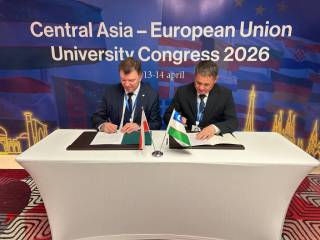
“Yesterday, several documents were signed, and today we signed about 15 more agreements. The outcome of our meetings will be the conclusion of contracts worth more than $100 million. At the Business Council meeting, we discussed the possibility of opening the Uzbekistan Trade House in Minsk. We are very much looking forward to its opening, as Uzbek products are highly popular among Minsk residents. We have already discussed this issue with my colleague, and we expect a visit from representatives of the Chamber of Commerce and Industry of Uzbekistan in the near future. We are preparing venues where the possibility of opening the Trade House will be considered in detail. Today’s cooperation covers a wide range of areas: deliveries of Belarusian machinery, organization of assembly production, and localization of manufacturing in Uzbekistan. We are developing cooperation in the pharmaceuticals, cosmetics, and light industries. In particular, the Belarusian company Martformel has already opened several factories in Uzbekistan, and their products are successfully sold on the Belarusian market. These are truly joint projects in which both sides are interested. The tone set by the heads of our states and their constructive relations motivates us toward even closer cooperation. Following the results of 2025, trade turnover between our countries continued to grow: both exports from Belarus to Uzbekistan and imports of Uzbek products to Belarus increased. We are growing toward each other. It is a two-way road”, said Chairman of the Belarusian Chamber of Commerce and Industry Mikhail Myatlikov.

During the event, key areas for further cooperation were outlined. These include agriculture and the food industry, mechanical engineering, the textile, leather, and footwear industries, furniture, woodworking, and the implementation of new investment projects within the framework of sectoral commissions.

Aziza Alimova, UzA

English
Chinese
Turkish
Tajik
Kyrgyz
Turkmen
Japanese
Arabic
English
French
Spanish
Русский
German
Ўзбек
Oʻzbek
Қазақ
Tashkent hosts a meeting of the Uzbekistan – Belarus Business Council
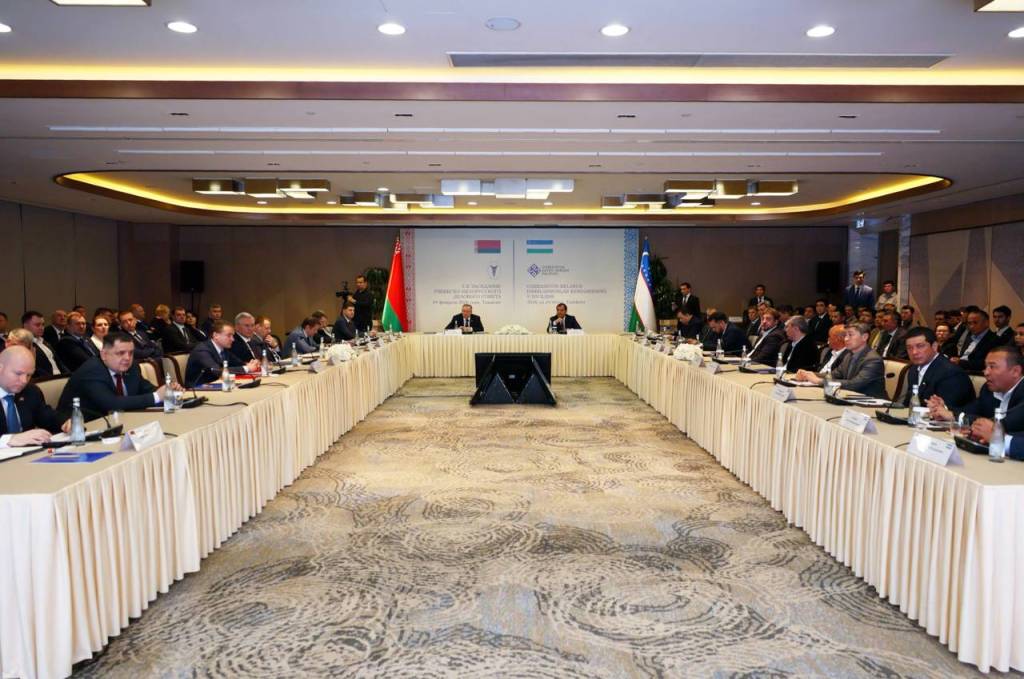
As part of the visit by the government delegation of the Republic of Belarus, a meeting of the Uzbekistan – Belarus Business Council was held in Tashkent, marking another step in the development of trade, economic, and investment cooperation between the two countries.

The event was attended by the Chairman of the Chamber of Commerce and Industry of Uzbekistan, Davron Vakhabov, the Chairman of the Belarusian Chamber of Commerce and Industry, Mikhail Myatlikov, representatives of relevant ministries and agencies, industry associations, and business circles of both states.

Opening the meeting, Davron Vakhabov emphasized that Uzbekistan and Belarus have complementary economies, significant resource potential, and competitive industries. At the end of 2025, bilateral trade between the countries grew by almost one-third to a record $965 million.
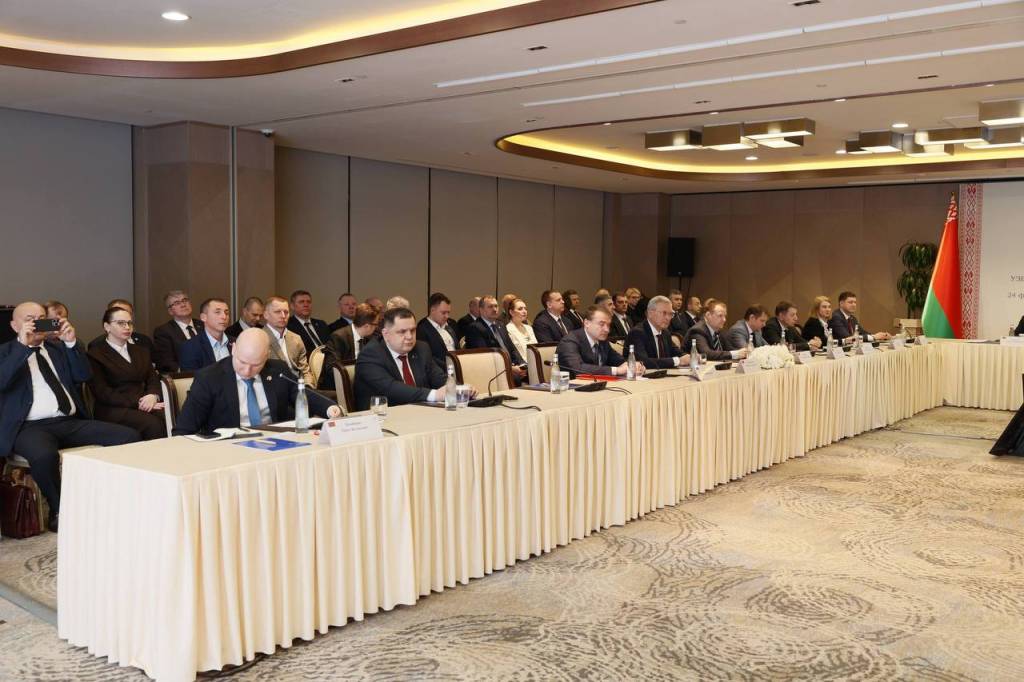
At present, 242 enterprises with Belarusian capital are operating in Uzbekistan, of which 57 are joint ventures. As noted during the meeting, this confirms the practical effectiveness of bilateral cooperation.

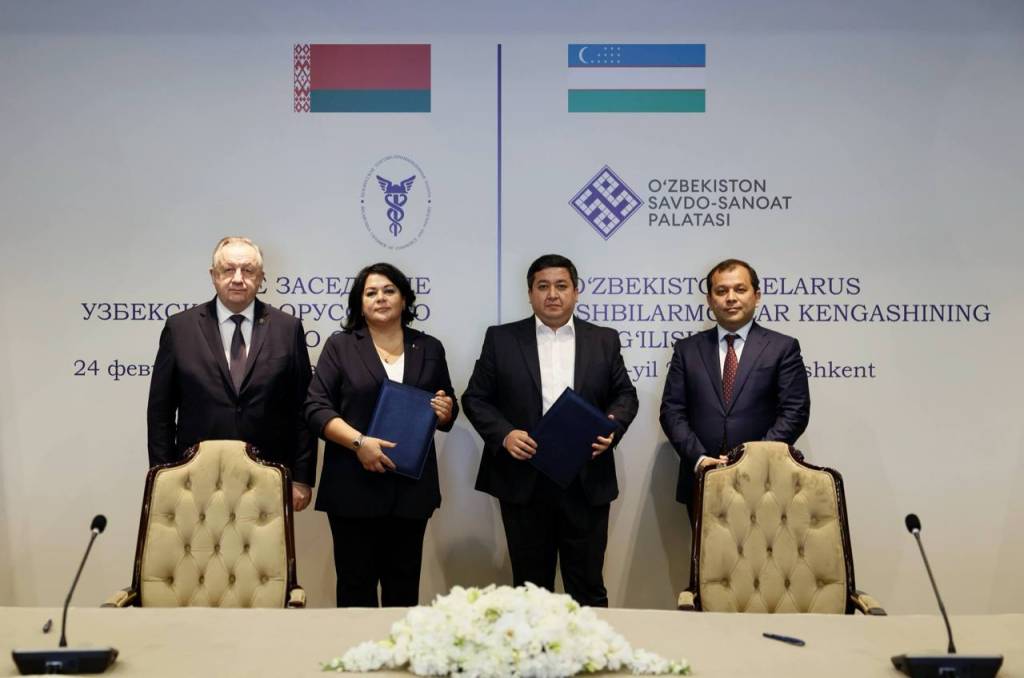
“Yesterday, several documents were signed, and today we signed about 15 more agreements. The outcome of our meetings will be the conclusion of contracts worth more than $100 million. At the Business Council meeting, we discussed the possibility of opening the Uzbekistan Trade House in Minsk. We are very much looking forward to its opening, as Uzbek products are highly popular among Minsk residents. We have already discussed this issue with my colleague, and we expect a visit from representatives of the Chamber of Commerce and Industry of Uzbekistan in the near future. We are preparing venues where the possibility of opening the Trade House will be considered in detail. Today’s cooperation covers a wide range of areas: deliveries of Belarusian machinery, organization of assembly production, and localization of manufacturing in Uzbekistan. We are developing cooperation in the pharmaceuticals, cosmetics, and light industries. In particular, the Belarusian company Martformel has already opened several factories in Uzbekistan, and their products are successfully sold on the Belarusian market. These are truly joint projects in which both sides are interested. The tone set by the heads of our states and their constructive relations motivates us toward even closer cooperation. Following the results of 2025, trade turnover between our countries continued to grow: both exports from Belarus to Uzbekistan and imports of Uzbek products to Belarus increased. We are growing toward each other. It is a two-way road”, said Chairman of the Belarusian Chamber of Commerce and Industry Mikhail Myatlikov.
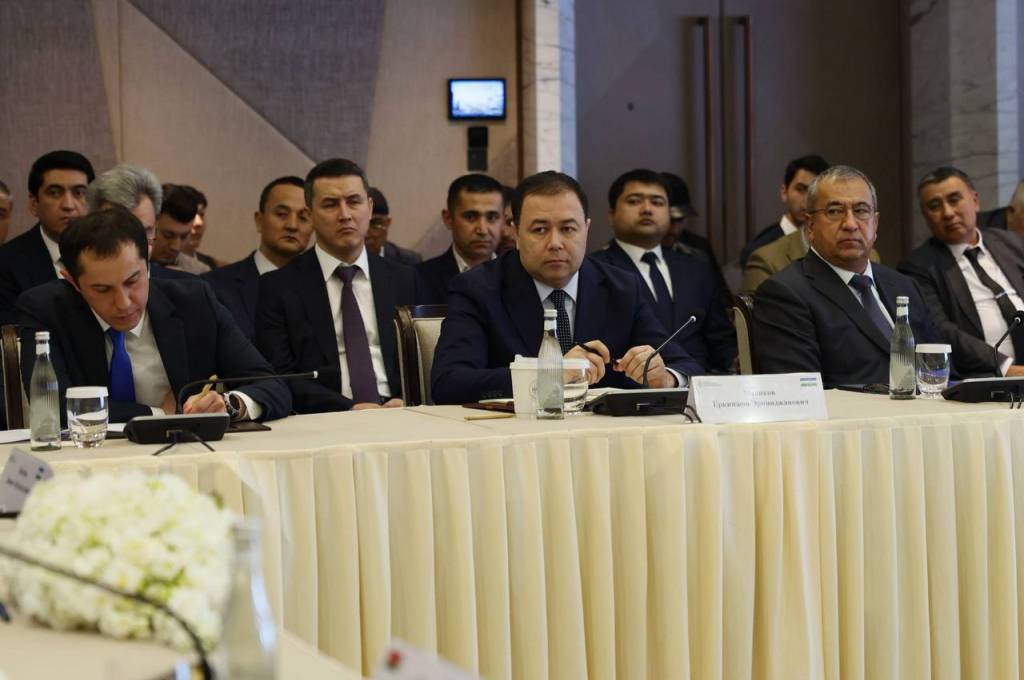
During the event, key areas for further cooperation were outlined. These include agriculture and the food industry, mechanical engineering, the textile, leather, and footwear industries, furniture, woodworking, and the implementation of new investment projects within the framework of sectoral commissions.
Aziza Alimova, UzA