
The Turkish News Agency has prepared an article about Tashkent’s rich history and culture.

The article notes that Tashkent, the largest city in Central Asia, attracts tourists with its ancient mosques, madrasahs, and architectural heritage. The city, which celebrated its 2200th anniversary in 2009, combines a rich history with a modern rhythm of life.

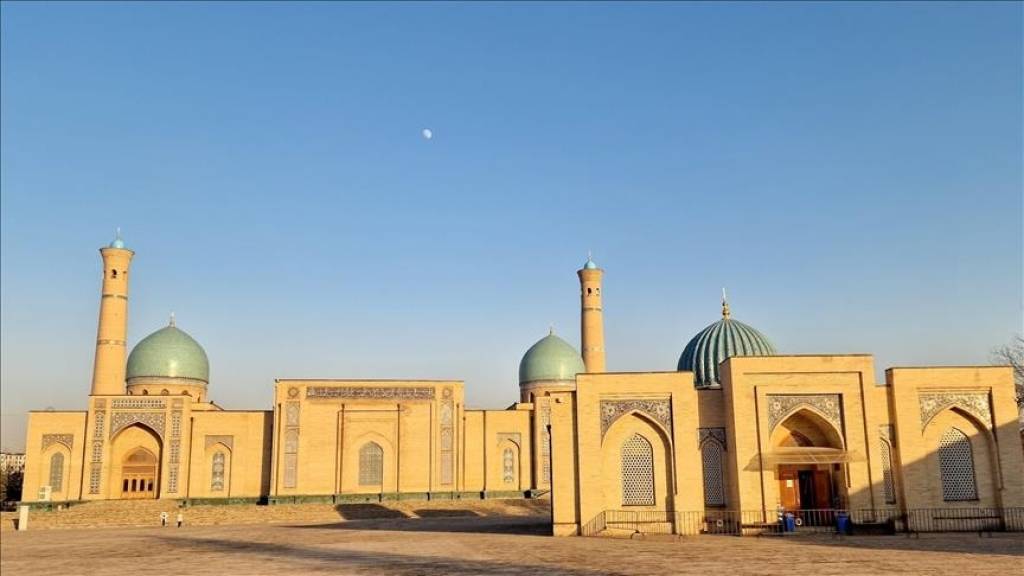
The Hazrati Imam religious complex is one of the main attractions of Tashkent. One of the first preachers of Islam in the region, Hazrati Imam (Al-Kaffal al-Shashi), rests here.

The complex includes the 16th-century Barakhan Madrasah, which once housed the Department of Muslim Board of Uzbekistan. The building, with its medieval structure, resembles the historical madrasahs and mosques of Samarkand.

https://cdnuploads.aa.com.tr/uploads/userFiles/4f62407a-abf2-4464-9690-b6acbca575b5/06_2025%2F12_OCAK%2F03%2F20250114_2_67244563_108538065.jpg

During the period of the former Soviet Union, the madrasah functioned as a dormitory and warehouse. Later, it became the first building of the Department of Muslim Board of Uzbekistan.

Another unique place is Muyi Muborak Madrasah. A sacred relic – the Quran of Uthman, dated to the 7th century (a manuscript of the Quran, stained with the blood of the third Caliph, Uthman), is kept here. This historical artifact and other ancient manuscripts attract many visitors.

Tashkent, famous for its unique historical monuments, is proud of its madrasahs, each of which preserves a piece of the past and impresses with architectural splendor.

https://www.aa.com.tr/uploads/userFiles/4f62407a-abf2-4464-9690-b6acbca575b5/06_2025%2F12_OCAK%2F03%2F20250114_2_67244563_108538067.jpg

Kukeldash Madrasah, located on Chorsu Hill in the old city of Tashkent, is one of the most impressive historical buildings in the capital. The madrasah was built in 1551-1575 on the initiative of Dervishkhan, known as Kukeldash.

Today, only two floors of the madrasah have been preserved, which continue their mission, combining the status of a historical monument with the function of an Islamic educational center where students learn spiritual sciences.

The architectural gems are a reminder of the region’s rich history and a living example of the synthesis of spirituality and art.

Travelers experience the past and get acquainted with the cultural heritage that has become integral to Central Asia’s identity.

UzA

English
Chinese
Turkish
Tajik
Kyrgyz
Turkmen
Japanese
Arabic
English
French
Spanish
Русский
German
Ўзбек
Oʻzbek
Қазақ
Tashkent enchants travelers: Anadolu Agency tells about the ancient city

The Turkish News Agency has prepared an article about Tashkent’s rich history and culture.

The article notes that Tashkent, the largest city in Central Asia, attracts tourists with its ancient mosques, madrasahs, and architectural heritage. The city, which celebrated its 2200th anniversary in 2009, combines a rich history with a modern rhythm of life.

The Hazrati Imam religious complex is one of the main attractions of Tashkent. One of the first preachers of Islam in the region, Hazrati Imam (Al-Kaffal al-Shashi), rests here.

The complex includes the 16th-century Barakhan Madrasah, which once housed the Department of Muslim Board of Uzbekistan. The building, with its medieval structure, resembles the historical madrasahs and mosques of Samarkand.

https://cdnuploads.aa.com.tr/uploads/userFiles/4f62407a-abf2-4464-9690-b6acbca575b5/06_2025%2F12_OCAK%2F03%2F20250114_2_67244563_108538065.jpg

During the period of the former Soviet Union, the madrasah functioned as a dormitory and warehouse. Later, it became the first building of the Department of Muslim Board of Uzbekistan.

Another unique place is Muyi Muborak Madrasah. A sacred relic – the Quran of Uthman, dated to the 7th century (a manuscript of the Quran, stained with the blood of the third Caliph, Uthman), is kept here. This historical artifact and other ancient manuscripts attract many visitors.

Tashkent, famous for its unique historical monuments, is proud of its madrasahs, each of which preserves a piece of the past and impresses with architectural splendor.

https://www.aa.com.tr/uploads/userFiles/4f62407a-abf2-4464-9690-b6acbca575b5/06_2025%2F12_OCAK%2F03%2F20250114_2_67244563_108538067.jpg

Kukeldash Madrasah, located on Chorsu Hill in the old city of Tashkent, is one of the most impressive historical buildings in the capital. The madrasah was built in 1551-1575 on the initiative of Dervishkhan, known as Kukeldash.

Today, only two floors of the madrasah have been preserved, which continue their mission, combining the status of a historical monument with the function of an Islamic educational center where students learn spiritual sciences.

The architectural gems are a reminder of the region’s rich history and a living example of the synthesis of spirituality and art.

Travelers experience the past and get acquainted with the cultural heritage that has become integral to Central Asia’s identity.

UzA