Saeed Al-Hassani: “Uzbekistan is a bridge between the Arab Gulf States and Central Asia”
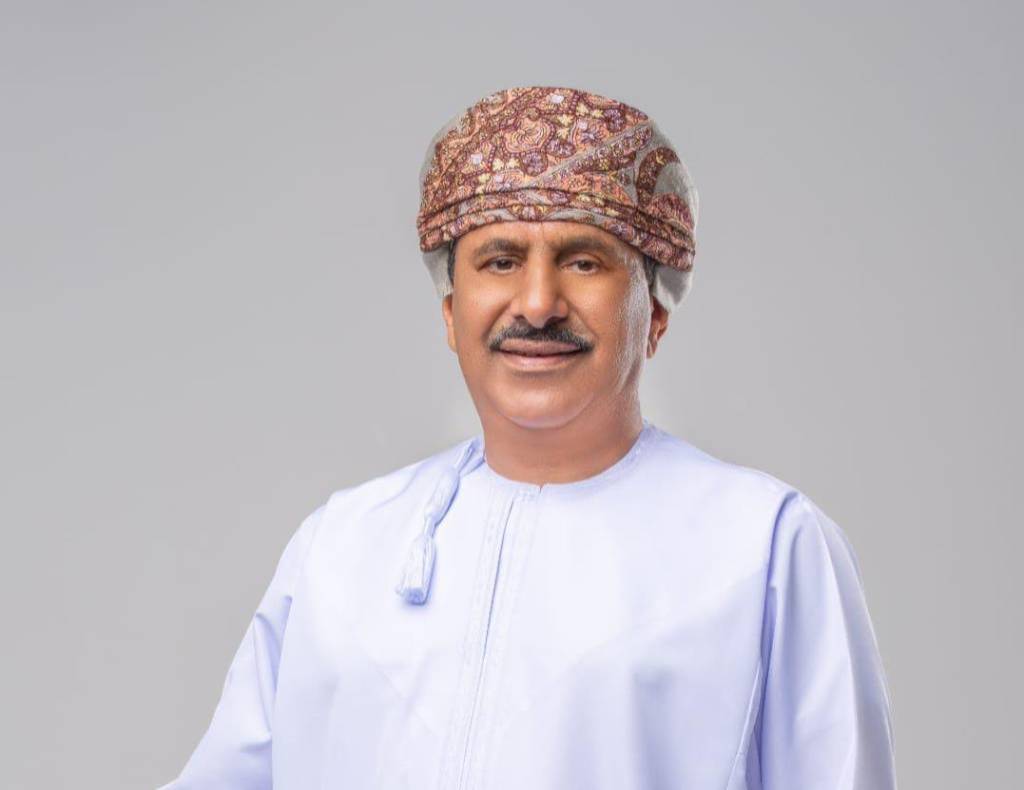
Recently, a forum of think tanks in the “Central Asia + Gulf Cooperation Council (GCC)” format was held in Tashkent.
The second meeting on “Current issues of cooperation between Central Asian countries and the Gulf States in the context of a changing regional order” was organized by the Institute for Strategic and Regional Studies under the President of the Republic of Uzbekistan in cooperation with the Gulf Research Center.
The forum brought together heads of leading research institutes, diplomats, and experts from Central Asian countries, Azerbaijan, and the Gulf states.
The UzA correspondent spoke with Ali bin Khalfan bin Saeed Al-Hassani, a member of the Sultanate of Oman’s Consultative Council, about the forum’s significance, the role of think tanks, and prospects for further cooperation.
– How do you assess the role of think tanks from Gulf countries and Central Asia in shaping a more sustainable institutional framework for interregional cooperation?
– Today, the activities of think tanks from the Gulf countries and Central Asia are taking on fundamentally new significance as an instrument for building a sustainable institutional architecture for interregional interaction. This is not merely about exchanging opinions at the expert level, but about creating an intellectual infrastructure for strategic partnership between the two regions.
First, partnerships among think tanks enable a deeper understanding of key security challenges, including the impact of developments in Iran and Afghanistan, and the transformation of global logistics routes. Under current conditions, economic interdependence is closely linked to regional stability, and expert platforms serve as mechanisms for aligning long-term approaches.
Second, regular dialogue between research institutions lays the groundwork for moving from political statements to practical initiatives. In particular, the establishment of permanent coordination mechanisms for cooperation is under discussion, including specialized formats on security, investment, and transport chains. Such initiatives can turn expert interaction into a supporting element for systematizing the “Central Asia – GCC” format.
Third, joint research enables the development of coordinated recommendations for governments across energy, infrastructure, food security, and humanitarian partnership. This is particularly important given shared challenges – from the instability of transit routes to the intensification of geoeconomic competition.
Finally, the participation of Uzbekistan’s analytical institutions in this process is system-forming. Uzbekistan today serves as a key initiator in building a systematic expert dialogue between the regions and in promoting regular analytical forums, which are gradually forming a sustainable foundation for long-term partnership.
Thus, partnerships among think tanks are becoming a key mechanism for building strategic trust and a coordinated agenda for interregional cooperation.
– At present, the Gulf countries are actively revising their foreign economic and foreign policy strategies. How important is developing cooperation with Central Asia, particularly with Uzbekistan, within this transformation?
– The intensification of cooperation between the Gulf countries and Central Asia is an integral part of the profound transformation of foreign economic strategy associated with the transition to a new development model.
First of all, the GCC countries are implementing large-scale national economic diversification programs, such as Vision 2030 in Saudi Arabia and We the UAE 2031 in the United Arab Emirates. In this context, the search for new investment directions is an objective necessity, since in the countries of the region, up to 40-50 percent of GDP and up to 70 percent of export revenues still depend on the oil and gas sector.
Central Asia is viewed as a promising destination for long-term capital placement. The region demonstrates stable economic growth of 4-6 percent per year, with a combined GDP exceeding $550-600 billion and a population exceeding 80 million. These indicators provide a solid foundation for expanding the Gulf countries’ investment engagement.
For the GCC countries, which import 85 percent of their food, ensuring food security is a top priority. In this regard, in addition to purchasing agricultural products, they are showing interest in investing in Central Asia’s agricultural sector to strengthen and control supply chains.
In addition, the Gulf countries plan to invest more than $150 billion in developing renewable energy by 2030, and a significant share of these funds may be directed to Central Asia, including Uzbekistan.
Amid growing geopolitical uncertainty, the GCC states are seeking to diversify their investment flows. Previously, about 60 percent of foreign investment in the region was directed to the United States and Europe, but today interest is gradually shifting toward emerging regions, including Central Asia.
Thus, cooperation with Central Asia is becoming an important factor in shaping the new foreign economic geography of the Gulf countries.
– How do you assess Uzbekistan’s potential to develop interregional transport and economic connectivity, and its impact on the growing interest among investment circles in the Gulf countries in Central Asia?
– Uzbekistan plays a key role in shaping a new architecture for transport and economic connectivity between Central Asia and the Gulf countries. A combination of geographical, economic, and institutional factors determines this.
First of all, Uzbekistan is one of the leading initiators of efforts to develop alternative transport routes between the regions. Of particular importance is the advancement of the Trans-Afghan transport corridor project, which can provide Central Asia with the shortest access to the ports of the Indian Ocean and significantly reduce cargo delivery times.
The development of such routes is particularly relevant against the backdrop of rising maritime transport costs and the instability of traditional logistics routes through the Strait of Hormuz. In an environment where freight costs may increase by up to 80 percent, and insurance expenses may double, the Gulf countries’ interest in alternative transport corridors through Central Asia is growing.
In addition, due to stable economic growth and the ongoing modernization of the public administration system, Uzbekistan is becoming one of the most attractive destinations for investment from the Gulf countries. According to estimates from international financial institutions, the country’s economic growth rate is expected to remain at 6.7-6.8 percent in the coming years.
An important factor has been the participation of Masdar and ACWA Power in implementing renewable energy projects, which has laid a foundation for a long-term technological partnership.
It should be noted that the expansion of transport connectivity and investment cooperation with the GCC countries is largely driven by the consistent foreign economic strategy of the President of the Republic of Uzbekistan, Shavkat Mirziyoyev, which aims to transform the country into a key logistics and investment hub in Eurasia.
In other words, Uzbekistan is gradually establishing itself as an important hub for interregional cooperation, serving as both a transit and an investment hub.
– In your view, what role can Uzbekistan play in advancing strategic, economic, and humanitarian cooperation between the Gulf countries and Central Asia amid a changing regional order?
– In the context of the transformation of the regional order, Uzbekistan’s role in developing cooperation between the Persian Gulf countries and Central Asia is system-forming.
First of all, the country serves as a driving force behind the institutionalization of interregional dialogue. The regular holding of analytical forums, the promotion of the “Central Asia – GCC” format, and its expansion to include Azerbaijan indicate the formation of a new multilateral platform for interaction.
In general, Uzbekistan’s foreign policy, focused on constructive dialogue and the development of partnerships with all key centers of power, is perceived by the Gulf countries as a factor in regional stability and predictability, which is particularly important against the backdrop of growing geopolitical tensions in the Middle East.
The personal initiative of President Shavkat Mirziyoyev plays an important role in intensifying interregional cooperation. Thanks to the efforts of Uzbekistan’s leader, cooperation with the GCC countries has become more comprehensive in recent years, encompassing not only the economic sphere but also political and humanitarian dimensions. High-level contacts have expanded significantly, cooperation with the sovereign wealth funds of the Gulf countries has intensified, and a new partnership agenda has taken shape in energy, transport, investment, and Islamic finance.
The humanitarian dimension is also particularly important. Projects in the field of Islamic cultural heritage, including the establishment of the Islamic Civilization Center in Tashkent and the restoration of the Imam al-Bukhari complex in Samarkand, are viewed in the Gulf countries as a significant contribution by Uzbekistan to strengthening a shared civilizational space.
Finally, economic liberalization and the modernization of the governance system are enhancing Uzbekistan’s appeal as a reliable partner for long-term cooperation in the investment, transportation, and technology sectors.
Overall, Uzbekistan is now recognized not merely as a participant but as one of the key architects of the emerging model of strategic partnership among the countries of Central Asia and the Gulf.
Interviewed by Utkir Alimov, UzA