Children are born with their rights, and our responsibility as adults is to nurture them, safeguard their health, and ensure a stable family life. Protecting the rights and interests of the future generation is a top priority in every country. In Uzbekistan, numerous effective projects are being executed in this direction, a testament to the government’s commitment and the fruitful collaboration between the government and international organizations, notably the United Nations Children’s Fund – UNICEF.

Uzbekistan National News Agency correspondent interviewed the UNICEF Representative in Uzbekistan, Ms. Regina Castillo.

– Ms. Castillo, what did you know about our country before coming to Uzbekistan? What is your impression about our country after you arrived?

 To be honest, I knew little. I knew about the ancient Silk Road, the marvelous cities of Samarkand and Bukhara and the diverse landscapes, ranging from the rolling Kyzylkum Desert to the lush Fergana Valley. I also knew data and statistics about Uzbekistan because I have been working in UNICEF and more specifically in the region of Europe and Central Asia for a long time. 

What I was not prepared to face was the enormous hospitality of the Uzbek people. I have been received warmly in all 8 countries where I have worked so far, but hospitality in Uzbekistan is unparallel. From my perspective, hospitality is the trademark of Uzbekistan. People receive you with open arms and if you enter with an open heart like the one, I try to have, then you are doubly welcomed!

I was also taken by the beauty of Tashkent with its wide streets, its green trees and its clean and safe streets. Safety is a scarce resource in many places around the world and I feel fortunate to live in a city as safe as Tashkent where I can walk freely as a woman without feeling exposed or threatened. And since I have been told that I look Uzbek with my dark hair and the olive skin of my Spanish ancestors, then I am and feel at home!

– How do you evaluate the reforms being carried out to protect the rights and interests of children in Uzbekistan? 

 I would like to point out that one of the first UN conventions that Uzbekistan ratified in the early years of its independence was the Convention on the Rights of the Child, and I am delighted to witness the Government’s commitment to fulfill all rights for all children in the country.

UNICEF commends the unprecedented reforms in the fields of health, education, child protection, and social protection, which have resulted in concrete results for millions of boys and girls, especially the most vulnerable. 

What impresses me the most, as a newcomer, is the Government’s determination and leadership to create a better future for children, as well as the quick pace of the reforms. For example, the past few years, the law on the children's ombudsperson came into force; the National Agency on Social Protection was established; and key legislative changes such as the criminalization of domestic violence. 

– In what areas does UNICEF support the Government of Uzbekistan in the best interests of children? Could you please share key achievements and future plans with us?

 This year, UNICEF Uzbekistan turns 30. During these three decades, UNICEF has been working together with the national partners, UN agencies and development organizations as well as communities and young people to provide its expertise and support to implement the state programmes on children. 

We share the best practices around the world, influence policy, leverage resources and implement the programmes that make a difference for children.

Let me start with our programme on health, nutrition, and WASH. 

In the last two years, UNICEF has reached over 15 million people with essential health services (42% of the population). Since 2021, UNICEF Uzbekistan has invested more than 25 million USD to deliver health programmes for children.

As a result of our joint efforts with the Government, child malnutrition has declined by 58%, while under-five mortality declined by 75% (1990-2022). 

As you might know, UNICEF is the biggest provider of life-saving vaccines for children and adults at the global level. In Uzbekistan, to support the National Expanded Programme of Immunization, we delivered 28 million vaccine doses every year. In 2022, nearly 4 million children under five and almost one million children under one were reached thanks to the UNICEF-support through procuring vaccines and cold chain improvements. 

By working with the Ministry of Health, we helped to improve perinatal care for 700,000 newborns. This means thousands of lives saved.

Key strategic focus areas on mother and child health include health systems strengthening, development of multisectoral policies and strategies, and community engagement to achieve sustainable results.

In Uzbekistan, UNICEF acts as the Coordinating Agency of the Local Education Group (LEG), and it is a leading agency in education. In this capacity, UNICEF facilitated the development of a Partnership Compact for Education Reform for 2023-2026. We collaborate with Ministry of Preschool and School Education and development partners to identify priority areas in relation infrastructure upgrading, curriculum reform, teacher professional development, learning assessment, and overall education governance. 

We support the national reform agenda towards quality and inclusive education for all children.

Starting from the pre-school level, UNICEF has accompanied the Government in the staggering increase in enrolment, one of the fastest increases at the global level. Now access to pre-school is reaching over 70%. UNICEF and Government collaboration includes the introduction of flexible and innovative alternative Early Childhood Education, the review of pre- and in-service teacher training. We established training centres for pre-school teachers in all regions.

In General Secondary Education, UNICEF is helping the Ministry of Preschool and School Education to develop students’ competencies and ensure children learn in inclusive and safe environments. In the past few years, UNICEF supported the development of quality textbooks. We helped with the upgrading of teacher training and professional development by establishment of new teacher professional standards.

Currently, we are supporting the Government in the modelling of inclusive education, enabling children with disabilities to access quality education.   

I am happy to say that UNICEF is championing innovation and new approaches including supporting digital learning. 

The UNICEF Giga initiative enabled the Government to define the exact location and connectivity status of all 10,132 state schools in Uzbekistan, and it was the first time for this kind of data to be collected and visualised in an open source. Most of the schools are now connected to high-speed connectivity. Moreover, UNICEF is supporting the use of digital learning to improve both learning outcomes and accessibility, through modelling of assistive technology.

Recently, at the meeting of the Local Education Group, UNICEF and the Ministry of Preschool and School Education have shared the findings from the pilot AI-based digital math platform Eduten. 

Results of the pilot evaluation show remarkable increase of learning outcomes, with an average +16.9% improvement in mathematics skills. The learning outcomes of students who used Eduten were higher than the outcomes of their peers who did not use this platform. This is an example of how UNICEF can integrate technology into their education system while developing clear standards based on safety, evidence of impact, scalability, inclusion, and accessibility.

Another big sphere UNICEF works on is Child Protection.

In June 2023, the Government established the National Agency for Social Protection. UNICEF’s advocacy and technical support helped to make this happen. Currently, we continue close cooperation with the Agency to coordinate child protection services, provide social welfare, establish a professional social work system, enhance psychosocial support, and develop services for at-risk children. 

UNICEF provided technical support to the Government of Uzbekistan to improve the protection of children from violence. Key legislative changes include criminalizing domestic violence, strengthening penalties for child sexual abuse in 2023. Moreover, a comprehensive law on the protection of children from all forms of violence is expected to be adopted by the Senate shortly. 

We believe that all children deserve to grow in a caring and loving family.  We focus on the continued deinstitutionalization of the childcare system, emphasizing family strengthening, community-based support for children with disabilities, and professionalizing foster care. As a result of our advocacy and joint efforts with the national partner organizations, various residential care institutions for children have been closed, paving the way for a deinstitutionalization of the childcare system.

Our future priorities include supporting the Government with the operationalization and implementation of the law on the protection of children from all forms of violence. Our programme on child protection focuses on building capacities of professionals including social workers, psychologists, and justice professionals to identify and respond to violence and providing coordinated multi-sectoral support services to survivors.

Lastly, we aim to enhance access to justice for children in contact with the law, including victims, witnesses, offenders, and parties to civil or administrative proceedings. In this regard, we promote the establishment of a specialized child justice system and advocate for the placement of children in detention as a measure of last resort. 

As to social policy, our programme helped thousands of families get access to the social benefits in the recent years.  

Let me share some statistics: 4.8 million children got child benefits for low-income families in 2023; over 60,000 people got benefits for caregivers of children with disabilities; and over 16,000 women benefited from maternity benefits. 

Another key achievement is development of fully digitalized Management Information System for Social Protection. For this to happen, UNICEF supported the piloting and national rollout of the Single Registry of Social Protection. This is a key instrument for the Government of Uzbekistan to identify and provide support to low-income families. This work also included the development of the eligibility criteria, the benefit scheme, the application process, the payment process, and monitoring mechanisms. 

The UNICEF efforts resulted in leveraging over 600 million USD in annual expenditure from the national budget for social protection.

As the Representative of UNICEF in Uzbekistan and as a child expert and advocate, there is no better time to be in Uzbekistan than now. I look forward to working hand in hand with the Government, partners, and the people of Uzbekistan to ensure that we do not leave any child behind. Children, as we all know, are born with rights and we, as adults, must ensure that their rights to education, protection, health, participation, to live in a family are fulfilled. 

In Uzbekistan, I would like to work especially with and for the most vulnerable children: those without parental care, children with disabilities, girls, and boys living in rural areas without access to quality education, health, and other services. 

Also, I want to work with youth, the greatest asset of this country to ensure that they learn, feel engaged and want to be part of the solution. No country, no organization can improve the lives of children alone and together with the UNICEF team, I intend to maintain and build partnerships to ensure high impact and sustainable results for children.

Interviewed by Guzal Sattorova, UzA

English
Chinese
Turkish
Tajik
Kyrgyz
Turkmen
Japanese
Arabic
English
French
Spanish
Русский
German
Ўзбек
Oʻzbek
Қазақ
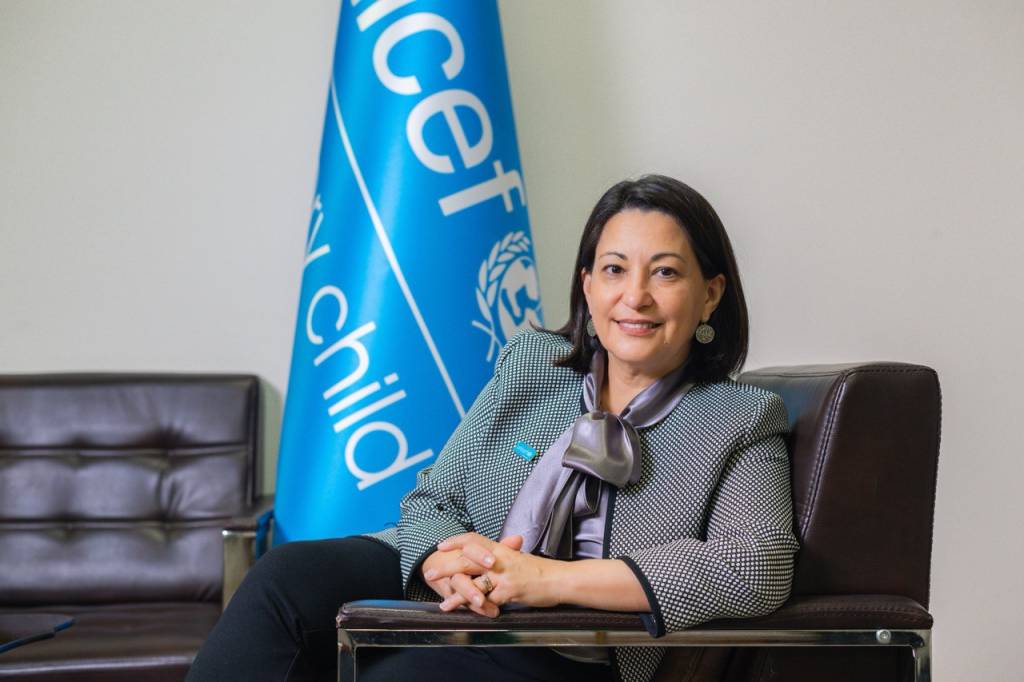
Regina Castillo: “The Government’s determination and leadership to create a future better for children, as well as the quick pace of the reforms, impresses me the most”
Children are born with their rights, and our responsibility as adults is to nurture them, safeguard their health, and ensure a stable family life. Protecting the rights and interests of the future generation is a top priority in every country. In Uzbekistan, numerous effective projects are being executed in this direction, a testament to the government’s commitment and the fruitful collaboration between the government and international organizations, notably the United Nations Children’s Fund – UNICEF.

Uzbekistan National News Agency correspondent interviewed the UNICEF Representative in Uzbekistan, Ms. Regina Castillo.

– Ms. Castillo, what did you know about our country before coming to Uzbekistan? What is your impression about our country after you arrived?

 To be honest, I knew little. I knew about the ancient Silk Road, the marvelous cities of Samarkand and Bukhara and the diverse landscapes, ranging from the rolling Kyzylkum Desert to the lush Fergana Valley. I also knew data and statistics about Uzbekistan because I have been working in UNICEF and more specifically in the region of Europe and Central Asia for a long time. 

What I was not prepared to face was the enormous hospitality of the Uzbek people. I have been received warmly in all 8 countries where I have worked so far, but hospitality in Uzbekistan is unparallel. From my perspective, hospitality is the trademark of Uzbekistan. People receive you with open arms and if you enter with an open heart like the one, I try to have, then you are doubly welcomed!

I was also taken by the beauty of Tashkent with its wide streets, its green trees and its clean and safe streets. Safety is a scarce resource in many places around the world and I feel fortunate to live in a city as safe as Tashkent where I can walk freely as a woman without feeling exposed or threatened. And since I have been told that I look Uzbek with my dark hair and the olive skin of my Spanish ancestors, then I am and feel at home!

– How do you evaluate the reforms being carried out to protect the rights and interests of children in Uzbekistan? 

 I would like to point out that one of the first UN conventions that Uzbekistan ratified in the early years of its independence was the Convention on the Rights of the Child, and I am delighted to witness the Government’s commitment to fulfill all rights for all children in the country.

UNICEF commends the unprecedented reforms in the fields of health, education, child protection, and social protection, which have resulted in concrete results for millions of boys and girls, especially the most vulnerable. 

What impresses me the most, as a newcomer, is the Government’s determination and leadership to create a better future for children, as well as the quick pace of the reforms. For example, the past few years, the law on the children's ombudsperson came into force; the National Agency on Social Protection was established; and key legislative changes such as the criminalization of domestic violence. 

– In what areas does UNICEF support the Government of Uzbekistan in the best interests of children? Could you please share key achievements and future plans with us?

 This year, UNICEF Uzbekistan turns 30. During these three decades, UNICEF has been working together with the national partners, UN agencies and development organizations as well as communities and young people to provide its expertise and support to implement the state programmes on children. 

We share the best practices around the world, influence policy, leverage resources and implement the programmes that make a difference for children.

Let me start with our programme on health, nutrition, and WASH. 

In the last two years, UNICEF has reached over 15 million people with essential health services (42% of the population). Since 2021, UNICEF Uzbekistan has invested more than 25 million USD to deliver health programmes for children.

As a result of our joint efforts with the Government, child malnutrition has declined by 58%, while under-five mortality declined by 75% (1990-2022). 

As you might know, UNICEF is the biggest provider of life-saving vaccines for children and adults at the global level. In Uzbekistan, to support the National Expanded Programme of Immunization, we delivered 28 million vaccine doses every year. In 2022, nearly 4 million children under five and almost one million children under one were reached thanks to the UNICEF-support through procuring vaccines and cold chain improvements. 

By working with the Ministry of Health, we helped to improve perinatal care for 700,000 newborns. This means thousands of lives saved.

Key strategic focus areas on mother and child health include health systems strengthening, development of multisectoral policies and strategies, and community engagement to achieve sustainable results.

In Uzbekistan, UNICEF acts as the Coordinating Agency of the Local Education Group (LEG), and it is a leading agency in education. In this capacity, UNICEF facilitated the development of a Partnership Compact for Education Reform for 2023-2026. We collaborate with Ministry of Preschool and School Education and development partners to identify priority areas in relation infrastructure upgrading, curriculum reform, teacher professional development, learning assessment, and overall education governance. 

We support the national reform agenda towards quality and inclusive education for all children.

Starting from the pre-school level, UNICEF has accompanied the Government in the staggering increase in enrolment, one of the fastest increases at the global level. Now access to pre-school is reaching over 70%. UNICEF and Government collaboration includes the introduction of flexible and innovative alternative Early Childhood Education, the review of pre- and in-service teacher training. We established training centres for pre-school teachers in all regions.

In General Secondary Education, UNICEF is helping the Ministry of Preschool and School Education to develop students’ competencies and ensure children learn in inclusive and safe environments. In the past few years, UNICEF supported the development of quality textbooks. We helped with the upgrading of teacher training and professional development by establishment of new teacher professional standards.

Currently, we are supporting the Government in the modelling of inclusive education, enabling children with disabilities to access quality education.   

I am happy to say that UNICEF is championing innovation and new approaches including supporting digital learning. 

The UNICEF Giga initiative enabled the Government to define the exact location and connectivity status of all 10,132 state schools in Uzbekistan, and it was the first time for this kind of data to be collected and visualised in an open source. Most of the schools are now connected to high-speed connectivity. Moreover, UNICEF is supporting the use of digital learning to improve both learning outcomes and accessibility, through modelling of assistive technology.

Recently, at the meeting of the Local Education Group, UNICEF and the Ministry of Preschool and School Education have shared the findings from the pilot AI-based digital math platform Eduten. 

Results of the pilot evaluation show remarkable increase of learning outcomes, with an average +16.9% improvement in mathematics skills. The learning outcomes of students who used Eduten were higher than the outcomes of their peers who did not use this platform. This is an example of how UNICEF can integrate technology into their education system while developing clear standards based on safety, evidence of impact, scalability, inclusion, and accessibility.

Another big sphere UNICEF works on is Child Protection.

In June 2023, the Government established the National Agency for Social Protection. UNICEF’s advocacy and technical support helped to make this happen. Currently, we continue close cooperation with the Agency to coordinate child protection services, provide social welfare, establish a professional social work system, enhance psychosocial support, and develop services for at-risk children. 

UNICEF provided technical support to the Government of Uzbekistan to improve the protection of children from violence. Key legislative changes include criminalizing domestic violence, strengthening penalties for child sexual abuse in 2023. Moreover, a comprehensive law on the protection of children from all forms of violence is expected to be adopted by the Senate shortly. 

We believe that all children deserve to grow in a caring and loving family.  We focus on the continued deinstitutionalization of the childcare system, emphasizing family strengthening, community-based support for children with disabilities, and professionalizing foster care. As a result of our advocacy and joint efforts with the national partner organizations, various residential care institutions for children have been closed, paving the way for a deinstitutionalization of the childcare system.

Our future priorities include supporting the Government with the operationalization and implementation of the law on the protection of children from all forms of violence. Our programme on child protection focuses on building capacities of professionals including social workers, psychologists, and justice professionals to identify and respond to violence and providing coordinated multi-sectoral support services to survivors.

Lastly, we aim to enhance access to justice for children in contact with the law, including victims, witnesses, offenders, and parties to civil or administrative proceedings. In this regard, we promote the establishment of a specialized child justice system and advocate for the placement of children in detention as a measure of last resort. 

As to social policy, our programme helped thousands of families get access to the social benefits in the recent years.  

Let me share some statistics: 4.8 million children got child benefits for low-income families in 2023; over 60,000 people got benefits for caregivers of children with disabilities; and over 16,000 women benefited from maternity benefits. 

Another key achievement is development of fully digitalized Management Information System for Social Protection. For this to happen, UNICEF supported the piloting and national rollout of the Single Registry of Social Protection. This is a key instrument for the Government of Uzbekistan to identify and provide support to low-income families. This work also included the development of the eligibility criteria, the benefit scheme, the application process, the payment process, and monitoring mechanisms. 

The UNICEF efforts resulted in leveraging over 600 million USD in annual expenditure from the national budget for social protection.

As the Representative of UNICEF in Uzbekistan and as a child expert and advocate, there is no better time to be in Uzbekistan than now. I look forward to working hand in hand with the Government, partners, and the people of Uzbekistan to ensure that we do not leave any child behind. Children, as we all know, are born with rights and we, as adults, must ensure that their rights to education, protection, health, participation, to live in a family are fulfilled. 

In Uzbekistan, I would like to work especially with and for the most vulnerable children: those without parental care, children with disabilities, girls, and boys living in rural areas without access to quality education, health, and other services. 

Also, I want to work with youth, the greatest asset of this country to ensure that they learn, feel engaged and want to be part of the solution. No country, no organization can improve the lives of children alone and together with the UNICEF team, I intend to maintain and build partnerships to ensure high impact and sustainable results for children.

Interviewed by Guzal Sattorova, UzA