Priority tasks for the development of the leather and footwear industry reviewed
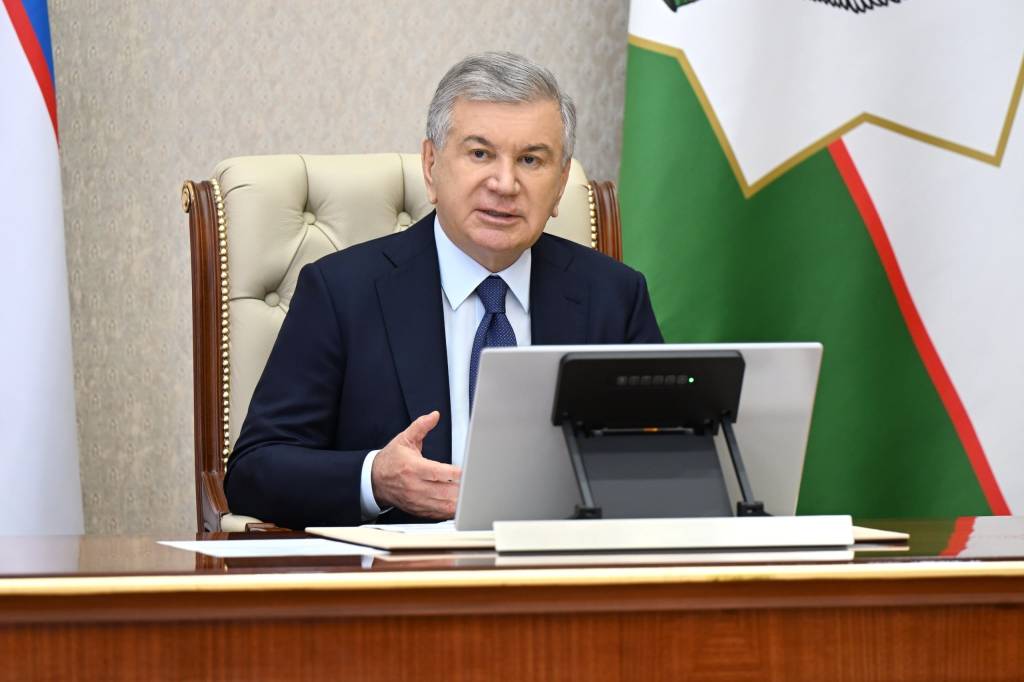
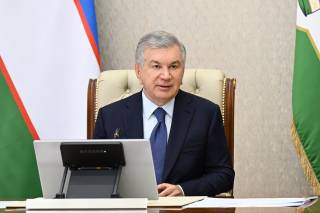
President Shavkat Mirziyoyev reviewed a presentation on current work and plans for the leather and footwear industry.
In recent years, several measures have been adopted to support enterprises in the sector, expand production, and increase exports. In the first quarter of this year, leather industry output grew by 25 percent to 962 billion UZS. By the end of the year, production is planned to reach 5.4 trillion UZS, and exports are expected to total $110 million. By 2030, production in the leather and footwear industry is planned to reach 12 trillion UZS, exports to $500 million, and 12,000 new jobs are planned.
At the same time, the sector has significant untapped potential. Despite the large volume of hides and wool procured in the country, the level of deep processing remains low. In particular, the processing rate for sheep and goat skins is about 30 percent. Of the 40,000 tons of wool procured annually, only 6,000 tons, approximately 15 percent, are processed.
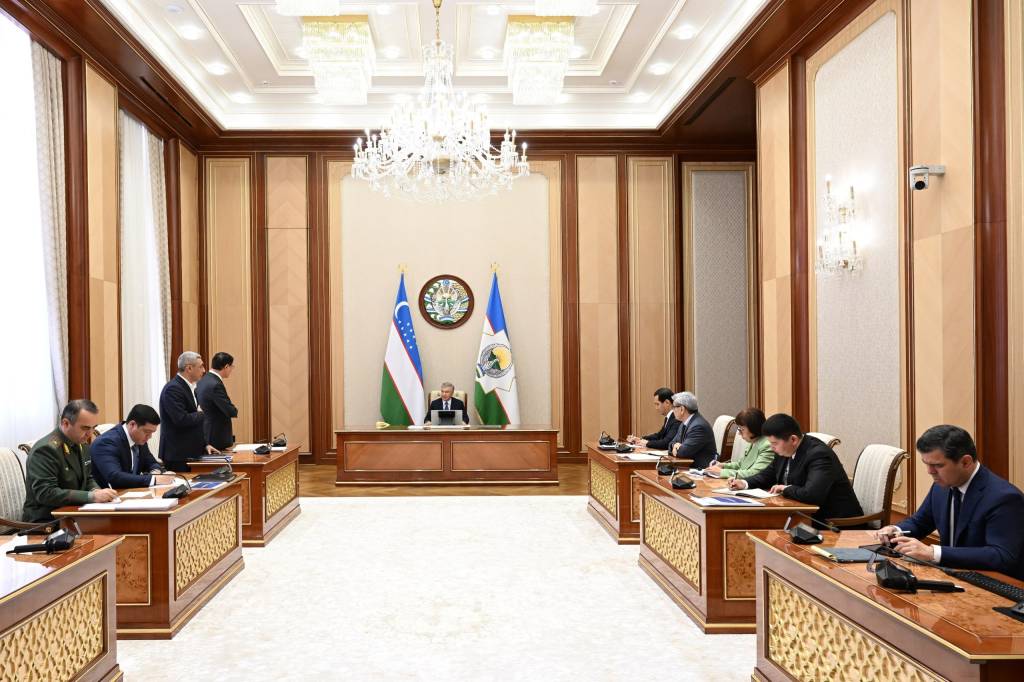
During the presentation, proposals for the effective use of enterprise capacity, the deep processing of raw materials, the increase in the share of finished products, and the expansion of export markets were reviewed.
In particular, specialized leather and footwear industrial zones are planned for Akhangaran district of Tashkent region and Shahrihan district of Andijan region. These zones will include production facilities, engineering and utility infrastructure, logistics facilities, design centers, and training centers. The management of the industrial zones will be entrusted to a special directorate to be established under the Light Industry Development Agency.
In Akhangaran, a modern industrial cluster for leather processing that meets environmental requirements will be established. At about 70 percent of the country’s 32 leather-processing enterprises, treatment facilities are outdated, and there is no unified, centralized system. In this regard, a centralized treatment facility will be built in the new zone, enabling the reuse of up to 8,000 cubic meters of treated water per day in technological processes.
Particular attention was paid to expanding the raw material base. To support entrepreneurs, it was proposed to organize centralized imports of cattle hides from neighboring countries under a “single window” principle, to compensate for transportation costs, and to provide processing enterprises with working capital.
Improving the system for collecting and primary processing small livestock hides was also identified as an important task. Measures were reviewed to establish collection and primary processing points for leather raw materials in Navoi, Kashkadarya, Surkhandarya, and Tashkent regions, and to stimulate processing enterprises.
To expand wool processing, it was proposed to build a new complex in Syrdarya region. Its capacity will be designed to process 30,000 tons of wool. Implementing the project will enable a full production chain – from raw materials to finished products – thereby significantly increasing added value, expanding exports, and creating new jobs.
Plans to increase footwear production volumes, including specialized footwear, and to expand cooperation and joint projects with foreign partners in this area were reviewed.
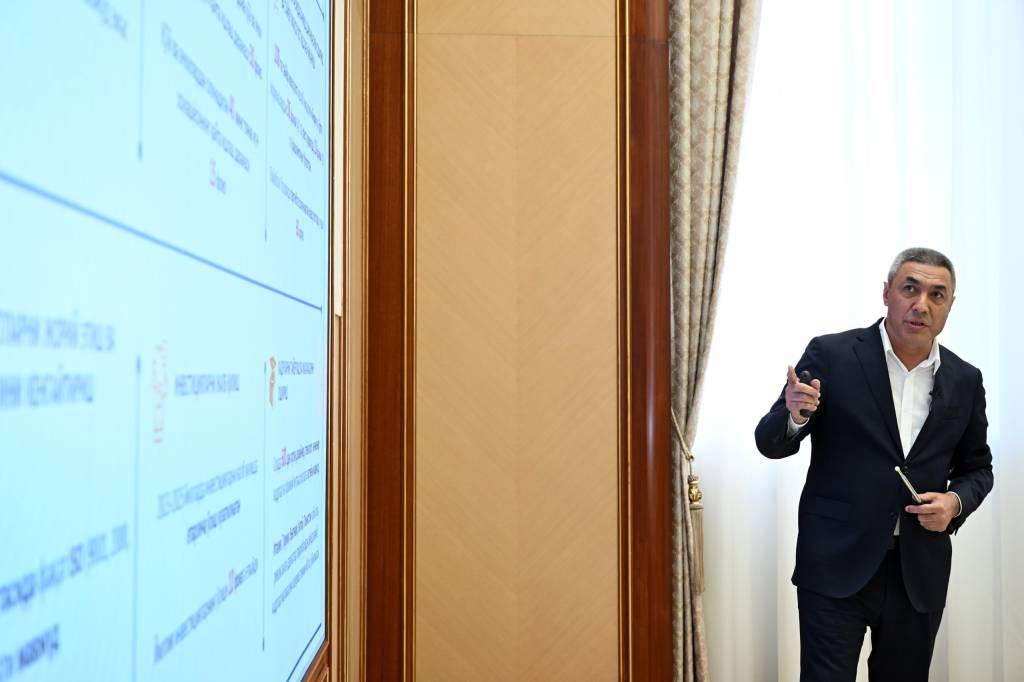
During the presentation, the issue of expanding artificial leather production was also addressed. It was noted that in the global market, major brands are increasingly shifting to artificial leather due to environmental considerations, affordability, and technological convenience.
In Uzbekistan, seven promising projects are planned for this area. As a result, production lines will be established capable of producing 50 million linear meters of products, enabling them to meet a significant share of domestic demand and increase exports.
It was noted that in the global market, major brands are increasingly switching to artificial leather due to environmental considerations, affordability, and technological convenience. In Uzbekistan, promising projects in this area are planned, which will make it possible to meet a significant share of domestic demand and increase exports.
The Head of State emphasized that the benefits provided to the industry alone will not yield results – precise calculations and practical actions are required for each enterprise, project, and market.
Responsible officials and regional leaders were given instructions on the financial recovery of enterprises, the full utilization of production capacity, the production of competitive import-substituting goods, and the provision of practical assistance to entrepreneurs in obtaining international certifications.
UzA