


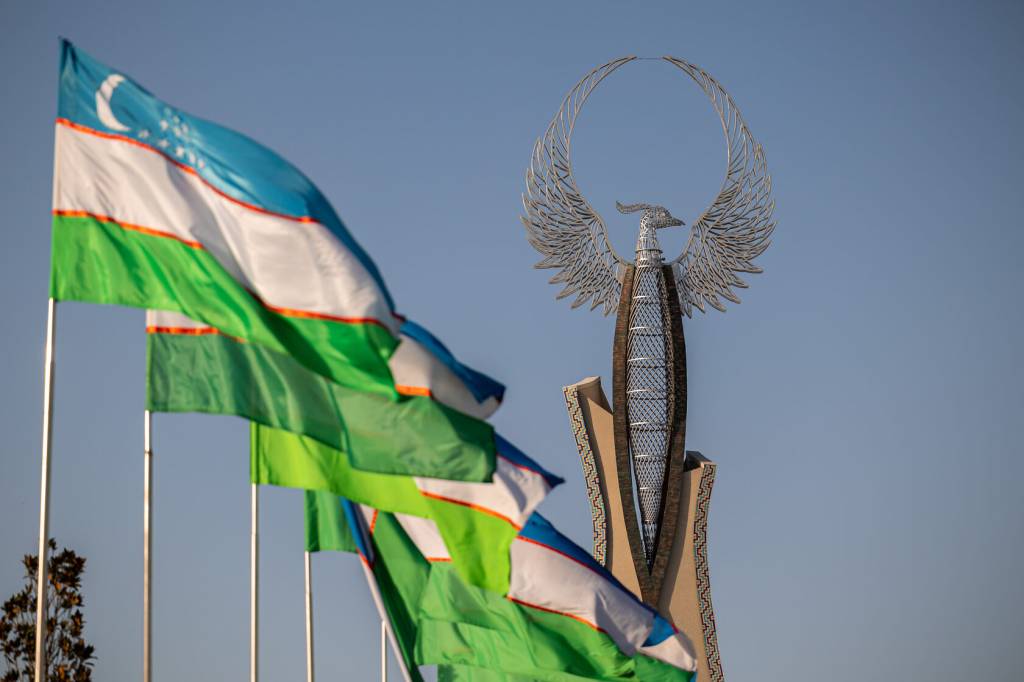
Today, Uzbekistan presents the world with an inspiring example of a nation that moves forward confidently and openly, with deep respect for its rich past.
This ancient land has given humanity outstanding scholars and thinkers – from Abu Rayhan Beruni and Ibn Sina (Avicenna) to Mirzo Ulugbek and the poet Alisher Navoi – whose works continue to unite peoples to this day. Building on their legacy, modern Uzbekistan is transforming its rich cultural heritage into a key element of its “soft power”. Here, soft power is not an abstract slogan, but a reality backed by tangible achievements and international recognition.
Cultural Diplomacy and a Tourism Boom

Uzbekistan is actively advancing cultural diplomacy, using its rich heritage as a means to strengthen friendship among nations. In practice, this has yielded tangible results. The country has achieved an almost complete recovery of its tourist flow after the pandemic: in 2023, Uzbekistan welcomed 6.626 million foreign visitors – 98 percent of the record level in 2019 – and by 2024, tourist arrivals exceeded 10 million, generating $3.5 billion in export revenues for the economy. These impressive figures were made possible through visa liberalization, infrastructure development, and the active promotion of the national brand on the global travel market.
The international community highly values Uzbekistan’s efforts to preserve and promote its cultural heritage. The ancient city of Khiva was named the “Cultural Capital of the Turkic World” and recognized as the best Islamic heritage destination of 2023. The mountain village of Sentob was awarded the title of “Best Tourism Village of 2023” at the UN World Tourism Organization General Assembly held in Samarkand. The renowned travel guide Lonely Planet included Uzbekistan among the top travel destinations for 2024. These achievements significantly enhance the country’s international image, clearly demonstrating that its cultural leadership is recognized worldwide.
At the same time, the growth of tourism is viewed by Tashkent not only as an economic success, but also as a tool of people’s diplomacy. Millions of foreign visitors who personally experience the beauty of Bukhara and Samarkand, the hospitality, and the rich culture of the Uzbek people, become a kind of “goodwill ambassadors”. It is no coincidence that the country’s leadership has set ambitious goals to welcome 15 million tourists by 2025 and increase tourism revenues to $4 billion. These plans are supported by concrete measures – from promoting new types of tourism (such as gastronomic, ecological, and ethnographic tourism) to the creation of a unified digital platform for travelers.
Economic Reforms and Investment Attractiveness
Over the course of eight years of reform, Uzbekistan has transformed into a rapidly developing “economic locomotive” of Central Asia. The government has systematically dismantled barriers to business, simplifying taxes and regulations and creating favorable conditions for investors. The results are evident – investment inflows are breaking records. In 2024 alone, the volume of foreign investment increased 1.6 times, reaching $34.9 billion – more than 60 percent over the past year, reflecting growing confidence from the international business community. Major global companies are entering the Uzbekistan market. For example, Saudi giant ACWA Power invested $3 billion in green energy projects in 2024 (bringing its total investment portfolio in the country to over $13.7 billion), while the European banking holding OTP Group became the first foreign bank to participate in privatization in the financial sector. These success stories are the best advertisement for the New Uzbekistan to investors worldwide.
International rankings confirm the country’s progress in creating a favorable business climate and strengthening public institutions. Back in 2019, Uzbekistan rose to 69th place in the World Bank’s Doing Business ranking, improving its position by 7 points in a year and entering the list of the world’s top 20 reforming countries. Equally telling is the breakthrough in anti-corruption efforts: according to Transparency International, Uzbekistan moved up from 146th place in 2020 to 121st in 2023, raising its Corruption Perceptions Index score to 33 points. This growing trust is also reflected in international surveys. In the 2023 Brand Finance Global Soft Power Index, Uzbekistan jumped 15 positions, increasing its influence score by nearly 26 percent. These shifts reflect real change – the modernization of the economy, the strengthening of legal safeguards, and openness to international cooperation. Economic success is no longer solely an internal matter for Uzbekistan. It has become part of the country’s global image, a symbol of a nation where reform is backed by concrete action.
Improving Access to and Quality of Education
Uzbekistan’s achievements in education and “intellectual diplomacy” are particularly commendable. Recognizing that human capital is the key resource of the 21st century, the state has made tremendous efforts to enhance both access to and the quality of education. As a result, the number of university students doubled in a short period – from approximately 570,000 in 2021 to over 1.16 million by 2023. Branches of leading international universities are being established across the country, and new private institutions are emerging that align with global education standards.
At the same time, academic mobility is rapidly expanding. Uzbek youth are eager for knowledge and experience – and they are acquiring it worldwide. According to UNESCO, in 2022, more than 150,000 students from Uzbekistan were studying abroad, compared to just 35,000 in 2017. In terms of the number of citizens receiving higher education abroad, Uzbekistan now ranks third in the world, after China and India. This remarkable leap has been made possible by the government’s targeted policies, including support for gifted youth, scholarship programs, and the removal of barriers to studying abroad. Each of these students becomes an ambassador of Uzbekistan’s positive image, strengthening the country’s ties with the global academic community.
In addition, Uzbekistan is actively promoting educational initiatives on the international stage. Within the framework of the Organization of Turkic States, and at Uzbekistan’s initiative, the Union of Turkic Universities and the “Orhun” exchange program were established – both aimed at strengthening academic ties among member countries and jointly preparing the future workforce. Uzbekistan’s educational diplomacy is built on the principles of cooperation rather than competition: by inviting partners to develop science, innovation, and student exchange programs jointly, Tashkent is earning a reputation as a reliable and forward-looking partner.
Active Foreign Policy and International Recognition

Uzbekistan’s proactive diplomacy reinforces achievements in culture, the economy, and education. The country is consistently pursuing an open, peaceful, and pragmatic foreign policy. In recent years, Tashkent has significantly improved relations with all its Central Asian neighbors, transforming the region from one of past disagreements into a zone of trust and good neighborliness. Uzbekistan’s initiatives – from agreements on border simplification and joint water resource management to the creation of transport corridors – have received unanimous support across the region. On the global stage, the country has asserted itself as a constructive participant in international processes. The country’s growing international standing was demonstrated in 2020, when Uzbekistan was elected to the UN Human Rights Council for the first time, receiving the highest number of votes among countries in its region.
President Shavkat Mirziyoyev has proposed a number of strategic initiatives of global significance, ranging from regional integration in Central Asia to the promotion of enlightenment values and intercultural dialogue. These ideas, presented at international summits, have been met with understanding and approval by the global community. It is telling that leaders of dozens of countries, in their official messages, have mentioned Uzbekistan and its President as a vivid example of dynamic development, extending wishes for the country’s continued success and prosperity. Such a respectful tone is a direct reflection of the evolution in the perception of Uzbekistan. From a relatively isolated state in the past, Uzbekistan has transformed into a respected partner, a reliable friend, open to all and committed to the principles of equality, peaceful cooperation, and non-interference in the internal affairs of others.
The New Uzbekistan is confidently strengthening its international image not through lofty rhetoric, but through concrete actions. Its soft power stems from tangible achievements – economic reforms, cultural revival, educational breakthroughs, and an active, peace-oriented diplomacy. The country carefully preserves its centuries-old history while passionately shaping its future. Observing its progress evokes a deep sense of pride and admiration: Uzbekistan is not merely transforming itself – it is making a vivid contribution to the creation of a more open, culturally enriched, and interconnected world.
Abduaziz Khidirov, UzA