

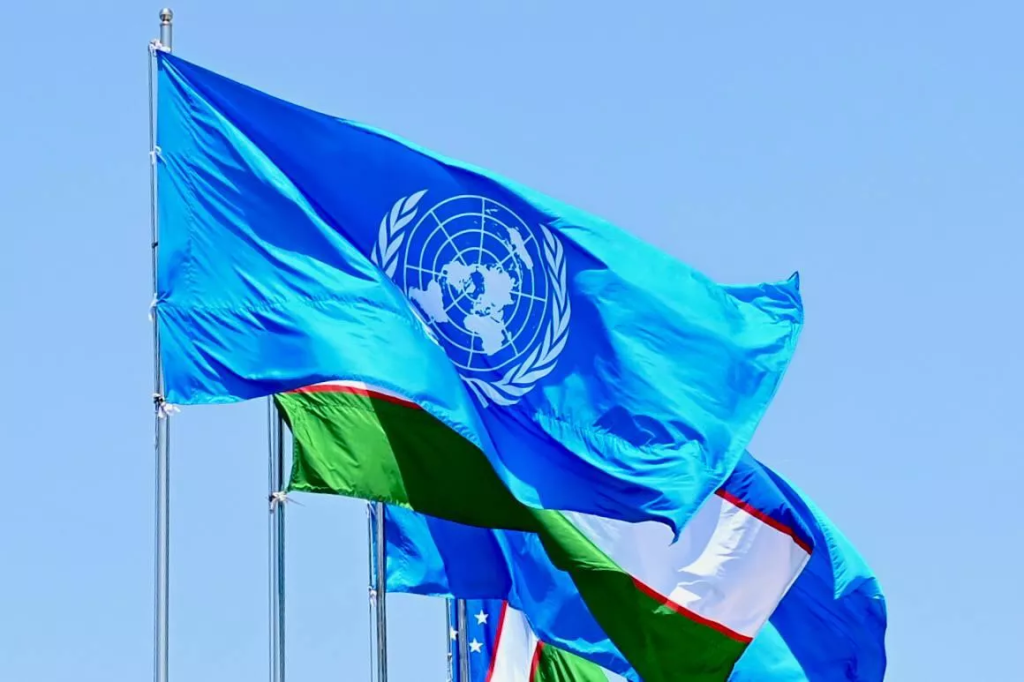
In 2015, the UN adopted the 2030 Agenda, which includes 17 Sustainable Development Goals (SDGs) aimed at ending poverty, protecting the environment, and ensuring shared prosperity.
The Republic of Uzbekistan actively supported this global initiative and reaffirmed its commitment to implementing the 2030 Agenda. One of the key steps along this path was the integration of the SDGs into national strategic development documents, enabling the development of a systemic approach to sustainable and inclusive growth.
The new phase of reforms, initiated by the President of Uzbekistan
Shavkat Mirziyoyev marked the beginning of large-scale transformations. The Action Strategy for the five priority areas of development of the Republic of Uzbekistan in 2017-2021, adopted as part of this process, became the first comprehensive program aimed at integrating the SDGs into public policy and accelerating socioeconomic development.
In 2022, the country approved the Development Strategy of the New Uzbekistan for 2022-2026, and in 2023, the Uzbekistan 2030 Strategy, outlining key priorities for the next decade. These documents cover areas such as education, healthcare, and social protection, sustainable economic growth, environmental sustainability, effective governance, and ensuring security and sovereignty.
Each of these priorities is closely linked to the UN Sustainable Development Goals, from improving quality of life and reducing poverty to ensuring food security and supporting youth development.
As a result, 16 national SDGs were adopted, derived from the global ones (excluding Goal 14, given the country’s landlocked status), as well as 125 targets and 206 indicators for monitoring their implementation.
To coordinate the work, a Coordination Council and a parliamentary commission have been established to monitor SDG implementation, ensuring interagency cooperation.
To date, 105 of these national target indicators (84%) have already been integrated into more than 190 state programs and strategic documents, underscoring the country’s commitment to implementing the SDGs.
By 2023, Uzbekistan had submitted two voluntary national reviews on the SDGs, in 2020 and 2023. The reviews received positive feedback from the UN, which noted Uzbekistan’s transparency and commitment to the SDGs.
Thus, in December 2022, the UN General Assembly supported a government-proposed resolution on enhancing the role of Parliaments in accelerating the achievement of the SDGs, affirming the country’s leading role in promoting sustainable development principles internationally. The document was co-sponsored by 80 states from all continents, as well as UN agencies and other international organizations.
In his speech at the 78th session of the UN General Assembly, President Shavkat Mirziyoyev stated that Uzbekistan is implementing profound reforms based on the principle of “In the name of human honor and dignity”. These changes are aimed at creating a vibrant civil society and protecting the rights and freedoms of every individual in accordance with the SDGs.
At the same time, achieving the Sustainable Development Goals by 2030 in our country will be guided by the UN’s fundamental principle of “Leaving no one behind”, which guarantees the protection of the rights and legitimate interests of every citizen. This approach underpins the comprehensive measures and programs being implemented today in various sectors of the economy and society.
Uzbekistan’s key achievements in sustainable socioeconomic development include the following:
Economic Reforms – Sustainable Achievement of the SDGs
Uzbekistan has demonstrated significant economic progress by implementing large-scale reforms to achieve the SDG economic indicators and transform a closed system into an open market.
Thanks to the reforms adopted under the leadership of the President of Uzbekistan since 2017, the country has undergone a complete economic transformation. The foreign exchange market has been liberalized, business conditions have been simplified, taxes have been reduced, and the banking sector has been reformed. As a result of these large-scale changes, average annual GDP growth from 2017 to 2023 was approximately 5.3%, distinguishing Uzbekistan from countries with comparable income levels.
According to the World Bank, the country is among the most actively reforming economies in the world. Even in 2020, the GDP decline was only about -2%, and in 2021, growth reached 7-8%. Between 2022 and 2024, the economy continued to grow at a rate of 5-6% annually, despite external challenges. This confirms steady progress toward achieving SDG 8, which aims for sustainable economic growth.
Uzbekistan’s economy is becoming more diversified and market-oriented. Instead of being dominated by agriculture, growth drivers are now industry, construction, and services.
GDP in current prices increased from $77 billion in 2017 to $115 billion in 2024, with a forecast of $200 billion by 2030. Exports totaled $26 billion. Foreign exchange reserves exceeded $48 billion for the first time in the country’s history.
Improving the investment climate was a key factor in this process. Today, international corporations are actively investing in the textile, automotive, chemical, and mining and metallurgical industries.
As noted by the President of Uzbekistan Shavkat Mirziyoyev, over $130 billion in foreign investment has been attracted to the country in recent years. In 2024, $35 billion in investment is expected to lead to the opening of over 9,000 new enterprises and the creation of approximately 300,000 high-income jobs.
These reforms contribute to the achievement of several SDGs: economic growth and diversification, technological development, and integration into the global economy.
Poverty Reduction and Sustainable Progress
Poverty alleviation remains a key priority of both the SDGs and Uzbekistan’s National Strategy. Thanks to the forward-looking policies of the Head of State and consistent measures, more than 7.5 million people have been lifted out of poverty to date, and the poverty rate is expected to fall to 8.9% by 2024. The goal is to reduce this figure to 6% by the end of the year and to halve the poverty rate by 2030.
“Today, we are ready to set an even higher bar: by 2030, according to international criteria, Uzbekistan has every opportunity to eradicate absolute poverty – and we will definitely achieve this”, the President of Uzbekistan stated.
Meanwhile, just five or six years ago, international organizations estimated this figure at around 35%. This progress highlights the significant strides made and the effectiveness of the ongoing social reforms.
In this regard, taking into account the piloting of new initiatives and the study of best international practices, the New Uzbekistan model for poverty reduction has been developed.
A system of targeted social registries has been launched, and during the pandemic, a total of $8 billion has been allocated for free medications and social benefits. This has prevented 5.2 million citizens from falling into a poverty trap and averted an economic recession.
A community-based outreach mechanism has been introduced at the grassroots level. Individual work is conducted with each family, and the necessary resources are allocated to increase income. $2.5-3 billion is allocated annually for the improvement of community areas, improving people’s lives, and developing entrepreneurial infrastructure.
The national program “From Poverty to Prosperity” is being implemented, aimed at systemically reducing poverty and improving living standards. It encompasses entrepreneurship development, job creation, and expanding access to education, vocational training, and financial resources.
The National Agency for Social Protection, under the President of the Republic of Uzbekistan, has been established, and “People” Centers have been opened in all cities and districts, offering over 100 types of social services through a one-stop shop.
As a result of these measures, 2.7 million citizens received services and assistance in 2024. New forms of daycare for those in need have enabled 50 thousand non-disabled family members to return to work.
To enhance the quality and coverage of social services in Uzbekistan, a $100 million project has been launched in collaboration with the World Bank. Separate programs are being implemented to include children with disabilities in school and vocational education.
Overall, the progress achieved in reducing poverty is already recognized by the international community as an essential achievement of Uzbekistan on its path to achieving the SDGs. The UN notes that Uzbekistan was one of the first in Central Asia to introduce a system of national poverty indicators and establish monitoring of this key indicator, which has a positive impact on the effectiveness of social policy.
Food Security
Uzbekistan has made significant progress in food security and has been recognized by international organizations as one of the most progressive countries in the world in this area.
In the Global Food Security Index, the country ranked first among the top 10 countries with the most significant progress from 2019 to 2022. This result was made possible by large-scale reforms in agriculture, which significantly diversified cropland from cotton monoculture to include grain, vegetable, and fruit cultivation.
Specifically, to increase rural incomes, the area under cotton and grain cultivation was reduced by 235 thousand hectares, and residents were allocated plots of 30-50 acres. This was an essential step towards increasing the incomes of 800 thousand people, which simultaneously meets SDG 1 – No Poverty.
Significant attention is being paid to technological modernization of the agricultural sector, including the introduction of drip irrigation, drought-resistant crop varieties, and digital farm management solutions. These measures not only increase productivity but also promote the sustainable use of natural resources – in line with SDGs 12 and 13.
Support for farmers and the development of agricultural cooperation, including access to financing and training, have become an essential component of food policy. This strengthens local supply chains and increases the availability of fresh food locally.
Furthermore, the country is promoting school and social feeding programs that reach vulnerable groups. This contributes to improved nutrition and health outcomes for children, women, and older people.
According to the Global Hunger Index, Uzbekistan has demonstrated a steady decline in the proportion of undernourished people. Over 95% of children receive nutrition that meets national standards, indicating progress toward achieving the SDG 2 targets by 2025.
The country is demonstrating a comprehensive approach to food security, integrating SDG objectives into agricultural policy. These measures contribute not only to improved food access but also to sustainable, inclusive development.
Youth – the Pillar of Social Stability
The President of Uzbekistan attaches particular importance to youth development, recognizing their crucial role in implementing the 2030 Agenda. In this spirit, Uzbekistan is implementing the Concept of State Youth Policy until 2025, based on the principle of “Working with Youth for the Benefit of Youth” from the UN Youth 2030 Strategy.
In 2020, the youth parliaments of 250 young activists were established under the Senate and Legislative Chamber of the Oliy Majlis of the Republic of Uzbekistan to enhance political literacy, foster social activism, and promote the protection of youth rights. These initiatives have significantly supported young people and increased their engagement in society.
Over the past three years, thanks to these measures, 250,000 young people have received preferential loans totaling over $500 million, 210 youth industrial zones have been established, and 2,500 projects worth over $300 million have been implemented. As a result, the number of young entrepreneurs has more than doubled to over 200,000.
Uzbekistan is actively developing high-quality education as the foundation for social and economic growth, fostering skills relevant to the modern labor market. Over the past eight years, the number of kindergartens has reached 2.5 million, with enrollment reaching 78%. The construction of new schools and the expansion of existing ones have created an additional 1 million student places.
Higher education enrollment has increased from 9% to 42%. Women make up 53% of students. Over 2 thousand students from Uzbekistan are studying at leading universities worldwide, 750 of whom are funded by the state through the “El-Yurt Umidi” Foundation. Last year, young people from Uzbekistan ranked first in Central Asia for admission to the top 500 universities.
Particular attention is being paid to improving the working conditions of teachers and mentors, as well as enhancing their qualifications. In particular, teachers’ salaries have increased by an average of 2.5 times over the past period.
At the same time, healthcare funding has increased sixfold in recent years, and high-quality medical services have become accessible at the mahalla level.
Previously, people traveled to Tashkent to receive high-tech care, now over 400 types of such services are provided directly in the regions and districts. Life expectancy in the country has increased from 73.8 to 75.1 years.
Overall, Uzbekistan’s success in sustainable development has been made possible by the decisive reforms initiated by President Shavkat Mirziyoyev, as well as widespread public support and recognition from international partners.
These reforms have allowed the country to rise 19 places in the global UN SDG Index among countries in Eastern Europe and Central Asia. For comparison, at the launch of the SDGs in 2015, the country’s index was only 48.6 points. By 2025, it had risen to 73.1.
Over the decade of integrating the SDGs into public policy, Uzbekistan has demonstrated significant progress, ranking first among Central Asian countries and 62nd globally among 167 countries, confirming the correctness of the chosen course and the real, positive changes taking place in the country.
Uzbekistan’s experience clearly demonstrates that sustainable development is a long-term and comprehensive process based on coordinated action by the state, society, and international partners.
In this context, the upcoming 80th session of the UN General Assembly will be an essential platform for showcasing Uzbekistan’s progress in achieving the SDGs and presenting new initiatives aimed at strengthening international cooperation for a sustainable future.
Shavkat Alimbekov,
Leading Research Fellow,
International Institute for Central Asia
UzA