
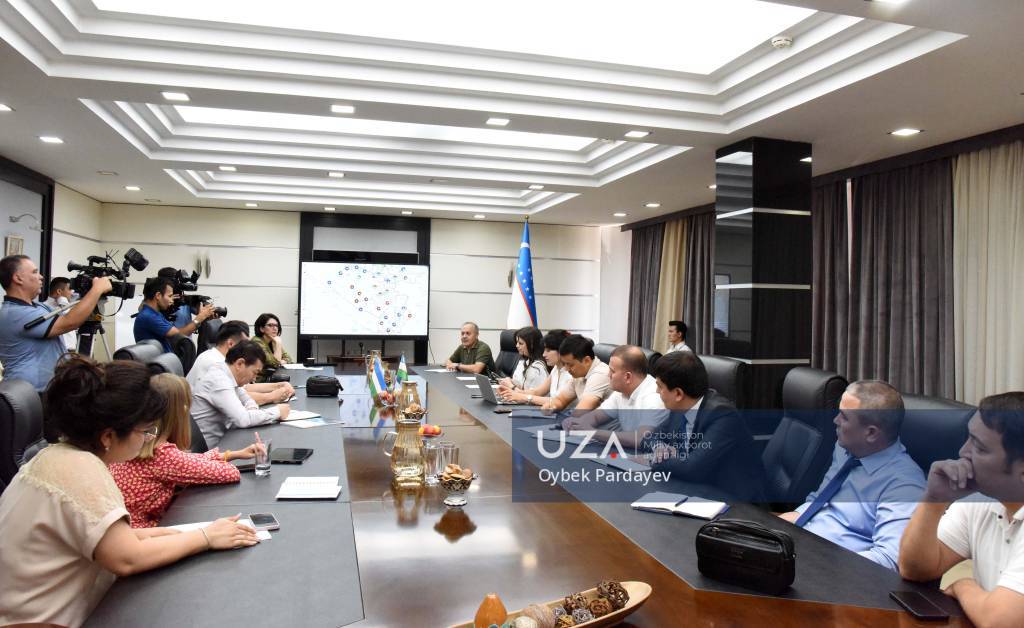
A new geoportal aimed at increasing the transparency and efficiency of public investment in the social sector has been presented at the Agency for Strategic Reforms under the President of the Republic of Uzbekistan.

The digital platform encompasses over 23,000 infrastructure facilities, comprising 11,127 schools, 6,888 kindergartens, 3,689 medical institutions, and 879 sports complexes. The geoportal was developed by the Delivery Unit under the Agency without the use of grant or loan funding, relying solely on open technologies and in-house solutions by Uzbekistan specialists.

The initiative is being implemented with the support of Saida Mirziyoyeva, Head of the Presidential Administration of the Republic of Uzbekistan. It serves as an essential tool in achieving the goals of the Uzbekistan 2030 Strategy. Through the platform, users can access detailed information on the condition of social infrastructure facilities, including availability of water supply, heating, assembly halls, sanitation, and other key indicators. For example, only 52% of schools are connected to a centralized water supply, while 9% have no access to water at all. Nearly half of all schools lack assembly halls. Among medical institutions, only 70% are connected to a running water supply.

The platform enables the digital mapping and monitoring of the condition of all social facilities nationwide; tracks project implementation; facilitates coordination among government agencies; supports data-driven decision-making on the development of the social infrastructure network; and ensures transparency and citizen engagement.

The geoportal provides citizens and specialists with an interactive map that allows them to locate nearby social infrastructure facilities, view their specifications, capacity, and level of network connectivity. The platform offers features for calculating distances, comparing regions in terms of accessibility, and analyzing trends over time. It also utilizes satellite data, including vegetation indices (NDVI), water bodies (NDWI), and urban development indicators (NDBI), covering the period from 2020 to 2025.

Users can contribute updates to the data via the Telegram bot “Real Holat”, allowing for the most accurate depiction of the current state of facilities. Shortly, integration with OneID will be introduced, enabling users to leave feedback on all social infrastructure sites.

The platform is also expected to serve as a foundation for public monitoring of government programs. By October 2025, a dedicated module will be launched to assess the implementation of the “Toza Qoʻllar” (“Clean Hands”) initiative, which aims to improve sanitary and hygiene conditions in schools, kindergartens, and outpatient clinics.

A full-featured version of the geoportal with expanded analytics is available to government agencies, featuring over 70 parameters, including building seismic resistance, frequency of power outages, roof conditions, and other critical indicators. Data collection and verification for the portal is carried out in three stages: initially, information is gathered from managers of primary institutions, the respective ministries, then cross-checked, and finally, verified with input from citizens.

The platform is open and accessible through the official website of the Agency for Strategic Reforms – https://asr.gov.uz/geoportal/. Its launch marks an important step toward the digitalization of public administration, enhanced civic engagement, and greater efficiency in government investment in the social sector.

[gallery-24404]

Aziza Alimova, photos by Oybek Pardayev, UzA

English
Chinese
Turkish
Tajik
Kyrgyz
Turkmen
Japanese
Arabic
English
French
Spanish
Русский
German
Ўзбек
Oʻzbek
Қазақ
New geoportal launched in Uzbekistan for managing investment in the social sector

A new geoportal aimed at increasing the transparency and efficiency of public investment in the social sector has been presented at the Agency for Strategic Reforms under the President of the Republic of Uzbekistan.

The digital platform encompasses over 23,000 infrastructure facilities, comprising 11,127 schools, 6,888 kindergartens, 3,689 medical institutions, and 879 sports complexes. The geoportal was developed by the Delivery Unit under the Agency without the use of grant or loan funding, relying solely on open technologies and in-house solutions by Uzbekistan specialists.

The initiative is being implemented with the support of Saida Mirziyoyeva, Head of the Presidential Administration of the Republic of Uzbekistan. It serves as an essential tool in achieving the goals of the Uzbekistan 2030 Strategy. Through the platform, users can access detailed information on the condition of social infrastructure facilities, including availability of water supply, heating, assembly halls, sanitation, and other key indicators. For example, only 52% of schools are connected to a centralized water supply, while 9% have no access to water at all. Nearly half of all schools lack assembly halls. Among medical institutions, only 70% are connected to a running water supply.

The platform enables the digital mapping and monitoring of the condition of all social facilities nationwide; tracks project implementation; facilitates coordination among government agencies; supports data-driven decision-making on the development of the social infrastructure network; and ensures transparency and citizen engagement.

The geoportal provides citizens and specialists with an interactive map that allows them to locate nearby social infrastructure facilities, view their specifications, capacity, and level of network connectivity. The platform offers features for calculating distances, comparing regions in terms of accessibility, and analyzing trends over time. It also utilizes satellite data, including vegetation indices (NDVI), water bodies (NDWI), and urban development indicators (NDBI), covering the period from 2020 to 2025.

Users can contribute updates to the data via the Telegram bot “Real Holat”, allowing for the most accurate depiction of the current state of facilities. Shortly, integration with OneID will be introduced, enabling users to leave feedback on all social infrastructure sites.

The platform is also expected to serve as a foundation for public monitoring of government programs. By October 2025, a dedicated module will be launched to assess the implementation of the “Toza Qoʻllar” (“Clean Hands”) initiative, which aims to improve sanitary and hygiene conditions in schools, kindergartens, and outpatient clinics.

A full-featured version of the geoportal with expanded analytics is available to government agencies, featuring over 70 parameters, including building seismic resistance, frequency of power outages, roof conditions, and other critical indicators. Data collection and verification for the portal is carried out in three stages: initially, information is gathered from managers of primary institutions, the respective ministries, then cross-checked, and finally, verified with input from citizens.

The platform is open and accessible through the official website of the Agency for Strategic Reforms – https://asr.gov.uz/geoportal/. Its launch marks an important step toward the digitalization of public administration, enhanced civic engagement, and greater efficiency in government investment in the social sector.

[gallery-24404]

Aziza Alimova, photos by Oybek Pardayev, UzA