Measures identified to develop the capital market
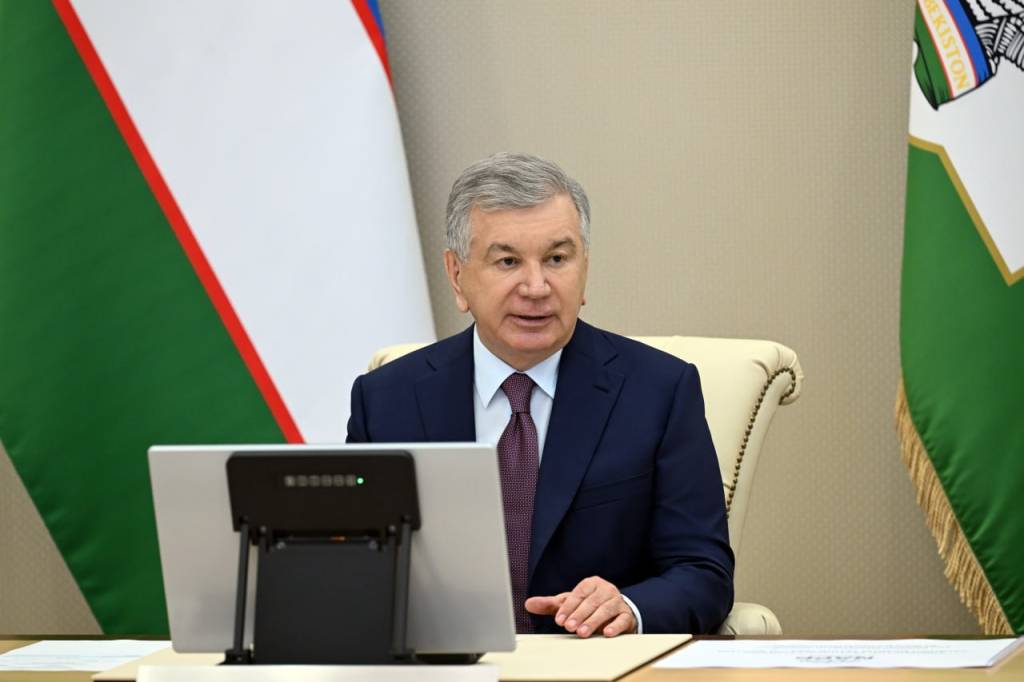
President Shavkat Mirziyoyev reviewed a presentation on measures to develop the capital market.
Recently, Uzbekistan has been actively working to liberalize its economy, reform state-owned enterprises, speed up privatization, and foster a supportive environment for investors. The growth of the capital market is playing an increasingly crucial role in these efforts.
Last month, a major event took place in the country’s financial sector. For the first time, the National Investment Fund conducted an initial public offering on the London and Tashkent stock exchanges. This once again demonstrated that Uzbekistan’s economy is becoming an open and reliable destination for foreign investment.
As noted, international investors are showing growing interest in Uzbekistan’s capital market. In particular, reputable international financial institutions such as the Asian Development Bank, the International Finance Corporation, and the European Bank for Reconstruction and Development have expressed interest in issuing bonds denominated in the national currency on the domestic stock market.
The need to establish modern infrastructure, a legal framework aligned with international standards, tax incentives, and, most importantly, a reliable and transparent business environment was emphasized.
In this regard, a revised draft law “On the Capital Market” has been developed in collaboration with international financial institutions. The document, comprising 16 chapters and 123 articles, aims to regulate the capital market in line with modern market principles, protect investors’ rights, strengthen market infrastructure, and introduce new financial instruments.
The draft law provides for the introduction of new financial instruments widely used in international practice. In particular, in accordance with the International Swaps and Derivatives Association standards, Uzbekistan will introduce a framework for transactions involving derivative financial instruments, such as options, swaps, futures, and forwards, as well as transactions under netting agreements.
A legal framework is being established to enable banks to issue covered and special bonds backed by mortgage loan obligations. This will help banks attract long-term funding, develop the mortgage market, and expand financial opportunities for the population.
Particular attention was also paid to the introduction of Islamic finance instruments. For the first time in Uzbekistan, the conditions for issuing sukuk securities are being defined, including such forms of Islamic finance as partnership, lease, trade, and agency sukuk.
The presentation also addressed improvements to the securities market infrastructure. The powers of the Central Securities Depository are to be expanded to include the right to make centralized dividend payments and to open correspondent accounts with foreign banks.
Financial institutions will provide professional services for the safekeeping and record-keeping of clients’ securities, as well as for carrying out related transactions. Simplifying the procedure for admitting foreign nominee holders to the domestic market will broaden opportunities to attract foreign institutional investors.
The regulator’s powers are also to be brought into line with international requirements and standards. This will contribute to effective oversight of market participants, transparency of information, prompt responses to violations of the law, and reliable protection of investors’ rights.
To enable the placement of shares in national enterprises on international financial markets and ensure reliable protection of investors’ assets, amendments are being introduced to more than 10 laws and codes.
The President emphasized that the capital market is an important source of long-term funding for the economy, enterprise transformation, and increased inflows of private investment.
The responsible officials were instructed to discuss the revised draft law “On the Capital Market” with international partners, develop market infrastructure in line with international standards, introduce new financial instruments, and train specialists for the sector.
UzA