


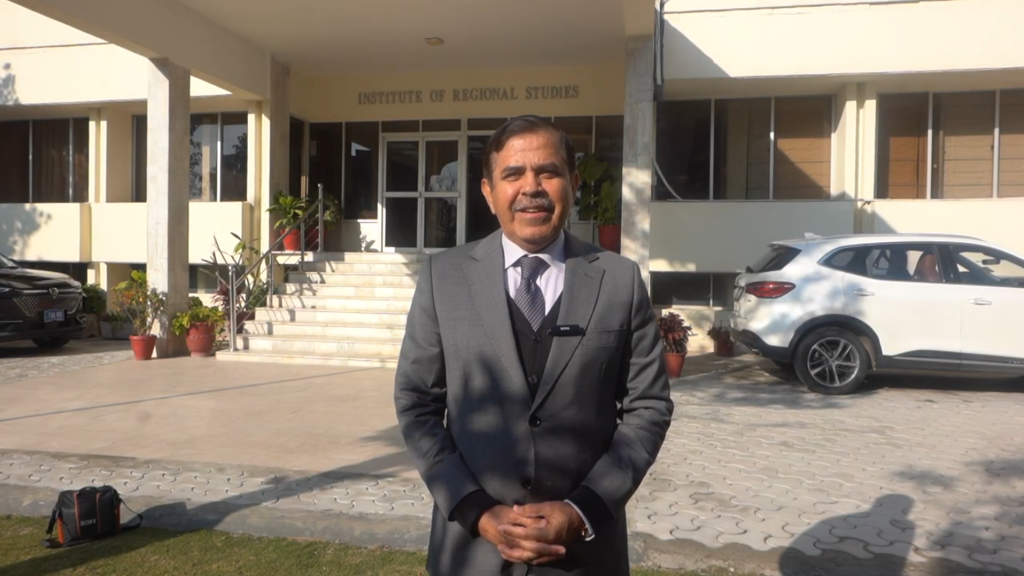
On January 29 this year, the Institute for Strategic and Regional Studies under the President of the Republic of Uzbekistan, jointly with the Institute of Regional Studies of Pakistan and with the support of the Embassy of Uzbekistan in Pakistan, organized an expert online conference titled “Uzbekistan – Pakistan: Strategic Partnership, Connectivity, and Sustainable Development in a Changing World”.
Speaking at the conference, Major General and the lecturer at the National Defence University in Islamabad, Muhammad Samrez Salik, emphasized that Uzbekistan and Pakistan possess unique potential for regional integration and joint economic growth. “Today, Uzbekistan is no longer an isolated center, and Pakistan is no longer a peripheral country. A strong economic bridge can be built between them”, he noted. According to Salik, landlocked status should be viewed not as a constraint but as both a challenge and an opportunity for geo-economic development, while Pakistan, with the Port of Karachi and the Gwadar Port, provides access to global trade routes.
The expert emphasized that demographic and economic differences create opportunities for complementary cooperation. “A combined market of nearly 300 million people represents not only consumers but also human capital. Connectivity will create the largest labor and intellectual cluster in the region”, he said. At the same time, Pakistan is a demographic giant with a young population and a high debt burden, whereas Uzbekistan demonstrates steady economic growth, higher per capita income, and technologically advanced production.
Muhammad Samrez Salik paid particular attention to the integration of transport and logistics. “The route from Tashkent to Pakistani ports currently takes about 35 days. After the launch of the railway through Afghanistan, this period will be reduced to 3-5 days”, he noted. He identified three key routes: the Trans-Afghan Corridor linking Pakistani ports with CIS markets through Afghanistan; an eastern route via China and Central Asia as an alternative in case of instability in Afghanistan; and the Central Corridor connecting Pakistan with the Caspian region and Europe. According to the expert, Uzbekistan serves as a critically important transit link, ensuring fast and secure access to both domestic and external markets.
Muhammad Samrez Salik drew attention to the existing untapped potential: “Although current trade turnover amounts to just over $400 million, this represents only 0.1% of the combined GDP of Pakistan and Uzbekistan. The growth opportunities are enormous”. He emphasized that the success of cooperation depends on effective infrastructure connectivity and market integration, enabling both countries to leverage their geographic, demographic, and economic advantages fully.
In conclusion, the expert noted: “Connectivity through transport corridors and market integration can transform Pakistan and Uzbekistan into a powerful economic and intellectual center of the region”.
The conference was attended by leaders and experts from leading analytical and educational institutions in Uzbekistan and Pakistan, as well as representatives of the business community and diplomatic missions. During the event, participants decided to establish an Expert Council between Pakistan and Uzbekistan to serve as a permanent platform for dialogue, the exchange of experience, and the development of practical recommendations.
UzA