Klaus Mangold: “Uzbekistan has chosen its own distinctive development path”
Since gaining independence, Uzbekistan has undergone significant changes in politics, the economy, and social life, while steadily strengthening cooperation with other countries.
Recently, the international expert community has extensively praised the country’s efforts to boost its economic potential, enhance the investment climate, and build trusting relations with foreign partners.
These changes are also evident in Uzbekistan’s growing cooperation with Germany. Political, economic, cultural, and humanitarian connections are expanding rapidly, and collaborations based on mutual trust and shared interests are gaining new depth.
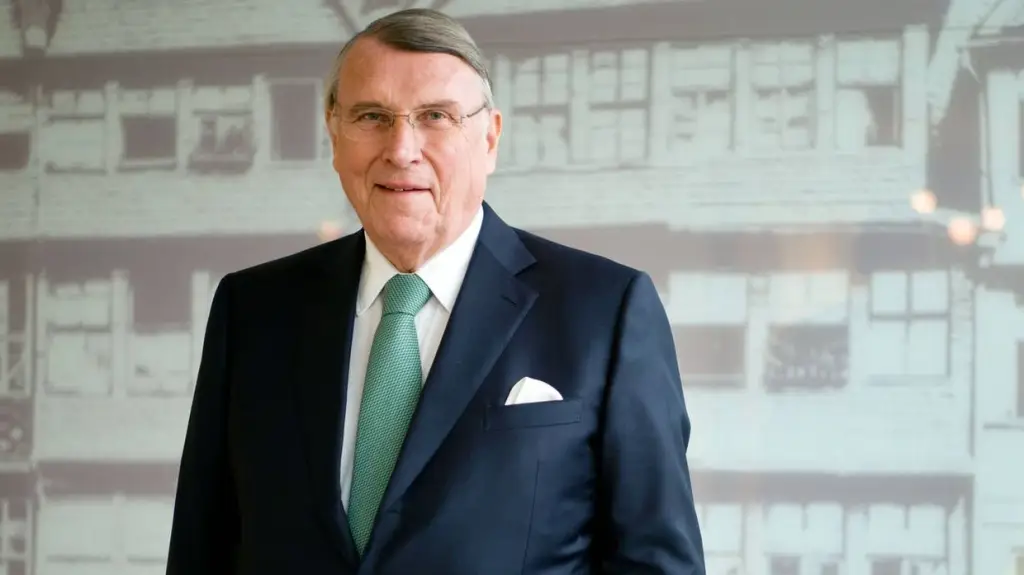
The guest on the project “Uzbekistan – Germany: 35 Years of Development and Partnership”, organized in collaboration with the Embassy of Uzbekistan in Germany, is Professor Klaus Mangold. He is the Chairman of Mangold Consulting GmbH and a well-known German economist. He offered insights into Uzbekistan’s journey since independence, its economic prospects, and its internationalposition.
– First of all, I would like to extend my heartfelt congratulations to the people of Uzbekistan on the 35th anniversary of independence. Over this period, the country has chosen a unique path of development and has experienced rapid growth. Today, it stands as a state confidently advancing along the path of prosperity and making a meaningful contribution to maintaining peace and stability in the region. These achievements have been made possible by a policy based on peace and stability. President Shavkat Mirziyoyev’s personal efforts have played a particularly important role in recent reforms aimed at strengthening security and well-being in the country.
I can say with confidence that Uzbekistan is mobilizing all available resources to pursue its unique course. As a result, its citizens feel happy and prosperous in their homeland, and the international community is witnessing positive changes.
Such achievements are closely tied to the country’s economic environment and the confidence it inspires. The economy and trust complement each other, laying a solid foundation for development. In recent years, this cooperation has grown even stronger thanks to the consistent policies pursued by the President and the government.
In turn, a stable and reliable economic environment creates new opportunities to make effective use of the country’s existing potential. Uzbekistan’s potential is considerable: raw materials, as well as the textile, construction, and automotive industries, are among the key sectors of the national economy. Growth prospects are particularly strong in light industry.
However, a successful economic model cannot be built solely on exporting raw materials. It is essential to integrate the raw materials sector with industry, expand production cycles, and establish comprehensive value chains between them. This will give the economy additional impetus and create a solid foundation for long-term growth.
Economic sustainability is directly linked to human capital. The country’s greatest asset is its educated and talented youth. Uzbekistan is experiencing a significant influx of young people into the labor market, making it especially important to accelerate industrialization. Industrial development will not only provide young people with decent jobs but also drive the economy as a whole.
Speaking of human capital and economic potential, I would like to highlight my personal experience with Uzbekistan. As an entrepreneur, I have devoted more than forty years of my professional career to this country. Therefore, I am not merely observing the reforms from the sidelines but have been a direct participant in and witness to them. Today, Uzbekistan is achieving results that once seemed unattainable and is confidently moving toward its stated goals.
These changes are also evident across the regions. When I visit Nukus, Tashkent, Jizzakh, or Andijan, I see tangible improvements in people’s living standards everywhere. The fact that people in Uzbekistan today can afford cars of various makes, while city squares, restaurants, and cafés are filled with people, clearly demonstrates the changes taking place in society. This transformation is being felt not only in major cities such as Tashkent and Samarkand, but also in the most remote districts and villages. In my view, these changes have been made possible by an effective public administration system and systematic reforms carried out under the President’s leadership.
Naturally, domestic achievements also directly affect the country’s international standing. Strong, stable leadership is a key prerequisite for sustained development. Today, Uzbekistan is steadily strengthening its position on the global stage. While the country’s foreign policy contacts were relatively limited in the past, it is now building mutually beneficial, constructive, and good-neighborly relations with both the West and the East. Such openness and active integration into global processes are reliable indicators of domestic stability and the country’s predictability as a partner.
I sincerely hope that this constructive momentum, clearly felt throughout the country, will continue to grow stronger. I wish Uzbekistan and its people great success in all spheres. The achievements already made are rightly a source of pride, as they provide a solid foundation for peace, prosperity, and a happy future.
Interviewed by Nasiba Ziyodullayeva, UzA