


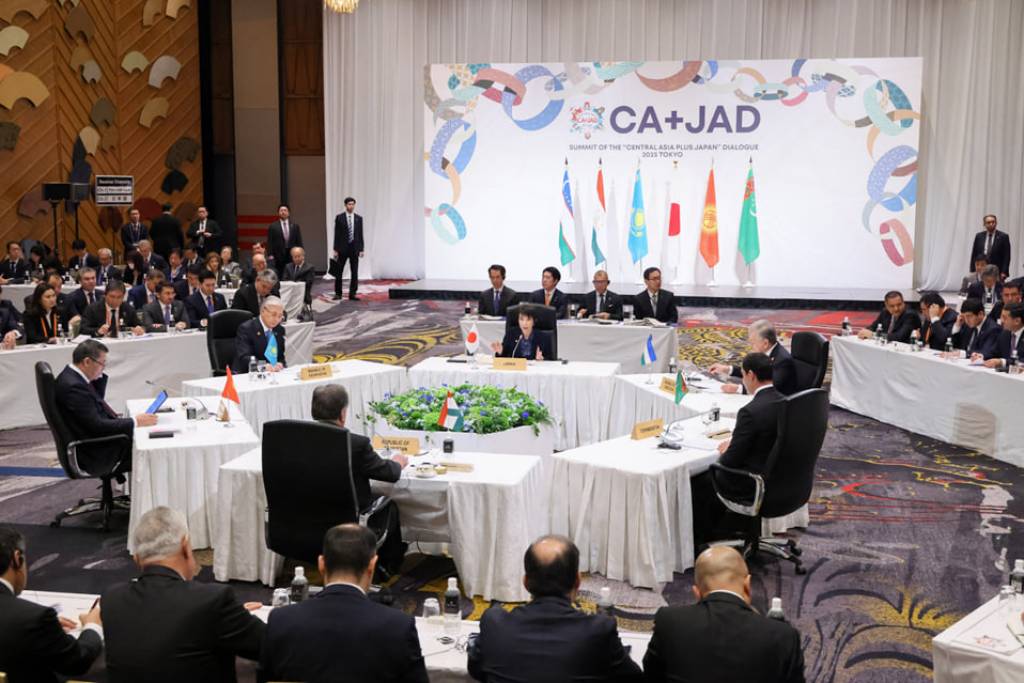
The concluding year of 2025 was highly productive for Uzbekistan’s domestic and foreign policy. The President’s state and official visits to various countries, as well as participation in numerous major summits and forums, were at the center of global attention.
In particular, the official visit of the President of Uzbekistan to Japan and his participation in the first “Central Asia + Japan” dialogue generated significant interest in the international community. It can be noted that global analytical centers closely followed the developments surrounding this visit. Below, we present the views and comments of several foreign experts.
Kamakshi Wason, Chief Operating Officer at the Tillotoma Foundation:

– In recent years, profound changes have been observed in the economic and political spheres of the Central Asian countries, particularly in Uzbekistan, as well as in their relations with the international community. Reforms aimed at strengthening good-neighborly relations and expanding international cooperation in the country are especially commendable. For example, the recent “Central Asia – Japan” summit held in Tokyo was not merely symbolic. It reflected Japan’s growing attention in its foreign and economic policy toward a region of strategic importance.
For the first time, the leaders of all Central Asian states met with the Prime Minister of Japan, indicating Tokyo’s intention to view the region not solely through the prism of bilateral relations, but as a consistent and long-term partner.
It is worth noting that demand in Japan remains high for rare earth elements and other critical minerals essential for high-tech manufacturing, green energy, and the defense industry. Central Asia, particularly Uzbekistan and Kazakhstan, can offer an alternative source in this regard. Diversifying supply chains has become a priority task for Tokyo, and cooperation with Central Asia fully aligns with this broader objective.
It should be acknowledged that the participation of the Leader of Uzbekistan at the summit was of great significance. The crucial initiatives put forward by President Shavkat Mirziyoyev are of critical importance not only for Uzbekistan, but also for the countries of the region. Agreements totaling more than $12 billion were announced, covering the development of education, healthcare, transport, environmental projects, and digital technologies. This reflects New Uzbekistan’s aspiration to pursue its modernization efforts in partnership with technologically advanced partners such as Japan.
As is well known, this year, U.S. President Donald Trump invited the leaders of Central Asia to Washington and emphasized that interest in the region also exists among the United States’ allies. From Japan’s perspective, this does not signify competition with the United States, but rather alignment and the absence of strategic differences between Washington and Tokyo regarding Central Asia.
Overall, the Tokyo summit laid the groundwork for further developing comprehensive cooperation with the countries of the region across all areas.
Kazushi Yamamoto, Researcher at Georgetown University (USA):

– It can be said that the “Central Asia + Japan” meeting became one of the most important events of the year now coming to an end. The Tokyo Declaration represents an agreement to elevate the “Central Asia + Japan” dialogue and advance cooperation toward green sustainability.
Central Asia is a region with enormous potential in terms of geopolitics, economic security, and mutually beneficial business opportunities. At a time when the international situation is changing rapidly, the region’s importance as a trade corridor connecting Asia and Europe is steadily increasing.
It should be noted that Japan plans to launch new business projects in Central Asia over the next five years with a total value of 3 trillion yen (approximately $19 billion). In addition, the parties agreed to cooperate in artificial intelligence, which creates new opportunities for technological partnerships.
Guzal Sattorova, UzA