Integration of Turkic States: Is an economic bloc emerging?
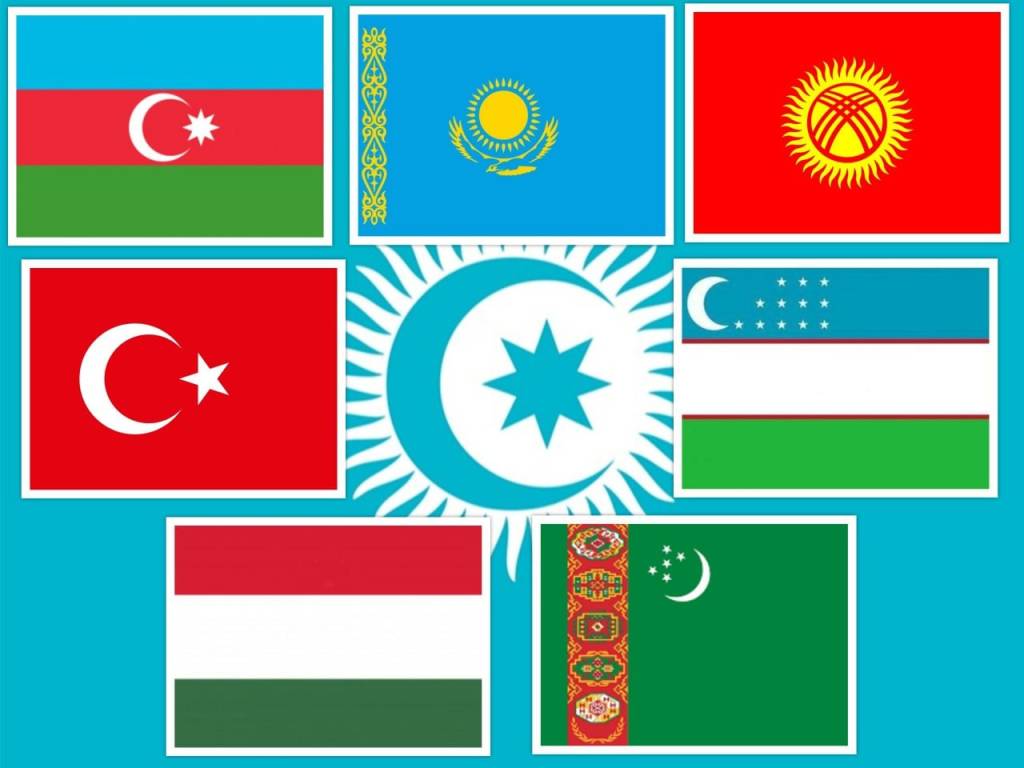
Amid the transformation of the global geopolitical landscape, cooperation among Turkic states in Eurasia has noticeably intensified.
In the region that unites Central Asia, the Caucasus, and Anatolia, political dialogue is expanding, transport and trade ties are strengthening, and joint economic initiatives are being advanced. Against the backdrop of shifts in the global geopolitical balance, the rapprochement of Turkic countries is attracting increasing attention from international analytical centers and experts. The institutional foundation of this process is the Organization of Turkic States.
The modern model of cooperation originates from the Nakhchivan Agreement signed in 2009, which established a mechanism for continuous political dialogue among Turkic-speaking states. In 2021, the organization was officially renamed the Organization of Turkic States, and its powers were expanded. Its full members include Uzbekistan, Kazakhstan, Kyrgyzstan, Türkiye, and Azerbaijan. Hungary and Turkmenistan have observer status. Within the framework of the Turkic World Vision 2040 strategy, deepening economic integration, developing transport connectivity, and increasing the volume of mutual trade have been identified as priority tasks.
Trade relations and economic connectivity
One key indicator of regional integration is the dynamics of mutual trade. In recent years, trade within the Organization of Turkic States has demonstrated steady growth. In 2023-2024, total trade among member states exceeded $45 billion. Although this figure is not yet comparable to the level of the largest economic unions, it clearly demonstrates the steady expansion of economic ties.
Türkiye plays a particularly important role in this process as the region’s largest economic center. Over the past decade, its trade with Central Asian countries has increased significantly. By 2023, Uzbekistan’s trade turnover with Türkiye had approached $3 billion. The goal is to raise this figure to $5 billion, indicating that bilateral cooperation is reaching a qualitatively new level.
Kazakhstan also occupies an important place in the Turkic economic space. With significant energy resources, a developed industrial base, and high transit potential, the country serves as a key link in the regional economic system.
According to economists’ assessments, the share of mutual trade within the Organization of Turkic States in the total foreign trade turnover remains relatively low. However, the high growth rates create the prerequisites for further deepening of economic integration.
Transport corridors and geoeconomic significance
One of the most important factors of economic rapprochement is the development of cooperation in transport and logistics. Against the backdrop of the restructuring of Eurasian supply chains, interest in the so-called Middle Corridor is increasing. This route provides transport connectivity from China through Central Asia to the Caspian Sea and, further, through the Caucasus and Türkiye to Europe. The Baku – Tbilisi – Kars railway line, as a strategic element of this corridor, contributes to the formation of a new logistical direction in Eurasia. According to expert assessments, with accelerated infrastructure development, this route may become an important alternative project in intercontinental trade logistics.
Investment and industrial cooperation
Positive dynamics are also observed in the investment sphere. In 2023, the Turkic Investment Fund was established to institutionalize cooperation. Its activities are aimed at financing joint infrastructure projects, stimulating industrial cooperation, and increasing the private sector’s role. The result of such interaction has also been a noticeable increase in recent years in the number of Uzbek – Turkish joint enterprises. Cooperation covers key sectors such as the textile industry, construction materials production, and energy. This model of cooperation contributes to the formation of regional production chains and the activation of investment flows.
The integration of Turkic states has not only economic but also geopolitical significance. For Türkiye, developing ties with Central Asia opens opportunities to strengthen its strategic position in Eurasia. The countries of the region, in turn, gain additional instruments to diversify foreign economic relations and access new markets.
Amid the transformation of global supply chains, the strengthening of transport, trade, and investment ties among Turkic states can form a new economic space in Eurasia. With further institutional consolidation and deepening integration, the coming decade may see the emergence of a new model of regional economic integration in the Turkic world.
Dilshod Hakimov, UzA