Institutional foundations of economic pragmatism: How Uzbekistan and Tajikistan are transforming bilateral trade
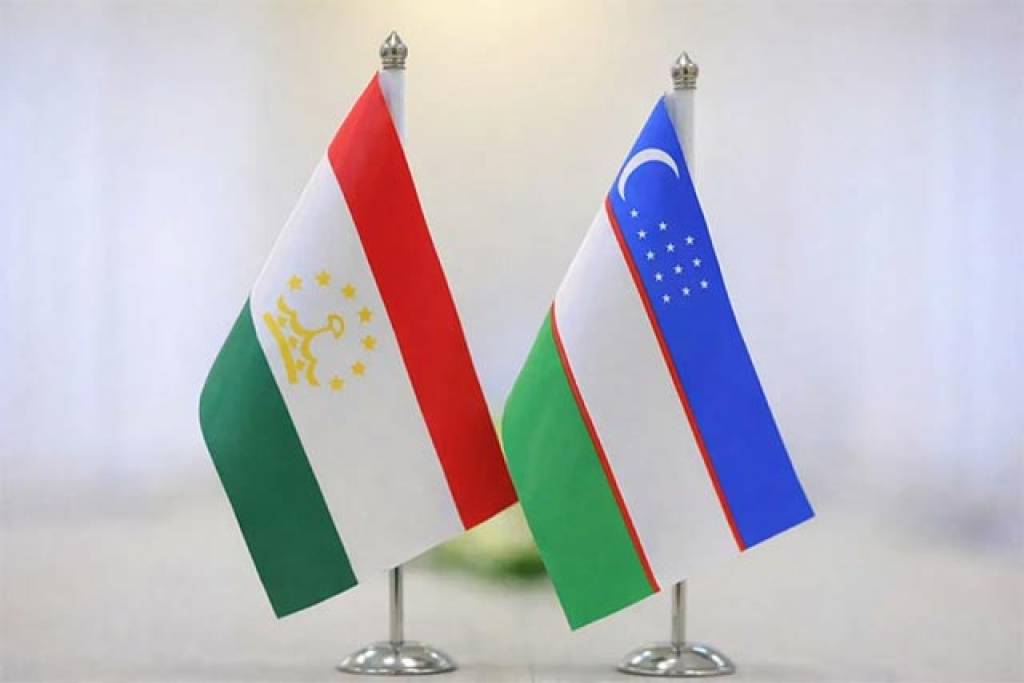
The entry into force of the Treaty on Allied Relations between the Republic of Uzbekistan and the Republic of Tajikistan (the exchange of instruments of ratification took place on March 31, 2025, in Khujand) opened a new chapter in bilateral cooperation. However, transforming political declarations into the real economy requires the creation of sustainable mechanisms.
Today, the economic component of the bilateral agenda demonstrates a shift from situational commodity exchange toward systematic, institutionally embedded integration. The multiple growth in bilateral trade turnover in recent years is not merely the result of political will at the highest level. It is the outcome of targeted efforts to remove barriers, harmonize customs procedures, and create new cross-border trade and logistics infrastructure. In this context, the strategic objective of increasing bilateral trade volume to 1 billion, and, in the longer term, to $2 billion, is supported by specific instruments: intergovernmental commissions, joint investment mechanisms, and cross-border economic zones.
Growth in trade turnover and a new structure of interaction
An analysis of statistical data shows stable positive dynamics: by the end of 2024, bilateral trade between Uzbekistan and Tajikistan exceeded $700 million. As emphasized by the President of the Republic of Uzbekistan, Shavkat Mirziyoyev, on November 27, 2025, during the ceremony of receiving credentials from the newly appointed Ambassador of Tajikistan, Nasreddin Ismatullo, the countries have set a near-term goal of surpassing the $1 billion mark in mutual trade turnover. The long-term target is 2 billion dollars, which was established during high-level negotiations in April 2024.
This growth is being achieved not through extensive expansion of raw material exports, but through a qualitative transformation in the structure of interaction. Several mechanisms serve as the main institutional drivers.
Intergovernmental commission and roadmaps
The Intergovernmental Commission on Trade and Economic Cooperation plays a key role in coordinating economic processes. At its meetings, specific plans are developed in the areas of industrial cooperation, energy, agriculture, and digitalization. The adoption of targeted roadmaps with the direct participation of the regions – Andijan, Namangan, Syrdarya, Fergana, and Khorezm regions of Uzbekistan, and the Sughd region of Tajikistan – has moved cooperation to the level of direct contacts between producers.
Uzbekistan – Tajikistan investment company
The establishment of a joint investment company has enabled the accumulation of capital to finance major infrastructure and industrial projects. Over recent years, the number of joint ventures operating in the territories of the two states has increased fifteenfold. These include projects in mechanical engineering, electrical engineering, the textile industry, metallurgy, pharmaceuticals, and the agro-industrial sector.
Energy synergy
The water and energy sector holds a special place in the economic agenda. During expanded-format negotiations in April 2024, the parties agreed to continue a constructive dialogue on water use issues and discussed prospects for energy projects. The shift from competition for resources to their joint development is creating a multiplier effect for related industries.
Thus, the economic transformation is built on the principle of complementarity: Uzbekistan and Tajikistan are forming shared value chains in which the products of one country become raw materials or components for production in the other.
Border zones “Oybek – Fotehobod” and “Andarkhan”: Mechanisms driving trade turnover growth
Achieving macroeconomic indicators is impossible without the corresponding physical infrastructure at the borders. As particularly emphasized by the President of Uzbekistan, the early launch of the free trade and border zone “Oybek – Fotehobod” and the trade and logistics center “Andarkhan” will be a key factor in the significant increase in trade turnover.
Located at the junction of Uzbekistan’s Fergana region and Tajikistan’s Sughd region, the “Andarkhan” logistics center is intended to become a major transit hub in Fergana Valley. Its establishment is aimed at addressing several strategic objectives: reducing transaction costs through the consolidation of customs, brokerage, banking, and logistics services under a “single-window” principle; ensuring the preservation of agricultural products through modern storage facilities; and creating a platform for direct contacts between representatives of small and medium-sized businesses of the two countries.
The concept of the “Oybek – Fotehobod” trade and industrial zone (Tashkent region – Sughd region) envisages the establishment of production facilities directly along the border line under a special customs and tax regime. This will allow Uzbek and Tajik investors to jointly process imported raw materials within the preferential tax zone and sell finished products both in the domestic markets of the two countries and for export to third countries.
The launch of these border facilities is intended to legalize a significant portion of unorganized trade by bringing it into a formal framework. This will create additional tax revenues for the budgets of border regions and ensure employment for the local population.
Transport and communication connectivity as a condition for integration
The development of trade zones and the expansion of production are inseparably linked to transport logistics. Issues related to the transport sector consistently remain on the bilateral agenda at the highest level. A practical outcome has been the steady expansion of passenger and freight transport links.
The Ministry of Transport of the Republic of Uzbekistan plans to develop international bus routes connecting major economic and cultural centers of the two countries, as well as integration into broader transit schemes involving Kazakhstan, Russia, and Kyrgyzstan.
For freight carriers, the full settlement of border issues, formalized by the Treaty on the Junction Point of State Borders between the Republic of Uzbekistan, the Kyrgyz Republic, and the Republic of Tajikistan, signed in Khujand on March 31, 2025, means greater predictability in logistics chains. The parties attach strategic importance to the development of the China – Tajikistan – Uzbekistan – Turkmenistan – Iran – Türkiye – Europe route: the consolidation of efforts by the two states makes this corridor more attractive to international shippers.
At the same time, the frequency of direct flights is being expanded, which is critically important for business communities and for realizing the potential of the tourism cluster, including the “Golden Tourist Ring of Fergana Valley” initiative.
Architecture of the Future
The economic transformation of Uzbekistan – Tajikistan relations confirms that a strong institutional foundation supports the political status of allied relations. Achieving the target of $2 billion is a comprehensive process that includes deepening industrial cooperation through joint investment mechanisms; modernizing physical infrastructure through the creation of advanced development zones “Oybek – Fotehobod” and “Andarkhan”; synchronizing transport strategies and opening new logistics corridors; and jointly developing natural and energy resources with due regard for regional balance.
Such a pragmatic, economically grounded approach not only forms the basis for the sustainable development of the peoples of Uzbekistan and Tajikistan but also sets a new standard for interstate interaction across Central Asia. The success of the bilateral economic model directly contributes to strengthening the region’s position within the “C5+1”, SCO, and CIS dialogue formats, turning Central Asia into a unified, stable, and investment-attractive market.
Abduaziz Khidirov, UzA