


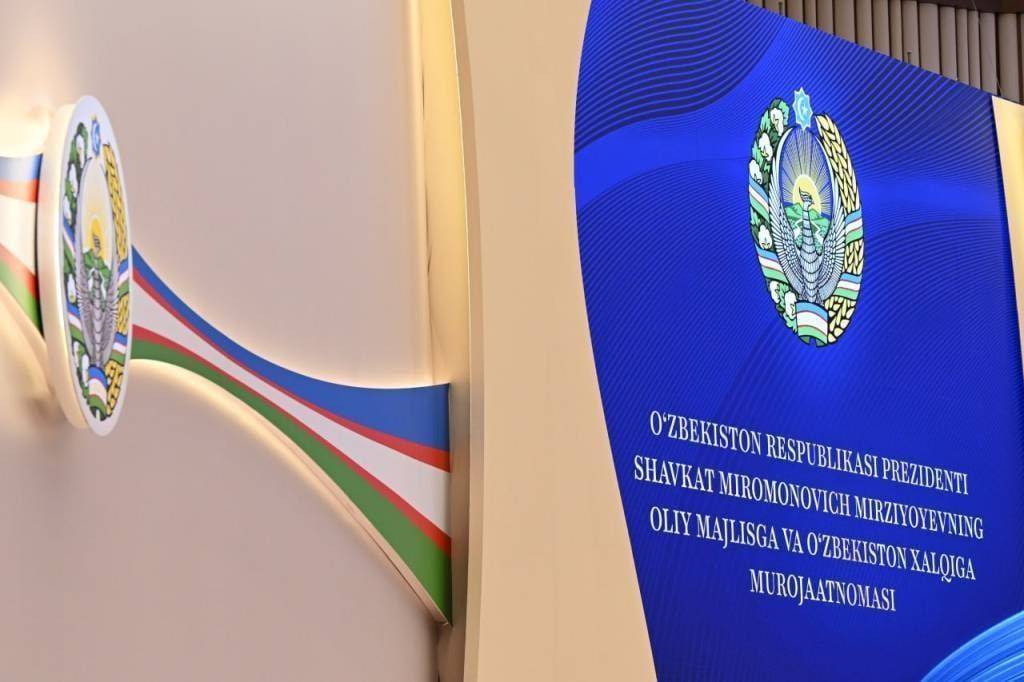
The Address of our country’s President, Shavkat Mirziyoyev, to the parliament and the people has become a programmatic document outlining key directions for the country’s development amid global instability, technological change, and the transformation of the world economy.
Executive Director of the El-Yurt Umidi Foundation for Training Promising Personnel under the President of the Republic of Uzbekistan, Gulnoza Ismailova, shared her views on this matter:
– The main idea of the Address is the priority of the individual and their potential. The President emphasizes that economic growth, poverty reduction, and improved population well-being are impossible without investment in citizens’ knowledge, skills, and professional mobility.
The figures cited in the Address – reductions in poverty levels, employment growth, and expanded access to education and vocational training – demonstrate that socio-economic reforms have begun to deliver sustainable results. However, the political “message” goes even deeper: the state assumes responsibility not only for creating jobs but also for the quality of human capital that will fill them.

The part of the Address devoted to the future of the labor market deserves special attention. The President effectively acknowledges that traditional employment models are becoming outdated. Artificial intelligence, automation, and digital technologies are transforming not only individual professions, but also the very essence of economic processes.
From this perspective, the statement that most professions will be automated in the coming years is not a warning, but a call to action. The state proposes a solution: the formation of a new labor-market architecture in which education, technology, and qualifications function as an integrated system.
For the El-Yurt Umidi Foundation, this means placing greater emphasis on training personnel specifically for such conditions – educating specialists capable of working in an interdisciplinary environment, mastering new technologies, and remaining competitive not only at the national, but also at the global level.
The special attention given to the development of information technologies, artificial intelligence, and high-tech sectors carries significant political importance. The Address clearly indicates that technological development is not only an economic issue, but also a matter of sovereignty.
The digitalization of public services, the introduction of artificial intelligence into governance, and the reduction of bureaucracy are all elements of a new state model focused on the individual, transparency, and efficiency.
Today, the El-Yurt Umidi Foundation is contributing to these objectives by supporting the education of young specialists at leading international universities in fields such as information technology, big data (data science), artificial intelligence, engineering, and digital governance. These are not isolated initiatives, but contributions to building the human capital foundation of a technological state.
An essential political signal of the Address is that the fight against corruption is viewed not as a campaign, but as a systemic task. The President emphasizes digital tools, transparent procedures, and the professionalization of the civil service. Personnel with international education, modern management skills, and a strong ethic of responsibility remain a key resource for such transformations.
It is precisely here that the role of the El-Yurt Umidi Foundation goes beyond an educational function. The Foundation becomes an element of the state’s anti-corruption policy aimed at shaping a new governance culture based on competence, openness, and accountability.
The Address also confirms that education is becoming an instrument of “soft power” and an essential component of Uzbekistan’s foreign policy. Cooperation with prestigious foreign universities, including projects with Japan’s University of Tsukuba, is not merely an academic initiative, but a strategic investment in the state’s future.
For the El-Yurt Umidi Foundation, this means expanding the role of academic diplomacy: establishing long-term partnerships, developing joint programs, and creating mechanisms for knowledge transfer. All of this returns to the country in the form of reforms, innovations, and new governance solutions.
Overall, the President’s Address can be assessed as another major political manifesto of a mature reform program. Its primary focus is on knowledge, technology, and people who are capable not only of adapting to change, but also of shaping it.
The El-Yurt Umidi Foundation focuses on the practical implementation of the priority areas identified by the President through the training of personnel for key sectors such as information technology, artificial intelligence, science, medicine, space, public administration, and the innovative economy.
Overall, based on the harmony between education and human potential, a New Uzbekistan is being formed, one that looks confidently to the future and is capable of taking a worthy place on the global stage.
Norgul Abduraimova, UzA