Foreign Policy Advisor to the President of Uzbekistan addresses the Global Baku Forum
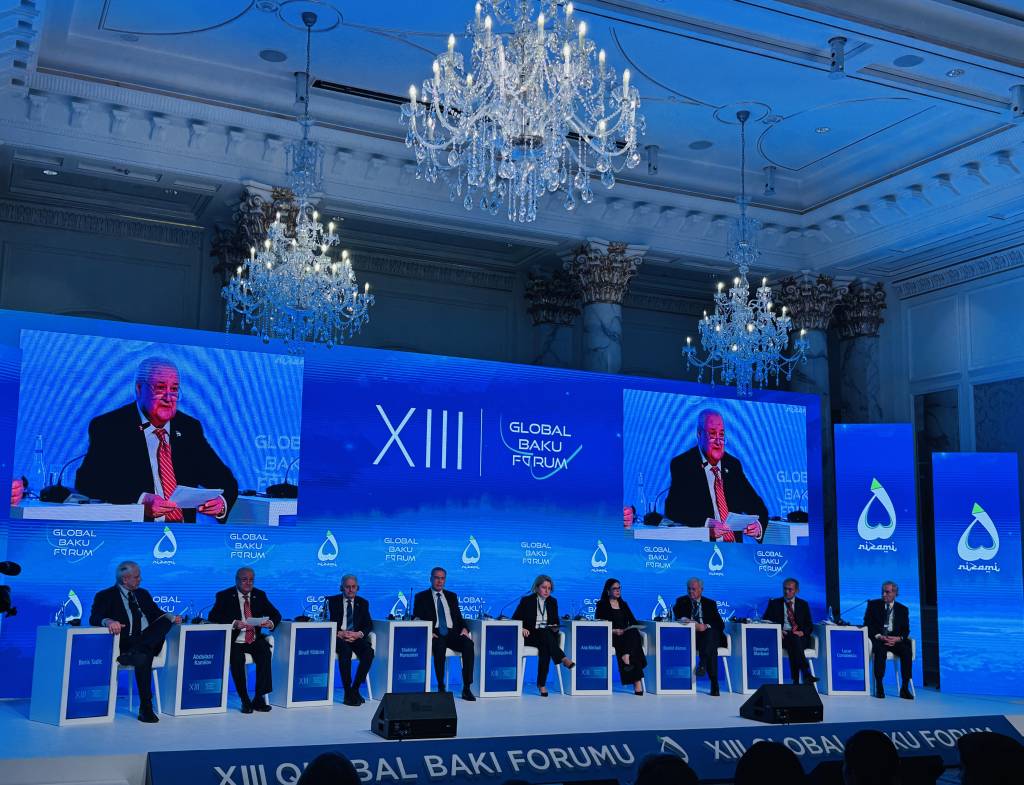
A delegation of the Republic of Uzbekistan, led by the Foreign Policy Advisor to the President, Abdulaziz Kamilov, took part in the XIII Global Baku Forum held from March 12 to 14 under the auspices of the Nizami Ganjavi International Center.
The forum, which brought together around 400 distinguished participants from dozens of countries, was held under the theme “Bridging divides in a world in transition”.
Discussions focused on the most pressing challenges of today, including the transformation of the international security architecture, the crisis of multilateral diplomacy, and the search for pathways to sustainable development amid global uncertainty.
Heads of state and leaders of major international institutions took part in the opening ceremony and panel sessions. Among them were President of Azerbaijan Ilham Aliyev, the heads of state of Albania, Montenegro, and Timor-Leste, senior UN leadership, including Under-Secretaries-General Miguel Ángel Moratinos and Anacláudia Rossbach, as well as heads of leading international organizations Rebeca Grynspan (UNCTAD), Tedros Adhanom Ghebreyesus (WHO), and others.
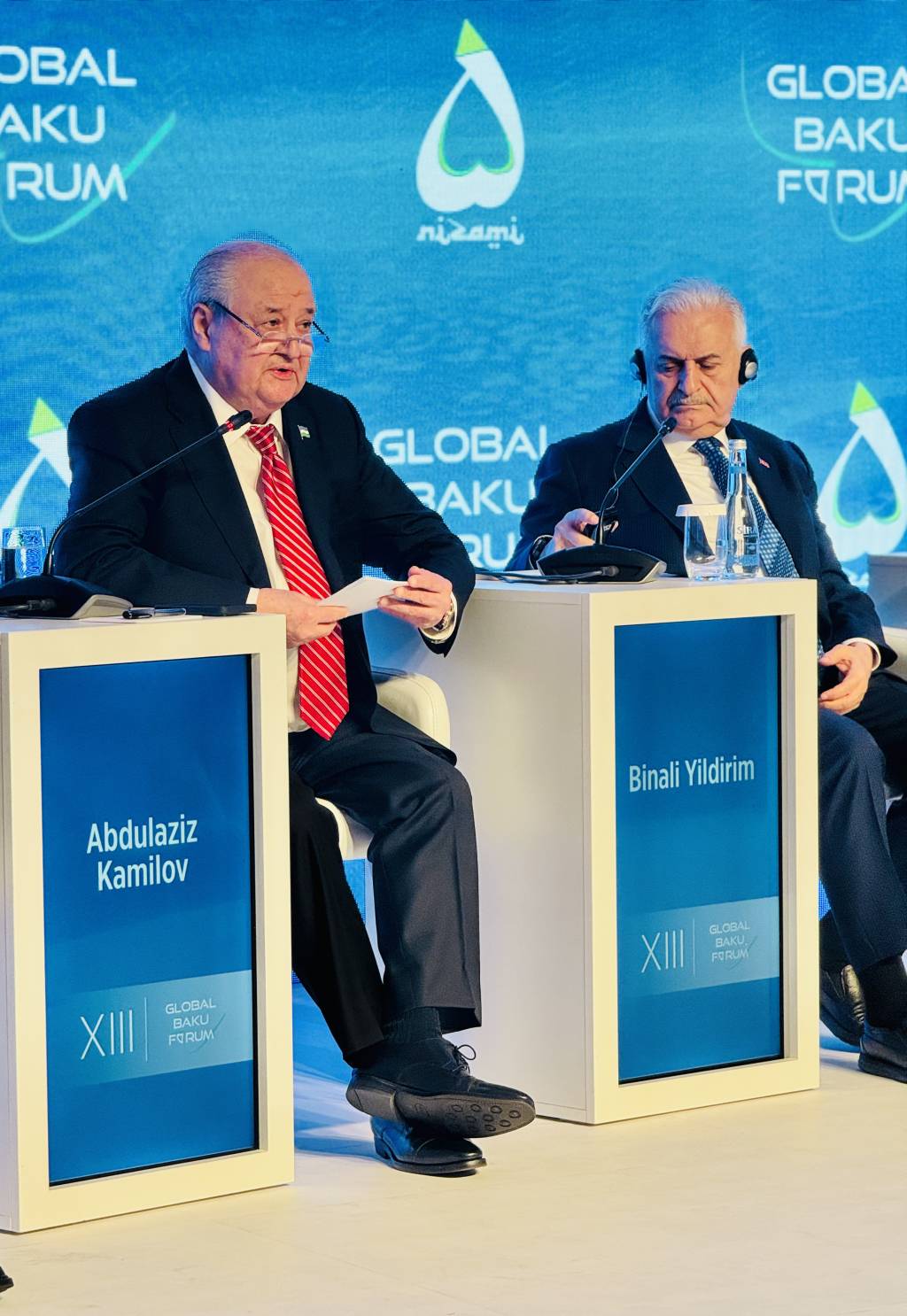
In his remarks, Mr. Kamilov stated that relations between Uzbekistan and Azerbaijan are experiencing an unprecedented rise and are developing in the spirit of a genuine strategic partnership. The foundation of this rapprochement has been the Treaty on Allied Relations and the personal trust-based dialogue between the heads of state Shavkat Mirziyoyev and Ilham Aliyev.
The Advisor to the President of Uzbekistan paid particular attention to Central Asia’s transformation.
He noted that “thanks to the peacebuilding efforts of President Shavkat Mirziyoyev and the sincere support for his policy from the countries of the region, Central Asia has transformed from a zone of contradictions into a space of shared development”.
“Peace has become our common long-term investment, which is already yielding dividends. In recent years, intra-regional trade in Central Asia has doubled, while mutual investments have increased fivefold”, Abdulaziz Kamilov emphasized.
At the same time, as the Advisor to the President of Uzbekistan noted, similar positive processes that contribute to strengthening stability and economic development are now clearly emerging in the South Caucasus.
In this regard, he stated that Uzbekistan welcomes the restoration of Azerbaijan’s territorial integrity and the signing of a peace agreement between Azerbaijan and Armenia. He added that “a stable South Caucasus is a strategic gain for the whole of Eurasia, opening fundamentally new conditions for connecting the economic, infrastructure, and transit potential of our regions”.
Abdulaziz Kamilov recalled that the President of Uzbekistan, Shavkat Mirziyoyev, was among the first leaders to recognize the enormous potential of such a rapprochement. His initiative to invite the President of Azerbaijan, Ilham Aliyev, to participate in the Consultative Meetings of the Heads of State of Central Asia marked a historic step toward a new stage of interregional connectivity.
According to Mr. Kamilov, Uzbekistan regards Azerbaijan as an organic and integral part of the region. This approach is based not only on a deep historical heritage and shared cultural codes, but also on a consolidated, long-term vision of a common future.
In this regard, “Azerbaijan’s accession to the Central Asian community opens broad opportunities for the formation of a common geopolitical and economic space from Central Asia to the South Caucasus”, he believes.
The practical embodiment of this strategy is the development of new transport corridors and the creation of reliable supporting infrastructure for cooperation.
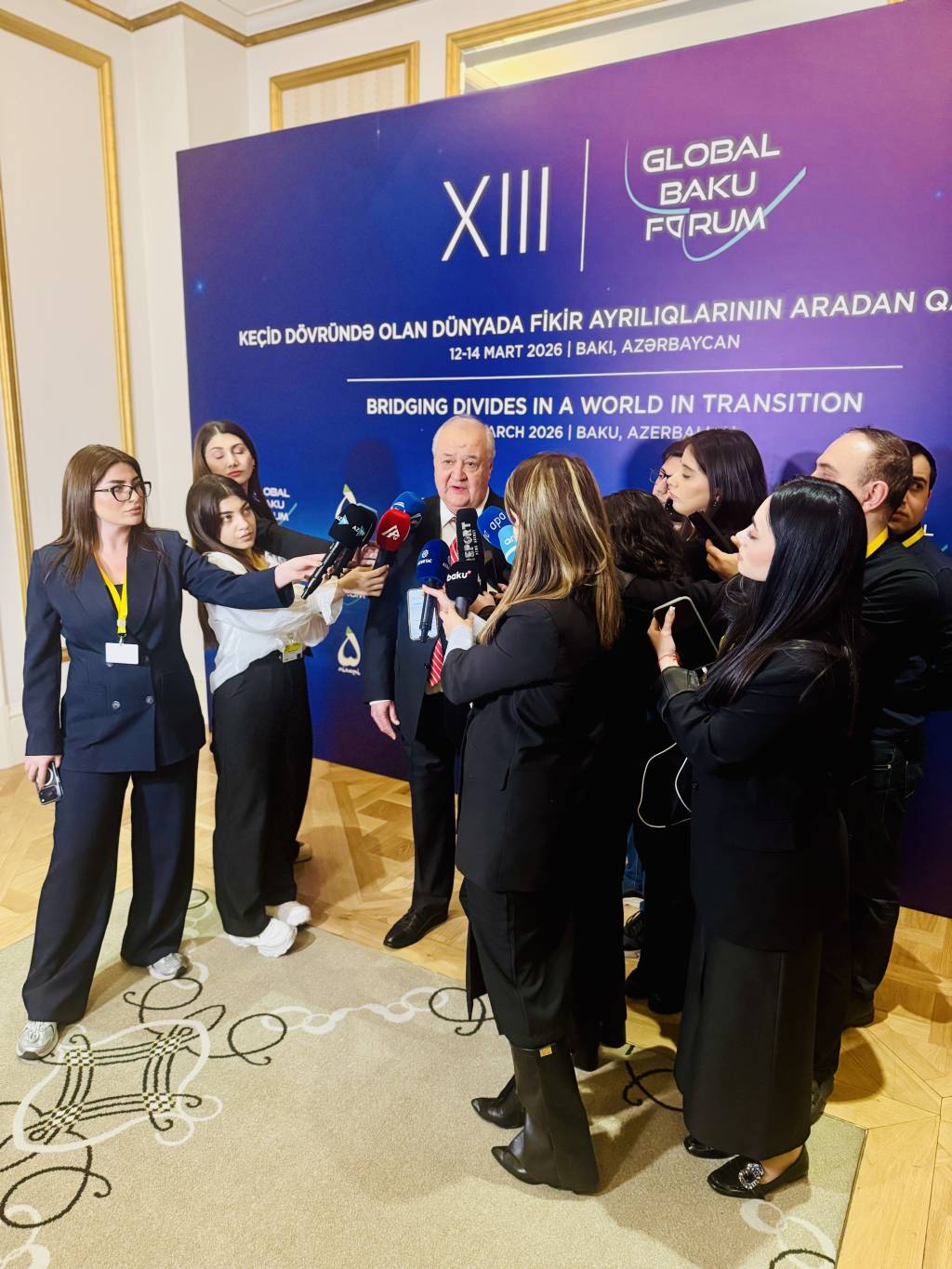
In this context, Mr. Kamilov highlighted the Middle Corridor as the shortest route connecting China and Central Asia with the Caucasus and Europe. “For the countries of the region, the Middle Corridor is an important factor of economic resilience and the key to full integration into global value chains”, the Foreign Policy Advisor to the President of Uzbekistan emphasized.
At the same time, he pointed to the significant potential of linking the Middle Corridor with the “China – Kyrgyzstan – Uzbekistan” railway project and the Trans-Afghan route, as well as to the strategic importance of developing the Zangezur Corridor.
“We view the Zangezur Corridor as a crucial segment of logistics networks connecting Europe, the South Caucasus, and Central Asia into a single hub”, he stated.
The Foreign Policy Advisor to the President of Uzbekistan expressed confidence that ensuring connectivity among these routes will enable the formation of a multi-level, diversified system of major transport corridors spanning the space from East Asia to the Middle East and Europe.
“Taken together, this will create conditions for balanced integration into the global economy, access to new markets, and will become a factor of stability for Eurasia”, Mr. Kamilov concluded.
UzA