


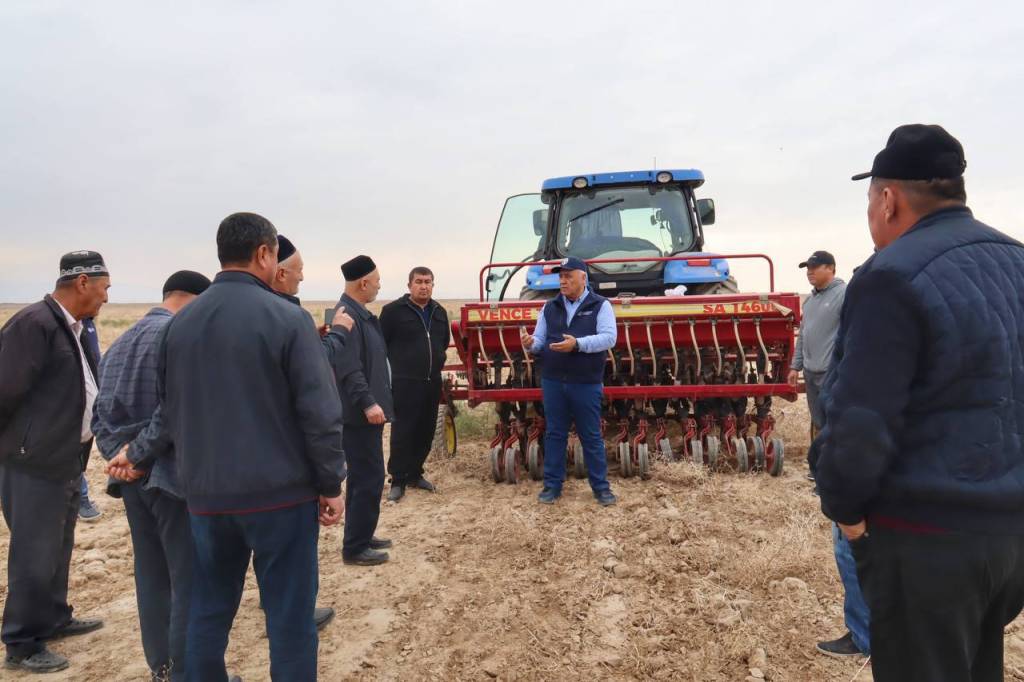
The representative office of the Food and Agriculture Organization of the United Nations (FAO) in Uzbekistan is conducting various activities in the regions under the FOLUR project.
Launched in 2023, this initiative is financed by the Global Environment Facility (GEF) and implemented in partnership with the Ministry of Agriculture and the Ministry of Ecology, Environmental Protection, and Climate Change of Uzbekistan.
The “Food Systems, Land Use, and Restoration Impact Program” (FOLUR) aims to conserve biodiversity, use land and water resources efficiently, and promote soil-protecting and resource-saving agricultural practices that support increased agricultural productivity. Additionally, wheat production, efficient land preparation technologies, and ecological approaches are being introduced to prevent ecosystem degradation.
The Karaozak and Beruniy districts of the Republic of Karakalpakstan, Urgench, Yangibozor districts of Khorezm, and Qamashi and Shakhrisabz districts of Kashkadarya regions were selected as part of the project. The project’s main objective is to introduce best practices and innovations for sustainable and inclusive wheat-based production landscapes and value chains.
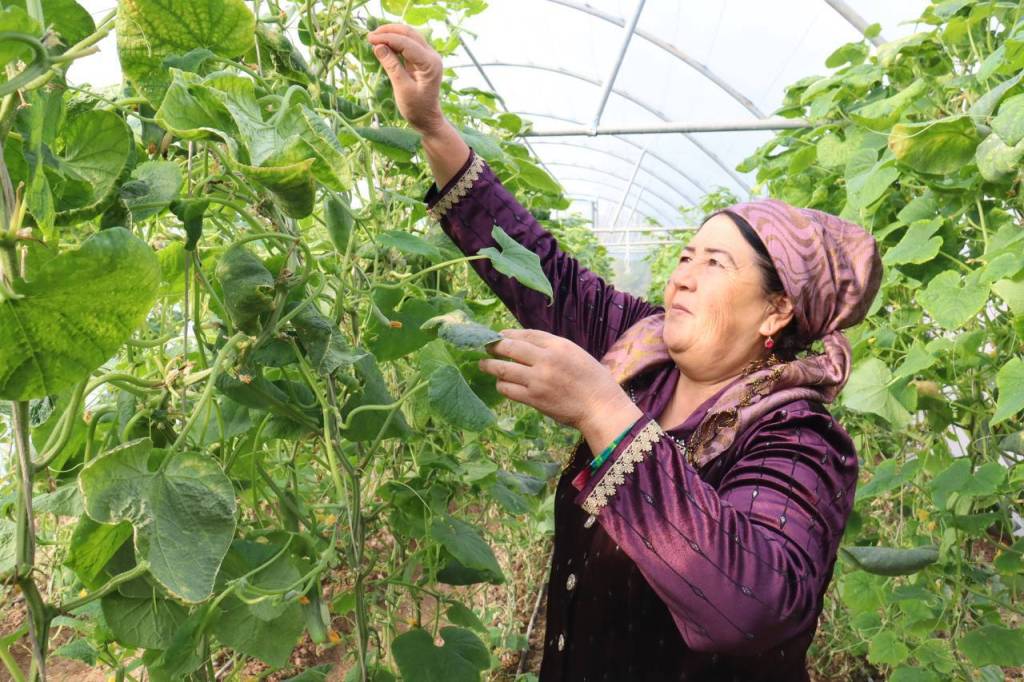
Reflecting on last year’s success, FAO’s National Project Coordinator in Uzbekistan, Azizbek Nurbekov, said: “Last year, 30 small greenhouses were built in these regions. Beneficiaries used them to grow melons, tomatoes, cucumbers, and other vegetables, generating income of 20 to 42 million UZS. Additionally, farms that received 25 motor cultivators saw their incomes rise by up to 20 million UZS over the year. Impressed by these results, the FAO office in Uzbekistan and the FOLUR team have decided to expand the distribution of greenhouses and motor cultivators in project areas”.
In October of this year, several events were held in selected areas and small greenhouses were built for 20 landowners, motor cultivators were delivered to 25 citizens. While handing over motor cultivators and new seed varieties to beneficiaries, the FOLUR project team shared recommendations on sowing rates, crop rotation, fertilizers, and irrigation practices. Experts advised farmers to grow coriander and garlic in the winter, with tomatoes, cucumbers, and greens in the spring and summer. The project entails supporting farmers in maximizing income throughout the year. The new beneficiaries of the project expressed their gratitude to the FAO representative office in Uzbekistan for their assistance.
Also, wheat seeds are supplied to farms, and planting works are being introduced using advanced technologies. This initiative builds on previous successes.
“In fall 2023, 15 tons of drought-resistant Kayroktosh wheat seeds were sown on 150 hectares using a no-till approach, achieving yields of 2-4 tons per hectare and increasing farm income. Following the 2024 wheat harvest, farmers returned 15 tons of seeds, which the project then distributed to other local farms at no cost. Now, an additional 5 tons of seeds have been delivered to five farms”, says FAO’s National Project Coordinator in Uzbekistan, Azizbek Nurbekov.
In other target areas, 8 farms in Khorezm region received 8 tons of salt-tolerant “Davr” winter wheat seeds. All seeds are sown using no-till technology.
UzA