


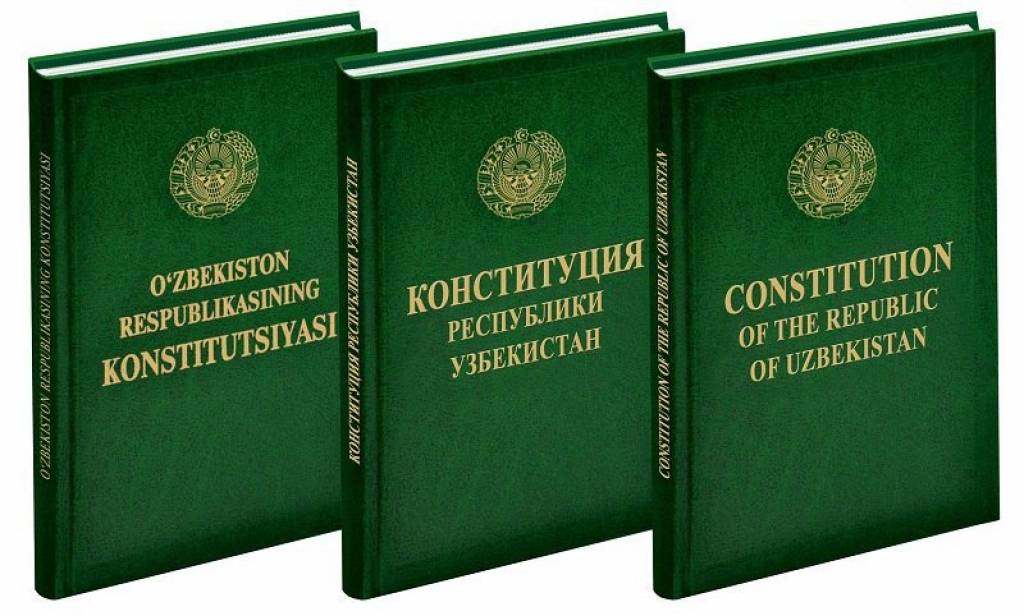
President Shavkat Mirziyoyev met with members of the Constitutional Commission for introducing amendments to the Constitution of the Republic of Uzbekistan and implementation of organizational measures.
Based on the content of the initiatives, one can once again conclude that the proposals made to the Constitution regarding the activities of the Cabinet of Ministers and local government bodies are predisposed to improving governance based on the principle that “the state is for the people”.
We talked about the essence and content of these proposals with the head of the Constitutional Law Department of Tashkent State University of Law Bekzod Narimanov.
– Would you please tell us what does it mean to reflect in the Constitution the issue of separation of powers of local hokims and local Councils, which is the most important in reforming the system of state power and administration? It was also proposed to exclude from the Basic Law the norm relating to the management by hokims of the activities of local Councils of people’s deputies simultaneously with the performance of their official functions. Would you please explain to the readers the essence and meaning of this proposal as a specialist?
– This is a very good proposal. We have been waiting for this reform for many years. When a hokim headed the local Council of People’s Deputies, he seemed to consolidate his decisions with the hands of the Council.
To increase the efficiency of the executive level, a resolution of the President of the Republic of Uzbekistan “On measures to further reduce bureaucratic barriers and introduce modern management principles in the activities of state bodies and organizations” of December 9, 2019, was adopted. According to it, from January 1, 2020:
– 11 separate functions and powers of local executive authorities were transferred to the territorial divisions of relevant government bodies;
– it is forbidden to demand 32 types of documents from citizens by state bodies and organizations, which are also not subject to the issue by civil society institutions;
– 29 separate interdepartmental collegiate bodies were abolished.
At the same time, the President noted in his Address that hokimiyats have about 300 tasks and functions, 175 of which are not specific to them and duplicate the functions of other agencies, which indicates the inefficiency of their activities and excessive paperwork. This provision shows that there is a lot of work to be done in improving the activities of executive authorities.
The implementation of large-scale reforms in the country and the introduction of a completely new system for identifying problems of the population made it possible to increase citizens’ confidence in state bodies in a short time, in particular, it made it possible to discuss issues of national importance with the people, to study the opinion of compatriots on each relevant issue.
An important aspect of this process is that our people, through their representatives, that is, deputies, not only follow, but also control the socio-economic development of our country. Increasing the responsibility and accountability of the executive power to representative bodies is an important aspect of the ongoing administrative reforms in the Republic of Uzbekistan, which determine the level of democracy in the executive power.
The exclusion from the Constitution of the norm that hokims can simultaneously preside over local Councils of people’s deputies is fully consistent with the rule of limiting the power and establishing accountability of the hokim to the local Council. The forthcoming tasks of the hokim will be freely discussed by the deputies without any pressure.
In his Address to the Oliy Majlis, the Head of the state emphasized the need for establishing a system of regular hearings of reports from the heads of state bodies and hokims in parliament and local Councils of people’s deputies on the level of resolving issues that arise among citizens. At the same time, it was proposed to create a new system of control over the activities of local representative bodies, which would allow the Council to make a request and determine how effectively the hokims use their powers.
Proceeding from this, local budgets will be executed based on the distribution of additional income, a fair definition of benefits, an assessment of the activities of the heads of executive bodies, and an analysis of applications to the People’s Reception Offices.
These initiatives are important to ensure constant communication with the people through the representatives of the hokim represented by deputies. For, the practice of informing the public about the latest events in society and evaluating the activities of the government through people’s deputies is increasingly becoming a reality in the socio-political life of our country.
Therefore, a clear delineation of powers between local executive bodies and Councils, the removal from the Constitution of the rule that hokims also preside over local Councils of people’s deputies plays an important role in strengthening the constitutional foundations of the system of checks and balances of power.
– The necessity of fixing in the Constitution the responsibility of the Cabinet of Ministers and hokimiyats for solving environmental issues, implementing youth policy, strengthening and protecting families, social protection of the disabled, developing convenient public transport, and supporting civil society institutions was proposed. Would you please tell us what result is expected from fixing these urgent tasks in our Basic Law?
– Yes, indeed, all of the above issues are the most important areas for a modern state. In a word, I support the introduction of these amendments to the Constitution. In my opinion, special attention should be paid to the environment, the development of public transport and the creation of the necessary conditions for the recreation of the population. There are many problems in these industries.
Hokims should develop separate regional programs in these areas starting today, without waiting for the introduction of relevant additions.
The proposals to the Constitution clearly define areas that concern our society today and are overlooked by officials. For example, at the level of the Basic Law, we all feel the issue of determining the responsibility of officials for work in the environmental and social spheres.
According to a recent report, the level of green spaces in Tashkent is 26 percent. What about our other regions? These areas should be identified as indicators for evaluating the work of hokims.
The successful implementation of large-scale reforms at the present stage of the country’s development and the achievement of the goals of New Uzbekistan requires the creation of a completely new, efficient and high-quality system of public administration, the organization of the coordinated functioning of local state governing bodies and executive power.
The current new mechanism “Legislative Chamber of the Oliy Majlis – Prime Minister and Members of the Government” makes it possible to improve the practice of submitting quarterly reports on the implementation of state programs to the lower house of parliament, as well as to strengthen control over the implementation of important parliamentary decisions and laws. In addition, the Legislative Chamber introduced the institution of the “Government Hour”, during which members of the Cabinet of Ministers answer questions from deputies, and since 2019, the practice of considering candidates for members of the government has been in effect in the lower chamber.
Thus, the introduction of this constitutional norm will lead to parliamentary and public control over the activities of the Cabinet of Ministers and hokimiyats in the most urgent areas mentioned above. This, in turn, means that a positive solution to our daily problems will be found.
The implementation of this initiative will significantly increase the efficiency of the activities of executive authorities, raise the dialogue between the state and the people to a qualitatively new level and effectively solve local problems.
UzA