


In rural Uzbekistan, where many families rely on their backyard gardens to grow vegetables, rising water scarcity makes it increasingly difficult to sustain their crops. As these challenges mount, innovative solutions come to save the day.
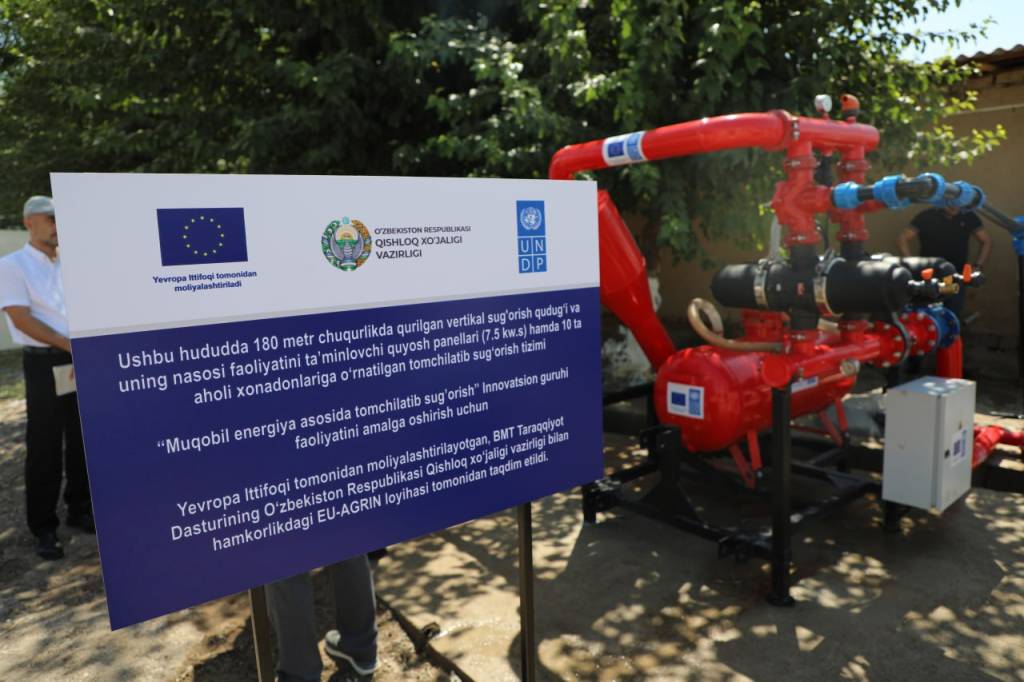
The new drip irrigation system has been introduced in Akkurgan district, Tashkent Region, known for its challenging water supply conditions. The system includes a water pump that extracts water from a vertical well at a depth of 180 meters, supported by solar panels.
Today, the system irrigates 0.8 hectares of land, benefiting 10 households and saving nearly 60% of water compared to traditional irrigation methods. The solar-powered irrigation system’s capacity can sufficiently irrigate 3 hectares of land, potentially benefiting 20 more households.
As climate change and increased water demand threaten Uzbekistan’s environment and food security, the government is promoting cost-effective farmer-led irrigation as a key climate adaptation measure. The excess electricity generated by the solar panels is sold to the State Electricity System, and the revenue is used to manage and operate the irrigation well and the drip irrigation network.
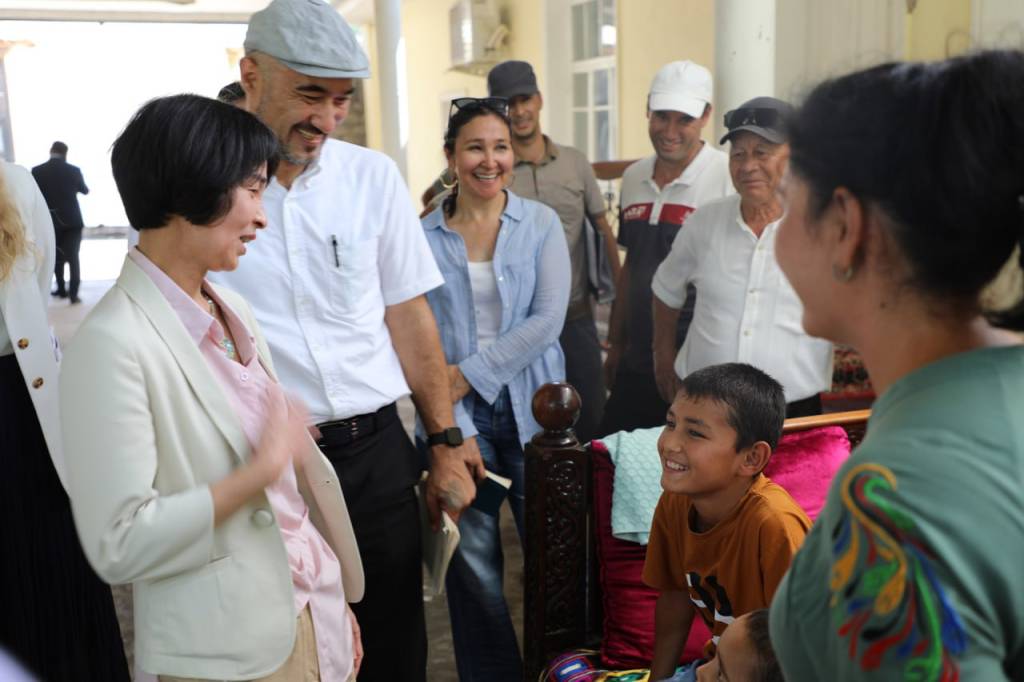
Mr. Wim Riepma, Head of Cooperation of the Delegation of the European Union (EU) to Uzbekistan, highlighted that “this solar-powered drip irrigation system does not only address the water scarcity but also paves the way for more sustainable agriculture in Uzbekistan. Most importantly, it directly benefits local families by increasing their access to electricity and water for irrigation, thus, food security and incomes’’.
Ms. Akiko Fujii, Resident Representative for the United Nations Development Programme (UNDP) in Uzbekistan, emphasized the importance of this project: “Today’s launch of the solar-powered drip irrigation system is a milestone in improving the lives of people across Uzbekistan. We also witness how technological innovation can help us achieve multiple Sustainable Development Goals: poverty reduction, zero hunger, water and energy security, and land protection”.
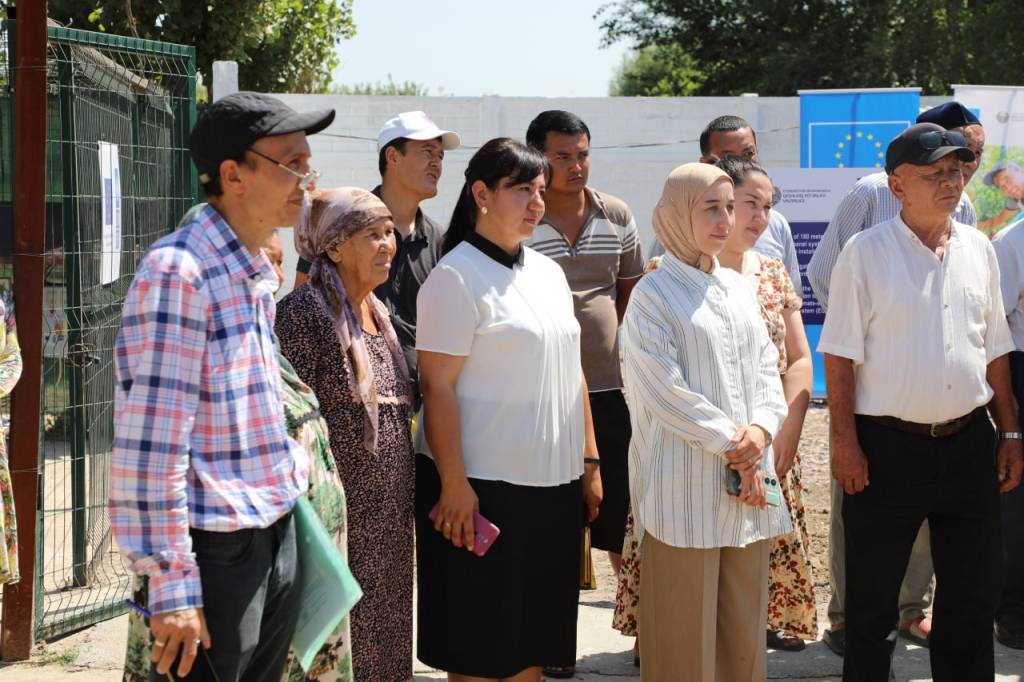
“Already in June, plants used to dry up from the heat without rain. With drip irrigation, our garden pleases us with greens, fresh tomatoes, eggplants, and bell peppers, even in summer. Now we enjoy gardening”, shared Maftuna Akhmedova, a resident of one of the households.
This initiative was implemented by the local Innovation Group comprised of specialists from the Scientific Research Institute of Irrigation and Water Problems, the Scientific Research Institute of Vegetables, Melon Crops and Potato, the International Strategic Centre for Agri-Food Development (ISCAD) under the Ministry of Agriculture, the Center for Agricultural Services (AKIS) and Koshtepa Assembly of Neighborhood Citizens.
The new drip irrigation system and the Innovation Group were launched as part of the project “Supporting an inclusive transition to a green economy in the agri-food sector and development of a climate-smart Uzbek Agriculture Knowledge and Innovation System” (EU-AGRIN). The UNDP implements the project in partnership with the Ministry of Agriculture and is funded by the EU.
Nasiba Ziyodullayeva, UzA