Eldor Aripov outlines priorities for the strategic partnership between Central Asia and the European Union
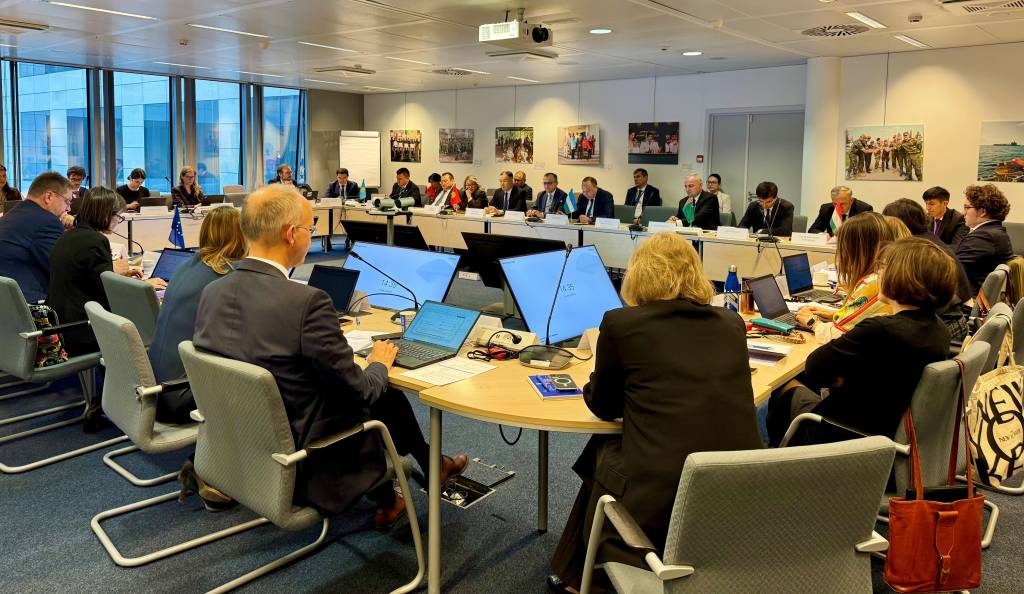
The first EU – Central Asia Strategic Institutes Forum was held in Brussels on 27-28 October 2026 under the theme “Central Asia – EU: Transforming Cooperation in a Changing World”.
The event took place at the headquarters of the European External Action Service (EEAS), bringing together the heads of leading think tanks from Central Asia and the European Union. It was organized by the Institute for Strategic and Regional Studies under the President of the Republic of Uzbekistan (ISRS), the Office of the European Union Special Representative for Central Asia, and the European Union Institute for Security Studies (EUISS).
The forum followed up on the Central Asia – EU Summit in Samarkand and put into practice President of Uzbekistan Shavkat Mirziyoyev’s initiative to expand cooperation among leading think tanks from the two regions.
Discussions focused on deepening interregional cooperation, addressing international security issues, expanding trade and economic ties, improving transport connectivity, and strengthening people-to-people contacts between Central Asia and Europe.
Addressing the forum, ISRS Director Eldor Aripov highlighted the symbolic significance of holding the first meeting of think tanks from the two regions at the EEAS headquarters. He noted that this reflected Central Asia’s growing importance on the European agenda and both sides’ commitment to deeper and more substantive engagement.
The ISRS Director emphasized that Central Asia is emerging as a distinct center of economic and geopolitical significance. The region’s economy is growing by more than 6% annually, and its population could exceed 100 million by 2050.
At the same time, Central Asia’s role as a transport hub and a source of critical resources is expanding. Closer intraregional cooperation, growing trade and infrastructure development are laying the groundwork for the gradual emergence of a common economic space.
Against this backdrop, Central Asia’s ties with Europe are naturally gaining importance. A major milestone was the first Central Asia – European Union Summit, held in Samarkand in April 2025 under the chairmanship of President of Uzbekistan Shavkat Mirziyoyev. The summit elevated relations between the two regions to a strategic partnership.
Speaking at the summit, the President of Uzbekistan stressed the need to give substance to this new framework for relations through concrete decisions, projects and programs. His proposals included establishing a joint investment platform to advance major regional projects; concluding a multilateral Investment Protection and Promotion Agreement; launching a joint Central Asia – European Union Chamber of Commerce; holding regular meetings of foreign ministers; establishing a Central Asia – EU Interparliamentary Cooperation Forum; and expanding cooperation among leading think tanks.
Building on these proposals, Eldor Aripov noted that further development of the partnership must take into account the long-term interests of both sides.
Cooperation with the EU should complement Central Asia’s relations with other partners, broadening the region’s opportunities to attract investment and technology, access new markets and diversify transport routes.
“For us, partnership with the European Union is an opportunity to expand economic ties, diversify markets and attract new technologies while remaining free to cooperate with other partners”, Eldor Aripov emphasized.
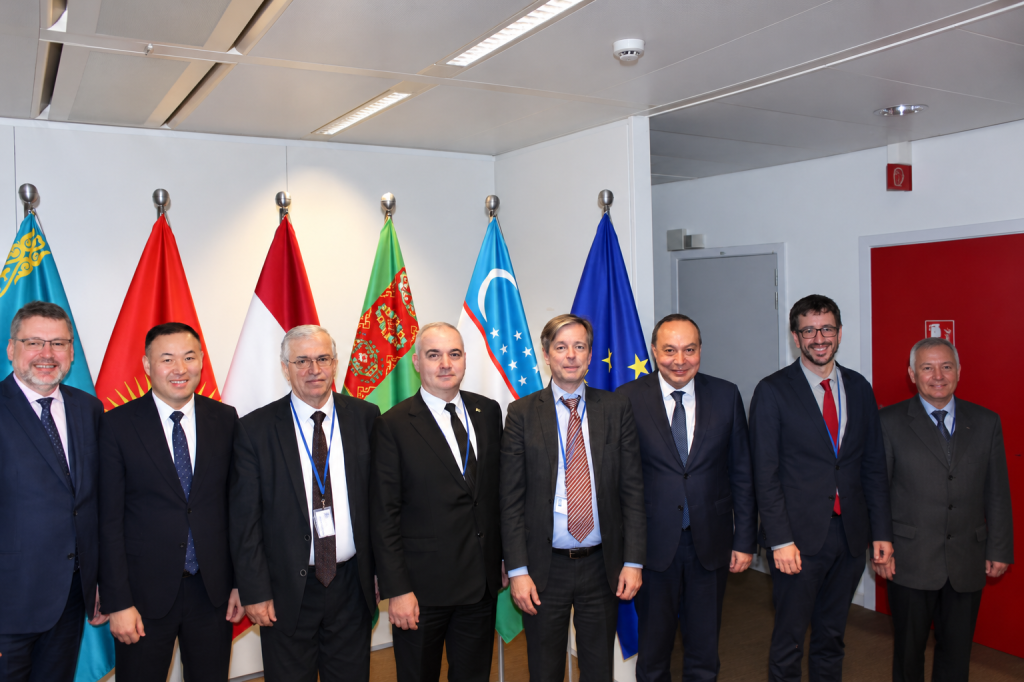
He also noted that cooperation should help both sides respond to external challenges while maintaining their development momentum and freedom to make their own decisions. This requires long-term commitments and durable mechanisms for cooperation that do not depend solely on prevailing geopolitical circumstances.
The ISRS Director then highlighted several promising areas for practical cooperation. These included developing joint value chains in critical minerals, with a focus on processing and the manufacture of high-value-added products; strengthening resilience to water-related and climate risks; and improving the efficiency of transport links, including along the Trans-Caspian International Transport Route.
Particular attention was also paid to developing human capital, vocational education and digital skills; expanding opportunities for legal labor mobility; and promoting stability in Afghanistan by combining security measures with economic development and educational initiatives.
In his concluding remarks, Eldor Aripov stressed that the key task now is to implement the agreements reached and translate policy priorities into action.
“Today, it is important to translate policy priorities into concrete projects and tangible results. This should be the measure of our partnership’s effectiveness”, the ISRS Director stated.
He highlighted the expert community’s role in this process, calling on think tanks to help develop practical proposals for advancing relations between Central Asia and the European Union. Participants expressed interest in continuing the expert dialogue and establishing the forum as a regular platform for cooperation.
Background: The forum was the first event of its kind to bring together Central Asian and EU think tanks in Brussels. It was convened as a follow-up to the first Central Asia – EU Summit in Samarkand to develop practical proposals for expanding the partnership between the two regions.
UzA