Diplomacy of Results: Uzbekistan’s Foreign Policy in 2025-2026
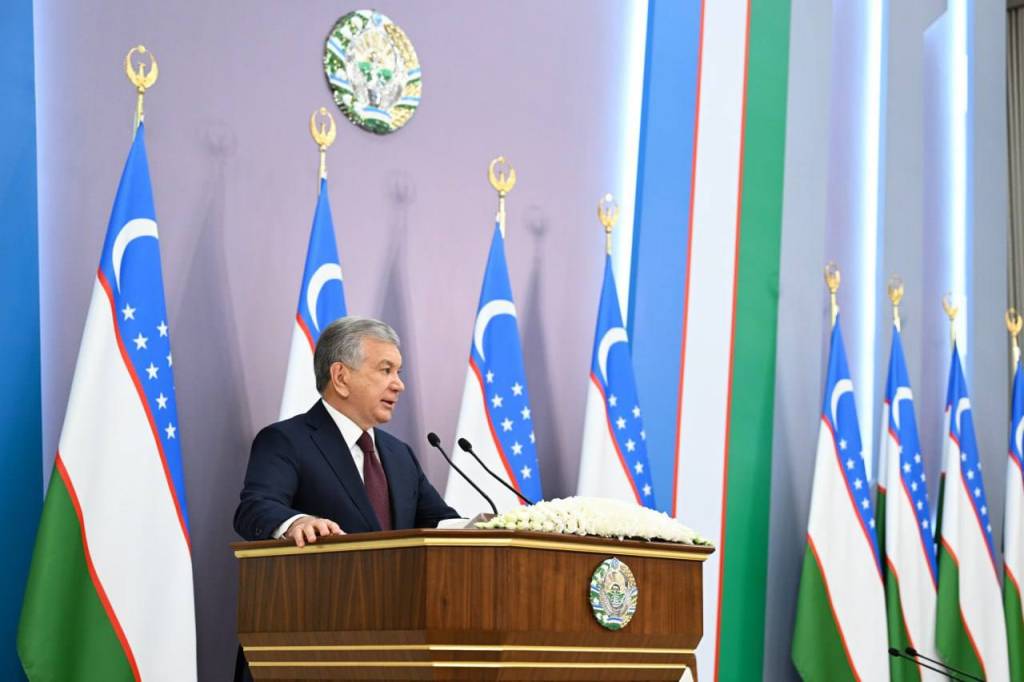
Uzbekistan’s foreign policy activity in 2025 went down in history as a “diplomacy of results”. The country demonstrated unprecedented activity on the international stage, strengthening global trust.
The global geopolitical environment over the past year was marked by serious instability and growing security threats, nevertheless, Uzbekistan confirmed the effectiveness of its chosen multi-vector foreign policy course. As noted by the Ministry of Foreign Affairs of the Republic of Uzbekistan, the parallel development of relations with the East and the West, as well as with near and distant partners, serves the interests of society and regional stability. It was precisely this pragmatic and open approach, based on equal dialogue and non-interference in internal affairs, that was recognized as the foundation of the country’s foreign policy strategy in 2025.
It is worth noting that a “friendly foreign policy based on mutually beneficial cooperation” led to “significant achievements across all areas”.
Among the key achievements are the following:
Multifaceted diplomatic activity. The President of the country made a record 28 foreign visits, while Tashkent hosted 23 high-level delegations. In a challenging international environment, this brought substantial practical benefits for national interests.
Strengthening international cooperation. Throughout the year, Uzbekistan’s diplomats actively participated in nearly 20 international summits and forums worldwide. At the same time, 10 authoritative international events were held in the country to develop cooperation across various areas. These contacts opened new opportunities for economic and cultural ties.
Expansion of the geography of partnerships. By the end of the year, Uzbekistan had signed 310 international agreements and established diplomatic relations with nine new states. This was the result of a targeted policy to diversify contacts with different regions and major global organizations.
Strengthening economic diplomacy. Business events made a significant contribution. More than 80 business forums involving foreign companies were held in the country, while Uzbekistan delegations conducted around 200 similar meetings abroad. A total of 25 Investor Days were organized, during which specific projects and cooperation conditions were discussed in detail, and direct contacts were established with more than 2,000 foreign companies. This helped consolidate a favorable investment climate and enhance the country’s attractiveness for foreign capital inflows.
Development of information diplomacy. Greater emphasis was also placed on strengthening the country’s image. More than 22,000 official materials on foreign policy activities were published, and over 6,000 articles on Uzbekistan’s achievements and initiatives appeared in foreign media outlets. More than 3,400 foreign journalists were accredited by Uzbek media outlets, enabling them to convey the country’s position on key international issues to a broad audience.
Protection of citizens’ interests. Consular work reached a qualitatively new level. More than 162,000 citizens received consular services abroad, and 250 compatriots were repatriated from other countries. Over 4,000 citizens received financial assistance, and around 2,000 were freed from various difficult situations overseas. These measures strengthened public trust in the state, demonstrating the government’s high level of responsibility for the safety of its citizens under all circumstances.
Foreign Policy Mechanisms
Specially structured foreign policy mechanisms played a significant role in achieving the set objectives.
First, Uzbekistan has been consistently implementing a policy of multi-vector engagement and equal partnership. Diplomatic activity expanded both the geography and the substance of international relations, while strategic ties with both long-standing and new partners were strengthened. The Presidential Office emphasizes that cooperation with “near and distant countries, the East and the West” developed on an equal and constructive basis.
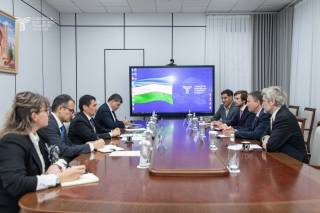
Second, the format of bilateral and multilateral meetings was actively employed. The press service noted that in the new reality, “international dialogue is reaching a qualitatively new level”. Regular meetings at the highest and expert levels, including with regional neighbors, helped build trust. Particular attention was given to strengthening relations with neighboring countries: centuries-old ties with close neighbors were built on a strategic partnership and mutual respect. At the same time, the active construction of “bridges of cooperation” continued not only with traditional partners (Russia, China, the United States, Türkiye, Germany, and others), but also in new directions – with the countries of Southeast Asia, the Middle East, Africa, and Latin America.
Third, Uzbek diplomacy actively engaged with international organizations and financial institutions. Efforts were directed toward joint implementation of projects to modernize the economy, infrastructure, and the energy sector, in cooperation with such institutions as the International Monetary Fund, the World Bank, the Asian Development Bank, the European Bank for Reconstruction and Development, and others. Of particular importance was integration with regional groupings: Uzbekistan strengthened ties within the Commonwealth of Independent States, the Shanghai Cooperation Organization, the Organization of Turkic States, and the Organization of Islamic Cooperation, to more fully utilize the economic and political potential of cooperation.
Finally, diplomacy actively employed new instruments of economic influence. The number of business forums and bilateral negotiations with investors increased manyfold, providing a tangible boost to capital inflows. In addition, one of the most essential mechanisms was the development of “diplomacy in the interests of citizens”: consular services focused on practical support for compatriots abroad, while the information activities of embassies helped strengthen the country’s reputation on the international stage.
Systemic Reforms
Alongside practical activity, a systemic adjustment of foreign policy mechanisms was also launched. As early as January 2026, the Head of State demanded that the work of diplomatic missions be brought to a new level of effectiveness. Following a videoconference meeting on foreign policy, ambassadors were assigned clear key performance indicators (KPIs) for export volumes, tourist flows from their countries of accreditation, and legal labor migration. These measures formalize foreign economic objectives aimed at achieving concrete financial results. At the same time, the President outlined nationwide targets: increasing exports to $40 billion and attracting $50 billion in investment in the coming year.
An essential part of the reforms was improving institutional processes. The need was voiced to revise the Uzbekistan 2030 Strategy in light of the results achieved and public opinion. This implies more coordinated planning of foreign economic initiatives and the engagement of a broad range of experts and parliamentarians. At the same time, efforts are underway to simplify investment procedures. In 2025, an electronic platform for investor services based on the “one-stop shop” principle was launched, and the digitalization of key foreign economic services has been outlined. In the longer term, these reforms will enable more prompt support for projects aimed at attracting technology and capital.
In addition, the role of civil society and the business community in foreign policy matters is increasing. As noted, in the coming years, mechanisms will be developed to ensure the participation of civil society institutions in discussions of foreign policy strategy. This is just one of the directions of large-scale reforms aimed at transforming foreign policy into a more predictable and measurable system.
Priorities for 2026
Against the backdrop of these transformations, clear priorities for 2026 have been outlined. First, the strengthening of ties with all countries will continue, based on the principles of equality and constructive dialogue. Particular attention will continue to be paid to neighboring states, especially to mutually beneficial cooperation in trade, transport, energy, and culture. Among the key priorities is deepening economic ties with Afghanistan and its integration into regional project chains.
Second, the country’s foreign policy will focus on the economy. This implies actively promoting Uzbek goods and services in foreign markets. In addition, foreign policy institutions plan to continue efforts to facilitate Uzbekistan’s participation in global trade blocs, in particular as a candidate for accession to the World Trade Organization. Appreciation was expressed to foreign partners for their support of this process.
Third, the strategic vector is being maintained over the long term: close cooperation with international financial institutions and regional organizations has been established to implement major infrastructure and energy projects. Russia, China, Türkiye, and leading Western countries remain priority partners. However, particular emphasis is placed on developing cooperation with the countries of Southeast Asia, the Middle East, Africa, and Latin America. Such multilateral ties are intended to ensure sustainable economic integration and diversify external markets for Uzbek goods.
Finally, one of the key foreign policy objectives for 2026 will be to ensure the comprehensive security and well-being of citizens. In addition to consular support measures, it is planned to intensify the protection of compatriots’ rights abroad through diplomatic channels and international platforms. For example, efforts will be expanded to send Uzbek specialists and students abroad and to organize new programs of social and legal protection for labor migrants. This is driven by the understanding that diplomacy’s mission is not only to achieve economic targets, but also to provide concrete protection for people.
Conclusion
The results of 2025 indicate that Uzbekistan’s foreign policy course has indeed evolved into a “diplomacy of results”. The emphasis on practical achievements has enabled the country to enter the new year with heightened expectations and a clear action plan. The year 2026 will focus on the systemic fine-tuning of diplomatic mechanisms through officially defined KPIs, institutional reforms, and a stronger role for foreign policy in the economy and in protecting citizens.
Thus, a qualitative transition has been made from individual successes and contacts to comprehensive planning and performance analysis. The continued strengthening of partnerships, active participation in global processes, and clearly defined economic objectives will further help transform each diplomatic effort into a tangible contribution to national development. These changes will lay the foundation for Uzbekistan’s international standing, responding to society’s aspirations for tangible progress and well-being.
Abduaziz Khidirov,
Master’s student,
Academy of Public Policy and Administration under the President of the Republic of Uzbekistan,
UzA