
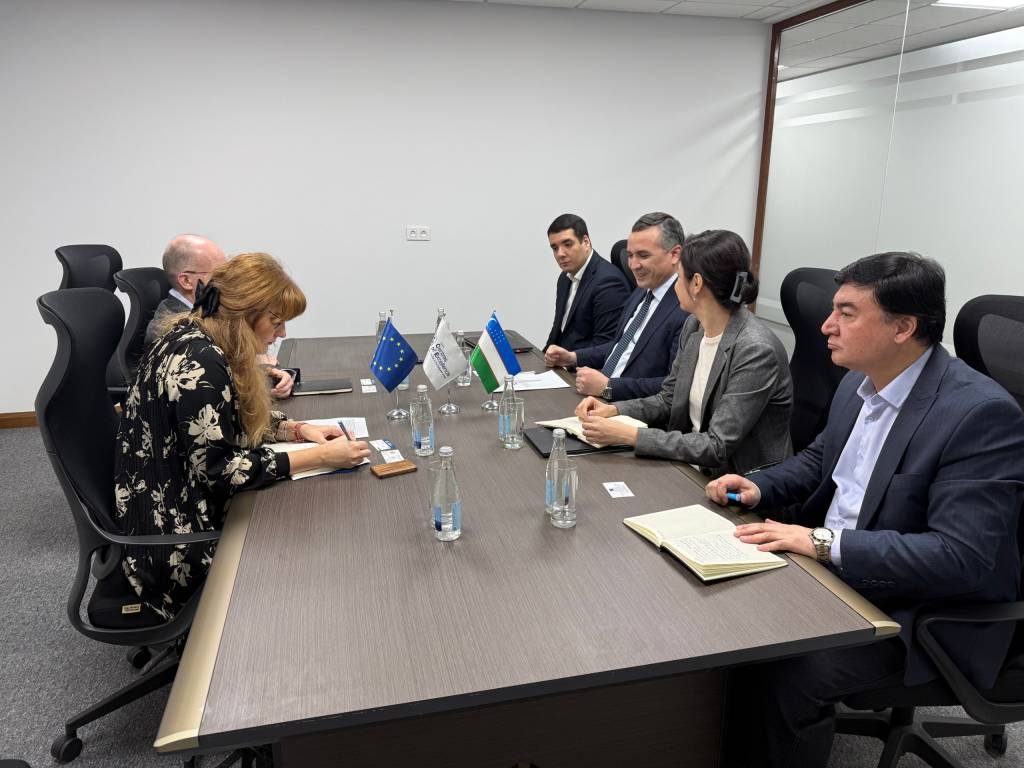
A meeting took place between Mr. Abduvakkos Rafikov, Chairman of the Committee for Industrial, Radiation, and Nuclear Safety under the Cabinet of Ministers of the Republic of Uzbekistan and Head of the Regional Secretariat for Central Asia of the Chemical, Biological, Radiological, and Nuclear (CBRN) Risk Mitigation Centres of Excellence (CoE) Initiative funded by the European Union (EU), and Mr. Wim Riepma, Head of Cooperation at the Delegation of the EU to Uzbekistan.

The meeting focused on mitigating CBRN threats in Central Asia, particularly in Uzbekistan, enhancing regional cooperation, and strengthening capabilities in this field.

The parties emphasized the importance of implementing effective strategies to counter such threats, which would help reduce risks and contribute to peace and stability in the region.

Additionally, the meeting addressed issues related to enhancing resilience to CBRN threats, providing technical assistance, exchanging knowledge and expertise, and implementing joint initiatives.

Following the meeting, both parties emphasized the importance of further developing cooperation between Uzbekistan and the European Union to ensure regional stability and security by effectively managing CBRN threats.

Nasiba Ziyodullayeva, UzA

English
Chinese
Turkish
Tajik
Kyrgyz
Turkmen
Japanese
Arabic
English
French
Spanish
Русский
German
Ўзбек
Oʻzbek
Қазақ
Cooperation on mitigating CBRN threats in Central Asia strengthens

A meeting took place between Mr. Abduvakkos Rafikov, Chairman of the Committee for Industrial, Radiation, and Nuclear Safety under the Cabinet of Ministers of the Republic of Uzbekistan and Head of the Regional Secretariat for Central Asia of the Chemical, Biological, Radiological, and Nuclear (CBRN) Risk Mitigation Centres of Excellence (CoE) Initiative funded by the European Union (EU), and Mr. Wim Riepma, Head of Cooperation at the Delegation of the EU to Uzbekistan.

The meeting focused on mitigating CBRN threats in Central Asia, particularly in Uzbekistan, enhancing regional cooperation, and strengthening capabilities in this field.

The parties emphasized the importance of implementing effective strategies to counter such threats, which would help reduce risks and contribute to peace and stability in the region.

Additionally, the meeting addressed issues related to enhancing resilience to CBRN threats, providing technical assistance, exchanging knowledge and expertise, and implementing joint initiatives.

Following the meeting, both parties emphasized the importance of further developing cooperation between Uzbekistan and the European Union to ensure regional stability and security by effectively managing CBRN threats.

Nasiba Ziyodullayeva, UzA