
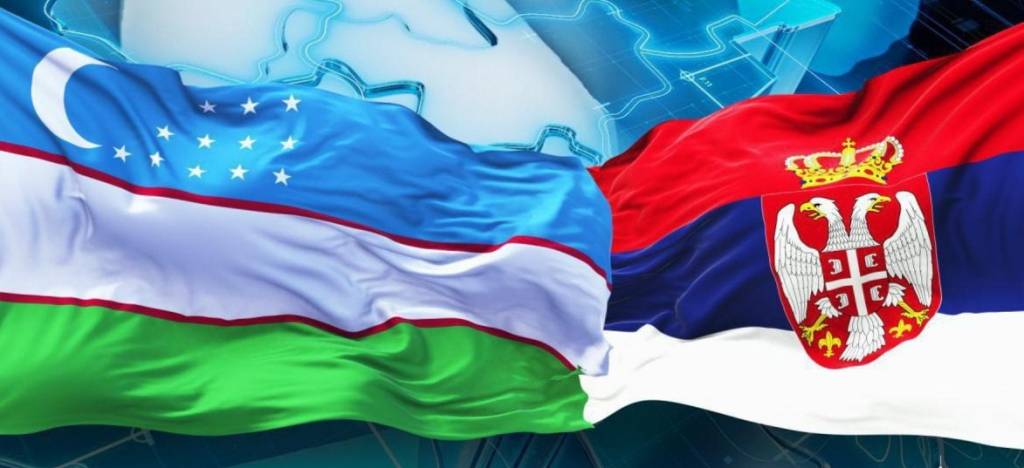
The official visit of the President of Serbia Aleksandar Vučić to Uzbekistan stands as a vivid example of friendly diplomatic relations between the two countries.

Odiljon Mamatkarimov, Deputy Chair of the Senate Committee on International Relations, Foreign Economic Relations, Foreign Investments, and Tourism, shared his views on the subject:

– In today’s world, geopolitical competition among states is intensifying, and the struggle for resources is becoming sharper, – said Odiljon Mamatkarimov. – Global economic and political crises, as well as challenges in the energy sector and in ensuring the security of transport routes, are provoking various conflicts. Under such circumstances, establishing peaceful relations between countries and strengthening cooperation based on mutual respect and trust are of exceptional importance.

Uzbekistan pursues an open and peace-loving foreign policy, which contributes to expanding the country’s cooperation with foreign states and strengthening diplomatic relations.

The friendly relations between Uzbekistan and Serbia are bringing three decades of diplomatic cooperation to a new qualitative stage.

The President of Uzbekistan warmly welcomed the President of Serbia Aleksandar Vučić and noted that the first summit of cooperation and this official visit will have historic significance.

Our two nations are united by strong bonds of friendship and a similar mentality. Serbia, occupying a central position in the Balkan Peninsula, has long served as a geostrategic and geo-economic link between Europe, the Middle East, and Eurasia, as well as a crossroads of regional transport corridors. The country is a key partner of the European Union, with advanced sectors in mechanical engineering, metallurgy, chemistry, and IT, and has achieved strong results in tourism and pharmaceuticals.

The parties discussed ways to increase trade turnover, expand cooperation in mechanical engineering, pharmaceuticals, chemistry, IT, and the agro-industrial complex, and develop the Central Asia – Balkans transport corridor through the Trans-Caspian route. They also agreed to hold a meeting of the Intergovernmental Commission in Tashkent.

A series of intergovernmental and interagency documents were signed to regulate and promote the development of diplomatic relations across multiple areas. Among them are the Agreement on Mutual Promotion and Protection of Investments, the Economic Cooperation Agreement, the Agreement on Cooperation in Tourism, the Agreement on Cooperation in Education, Science, and Culture, the Program of Cooperation between the Ministries of Foreign Affairs for 2026-2027, and the Memorandum on Cooperation in Labor Migration. All of these agreements will contribute to expanding trade between the two countries, accessing new markets, and diversifying the import-export system. The labor migration agreement will formalize employment relations, strengthen legal protections, and create new opportunities for skilled professionals. In particular, cooperation with Serbia, a close partner of the European Union, will enhance Uzbekistan’s export potential, accelerate industrial and technological modernization, and increase investment inflows.

Overall, relations between Uzbekistan and Serbia are set to create a new integrative bridge not only between the two nations, but also between Central Asia and the Balkans. This partnership will help form a new geo-economic space grounded in shared interests.

Interviewed by Norgul Abduraimova, UzA

English
Chinese
Turkish
Tajik
Kyrgyz
Turkmen
Japanese
Arabic
English
French
Spanish
Русский
German
Ўзбек
Oʻzbek
Қазақ
Cooperation between Uzbekistan and Serbia – a striking example of friendly diplomatic relations

The official visit of the President of Serbia Aleksandar Vučić to Uzbekistan stands as a vivid example of friendly diplomatic relations between the two countries.

Odiljon Mamatkarimov, Deputy Chair of the Senate Committee on International Relations, Foreign Economic Relations, Foreign Investments, and Tourism, shared his views on the subject:

– In today’s world, geopolitical competition among states is intensifying, and the struggle for resources is becoming sharper, – said Odiljon Mamatkarimov. – Global economic and political crises, as well as challenges in the energy sector and in ensuring the security of transport routes, are provoking various conflicts. Under such circumstances, establishing peaceful relations between countries and strengthening cooperation based on mutual respect and trust are of exceptional importance.

Uzbekistan pursues an open and peace-loving foreign policy, which contributes to expanding the country’s cooperation with foreign states and strengthening diplomatic relations.

The friendly relations between Uzbekistan and Serbia are bringing three decades of diplomatic cooperation to a new qualitative stage.

The President of Uzbekistan warmly welcomed the President of Serbia Aleksandar Vučić and noted that the first summit of cooperation and this official visit will have historic significance.

Our two nations are united by strong bonds of friendship and a similar mentality. Serbia, occupying a central position in the Balkan Peninsula, has long served as a geostrategic and geo-economic link between Europe, the Middle East, and Eurasia, as well as a crossroads of regional transport corridors. The country is a key partner of the European Union, with advanced sectors in mechanical engineering, metallurgy, chemistry, and IT, and has achieved strong results in tourism and pharmaceuticals.

The parties discussed ways to increase trade turnover, expand cooperation in mechanical engineering, pharmaceuticals, chemistry, IT, and the agro-industrial complex, and develop the Central Asia – Balkans transport corridor through the Trans-Caspian route. They also agreed to hold a meeting of the Intergovernmental Commission in Tashkent.

A series of intergovernmental and interagency documents were signed to regulate and promote the development of diplomatic relations across multiple areas. Among them are the Agreement on Mutual Promotion and Protection of Investments, the Economic Cooperation Agreement, the Agreement on Cooperation in Tourism, the Agreement on Cooperation in Education, Science, and Culture, the Program of Cooperation between the Ministries of Foreign Affairs for 2026-2027, and the Memorandum on Cooperation in Labor Migration. All of these agreements will contribute to expanding trade between the two countries, accessing new markets, and diversifying the import-export system. The labor migration agreement will formalize employment relations, strengthen legal protections, and create new opportunities for skilled professionals. In particular, cooperation with Serbia, a close partner of the European Union, will enhance Uzbekistan’s export potential, accelerate industrial and technological modernization, and increase investment inflows.

Overall, relations between Uzbekistan and Serbia are set to create a new integrative bridge not only between the two nations, but also between Central Asia and the Balkans. This partnership will help form a new geo-economic space grounded in shared interests.

Interviewed by Norgul Abduraimova, UzA