


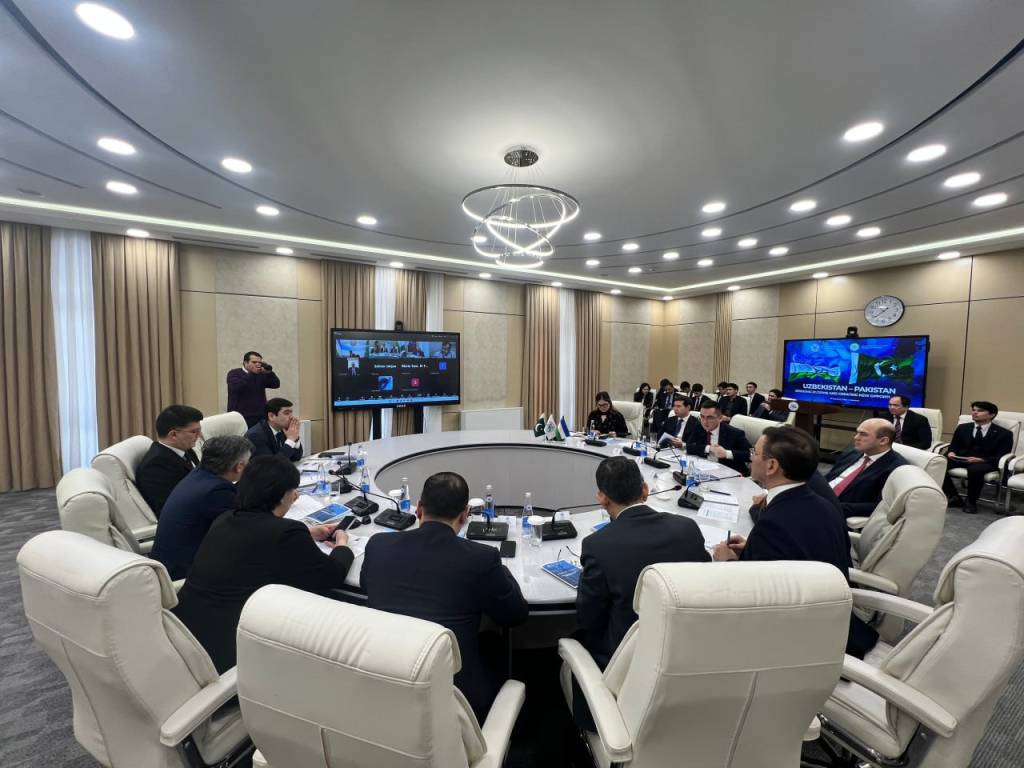
As previously reported, a roundtable discussion titled “Uzbekistan–Pakistan: Bridging regions and creating new opportunities” was held at the International Institute for Central Asia. The event was organized jointly with the Embassy of Pakistan in Uzbekistan and timed to coincide with the upcoming state visit of President of Uzbekistan Shavkat Mirziyoyev to Islamabad.
Opening the meeting, IICA Director Javlon Vakhabov stressed that relations between Uzbekistan and Pakistan have evolved into a strategic partnership, driven by the commitment of both countries’ leaders and practical initiatives. The growth of bilateral trade from $36.5 million in 2017 to almost $450 million in 2025 is an explicit confirmation of this. As Javlon Vakhabov noted, given the positive dynamics, reaching $2 billion in bilateral trade in the coming years seems quite achievable.
During the discussion, experts from both countries identified promising areas of cooperation in the economy, transport, education, science, culture, and tourism, and proposed new joint projects for Central and South Asia.
Ambassador Extraordinary and Plenipotentiary of Pakistan to the Republic of Uzbekistan Ahmed Farooq noted that Uzbekistan’s central geographic location, growing population, and consistent policy under President Shavkat Mirziyoyev make the country a significant partner for Pakistan. The development of transport and economic connectivity remains a key element of the relationship, benefiting the peoples of both countries and stimulating regional integration.
Heads and representatives of government departments, international organizations, analytical centers, the expert community, and scientific institutions of Uzbekistan and Pakistan attended the event.
The roundtable discussion confirmed that cooperation between Uzbekistan and Pakistan is reaching a new strategic level. Experts and representatives of the two countries stressed the importance of deepening economic, transport, educational, and cultural ties. The implementation of joint initiatives and the exchange of experience will not only strengthen bilateral relations, but also contribute to the sustainable development and integration of Central and South Asia.
[gallery-27265]
Aziza Alimova, photos by Farhod Abdurasulov, UzA