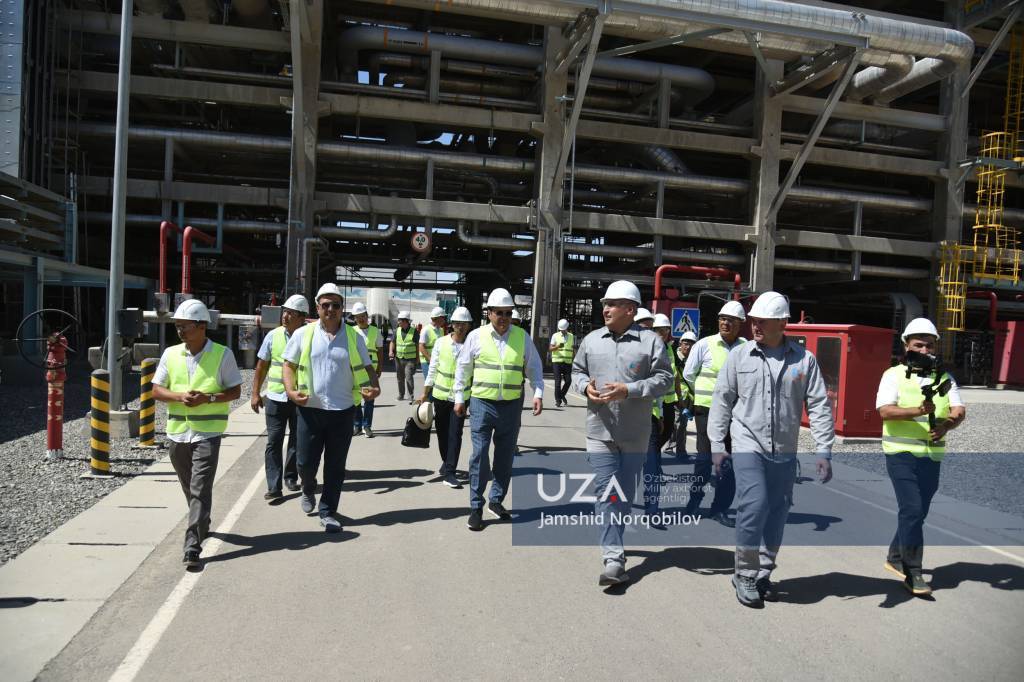
A press tour was held at the Uzbekistan GTL plant in Kashkadarya region.

Journalists were introduced to the plant’s management system, advanced technological equipment, and production processes.

The Uzbekistan GTL project was implemented based on a resolution by the President of the Republic of Uzbekistan dated December 29, 2016. Construction and installation works commenced in 2017 and, despite the pandemic, were fully completed by December 2021. In the same year, the Head of State visited the plant and participated in its official opening ceremony.

In 2022, Uzbekistan began producing synthetic petroleum products, including diesel fuel, naphtha, aviation kerosene, and liquefied natural gas, for the first time through natural gas processing. This marked a significant step toward the country’s energy independence and the export of competitive products to international markets.

Alongside meeting domestic market demands, the plant is expanding its export potential. Approximately 750,000 tons of GTL products have been supplied to foreign countries, while liquefied gas is entirely directed to the domestic market.

In 2022, the plant operated at 70 percent of its design capacity. Following scheduled major maintenance conducted from December 2024 to February 2025, production capacity increased to 95 percent. In June of this year, full-capacity performance tests were successfully conducted in collaboration with Air Products, confirming the stability of the GTL plant’s operations and compliance with international standards. Worldwide, only four major plants use GTL technology, and none have yet reached 100 percent operational capacity.

The plant’s annual production volume includes 700,000 tons of synthetic diesel fuel, 450,000 tons of naphtha, 300,000 tons of aviation kerosene, and 50,000 tons of liquefied gas.

The introduction of GTL products to the market significantly reduced prices. Specifically, the cost of synthetic diesel fuel decreased by nearly half. Moreover, aviation kerosene, previously entirely imported, is now produced domestically in sufficient quantities.

[gallery-24359]

Ulmas Baratov, photos by Jamshid Norqobilov, UzA

English
Chinese
Turkish
Tajik
Kyrgyz
Turkmen
Japanese
Arabic
English
French
Spanish
Русский
German
Ўзбек
Oʻzbek
Қазақ
At the Uzbekistan GTL plant
A press tour was held at the Uzbekistan GTL plant in Kashkadarya region.

Journalists were introduced to the plant’s management system, advanced technological equipment, and production processes.

The Uzbekistan GTL project was implemented based on a resolution by the President of the Republic of Uzbekistan dated December 29, 2016. Construction and installation works commenced in 2017 and, despite the pandemic, were fully completed by December 2021. In the same year, the Head of State visited the plant and participated in its official opening ceremony.

In 2022, Uzbekistan began producing synthetic petroleum products, including diesel fuel, naphtha, aviation kerosene, and liquefied natural gas, for the first time through natural gas processing. This marked a significant step toward the country’s energy independence and the export of competitive products to international markets.

Alongside meeting domestic market demands, the plant is expanding its export potential. Approximately 750,000 tons of GTL products have been supplied to foreign countries, while liquefied gas is entirely directed to the domestic market.

In 2022, the plant operated at 70 percent of its design capacity. Following scheduled major maintenance conducted from December 2024 to February 2025, production capacity increased to 95 percent. In June of this year, full-capacity performance tests were successfully conducted in collaboration with Air Products, confirming the stability of the GTL plant’s operations and compliance with international standards. Worldwide, only four major plants use GTL technology, and none have yet reached 100 percent operational capacity.

The plant’s annual production volume includes 700,000 tons of synthetic diesel fuel, 450,000 tons of naphtha, 300,000 tons of aviation kerosene, and 50,000 tons of liquefied gas.

The introduction of GTL products to the market significantly reduced prices. Specifically, the cost of synthetic diesel fuel decreased by nearly half. Moreover, aviation kerosene, previously entirely imported, is now produced domestically in sufficient quantities.

[gallery-24359]

Ulmas Baratov, photos by Jamshid Norqobilov, UzA