


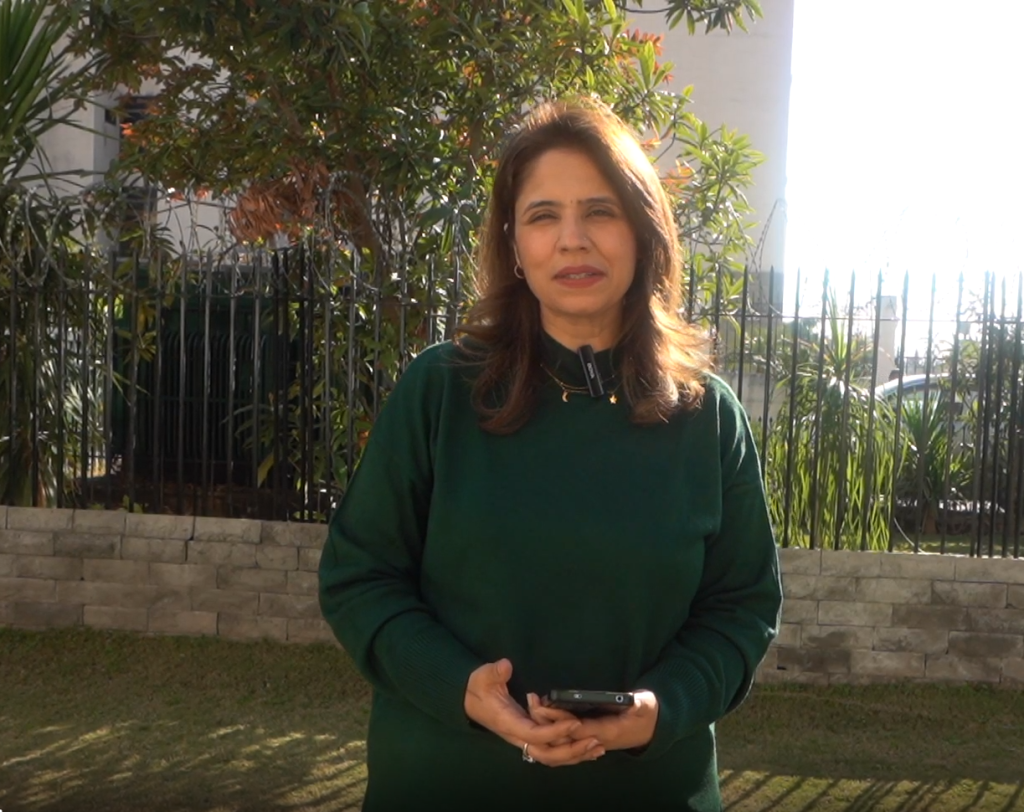
On January 29 this year, the Institute for Strategic and Regional Studies under the President of the Republic of Uzbekistan, jointly with the Institute of Regional Studies of Pakistan and with the support of the Embassy of Uzbekistan in Pakistan, organized an expert online conference titled “Uzbekistan – Pakistan: Strategic Partnership, Connectivity, and Sustainable Development in a Changing World”.
Speaking at the conference, Amina Khan, Director of the Centre for Afghanistan, Middle East and Africa at the Institute of Strategic Studies Islamabad under the Ministry of Foreign Affairs of Pakistan, noted that the most long-term and sustainable investments between countries are investments in human capital. “Infrastructure connects countries. However, it is people – through education, skills, and technology – who ensure the sustainability of partnership”, she emphasized.
Amina Khan added that Uzbekistan has made notable progress in educational reforms, technical training, and digital transformation, and that the country’s experience in e-governance and digital public services offers valuable lessons for Pakistan.
The expert particularly noted that both countries possess unique strengths that can mutually reinforce one another. “Pakistan can offer English-language higher education, medical education, and research cooperation, while Uzbekistan offers experience in digitalization and the development of professional skills”, Amina Khan emphasized.
According to her, these opportunities can be realized through three key cooperation platforms: bilateral, trilateral, and multilateral.
At the bilateral level, Amina Khan proposed establishing a Pakistan – Uzbekistan dialogue on human capital and technology to jointly develop technical and vocational education and workforce training, taking into account the needs of national and regional labor markets in logistics, energy, agriculture, manufacturing, and infrastructure.
The expert emphasized the need to sign memorandums of understanding between universities and technical education institutions to enable the development of joint research projects on security, climate change, water resource management, renewable energy, and data analysis. “Joint research helps address both bilateral and regional challenges by creating locally grounded solutions that have so far been lacking”, Amina Khan stated.
She also proposed establishing incubation centers and academic departments to promote political, economic, and cultural interaction, as well as the study of shared Islamic heritage and the legacy of the Great Silk Road. “The creation of such centers is significant and entirely feasible – both in research institutes and at universities”, the expert emphasized.
In addition to bilateral initiatives, Amina Khan stressed that trilateral formats can strengthen ongoing projects, reduce costs, and scale up successful solutions. In particular, she proposed expanding cooperation among Pakistan, Uzbekistan, and Afghanistan in education, healthcare, skills development, technology, and trade. As a practical example, she cited the Termez International Trade Center Free Trade Zone in Uzbekistan, established on the border with Afghanistan, which serves as a model of structured cross-border cooperation and can be replicated at other border points to expand regional integration. “It is not merely a border crossing, but a fully-fledged economic system – an ecosystem of people-to-people contacts, education, medical services, trade, and regional transit”, she stressed. In her view, similar models could be replicated at the Chaman – Spin Boldak border crossing, the Torkham border crossing, and in Kabul, thereby enhancing regional integration and improving security.
Amina Khan emphasized that the development of trade and connectivity must be accompanied by investment in human capital. “Cooperation in education and technology is a low-risk, high-impact path that deepens bilateral ties and promotes regional integration”, she stated. The expert added that if Pakistan and Uzbekistan invest in the right directions and sectors, their partnership could become a model for regional cooperation.
The conference was attended by leaders and experts from leading analytical and educational institutions in Uzbekistan and Pakistan, as well as representatives of the business community and diplomatic missions. During the event, an agreement was reached to sign a Memorandum of Cooperation between the Institute for Strategic and Regional Studies of Uzbekistan and the Institute of Strategic Studies of Pakistan.
UzA