
Another significant step has been taken towards preserving the rich cultural heritage of the Uzbek people and promoting it widely on the international stage.

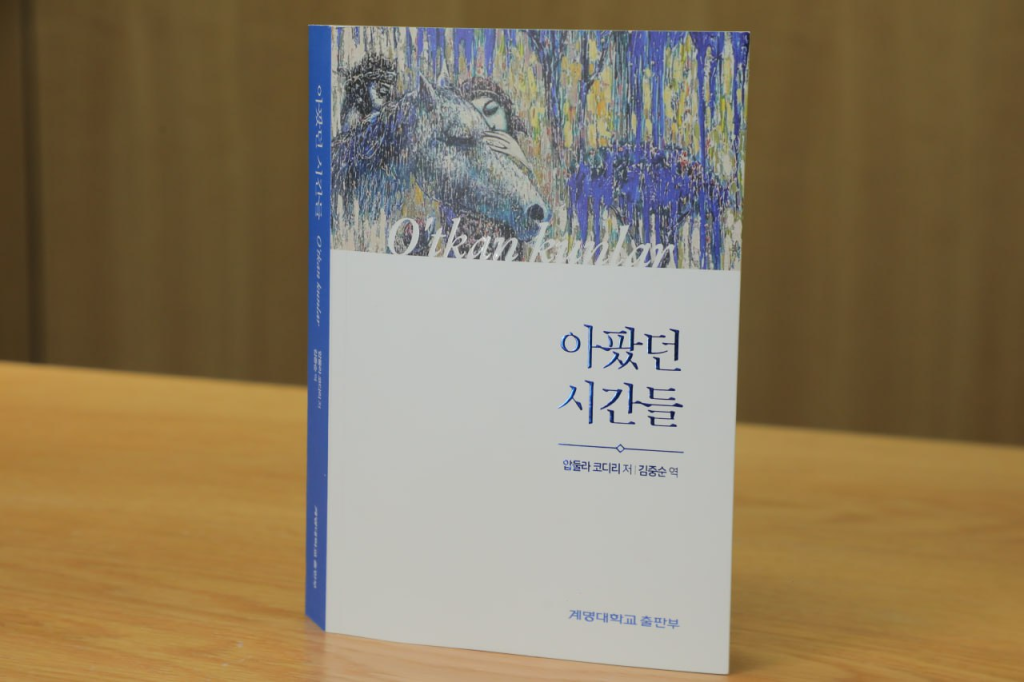
A professor at Keimyung University in the Republic of Korea, Jong-Sung Kim, has translated the famous novel “Bygone Days” by the founder of Uzbek novelism, Abdulla Qodiriy, into Korean.
For two and a half years, the translator has conducted in-depth research to convey the meaning of the work to Korean readers accurately. To gain a more detailed understanding of those historical events, he became acquainted with the cities of Tashkent, Margilan, Kokand, and Fergana, and also exchanged views on the translation process with professors and teachers at the Tashkent State University of Oriental Studies.

Recently, a ceremony was held in Seoul to present a novel in Korean. Representatives from the government, ministries, and agencies of the country, the diplomatic corps, media, and literature enthusiasts attended the event.

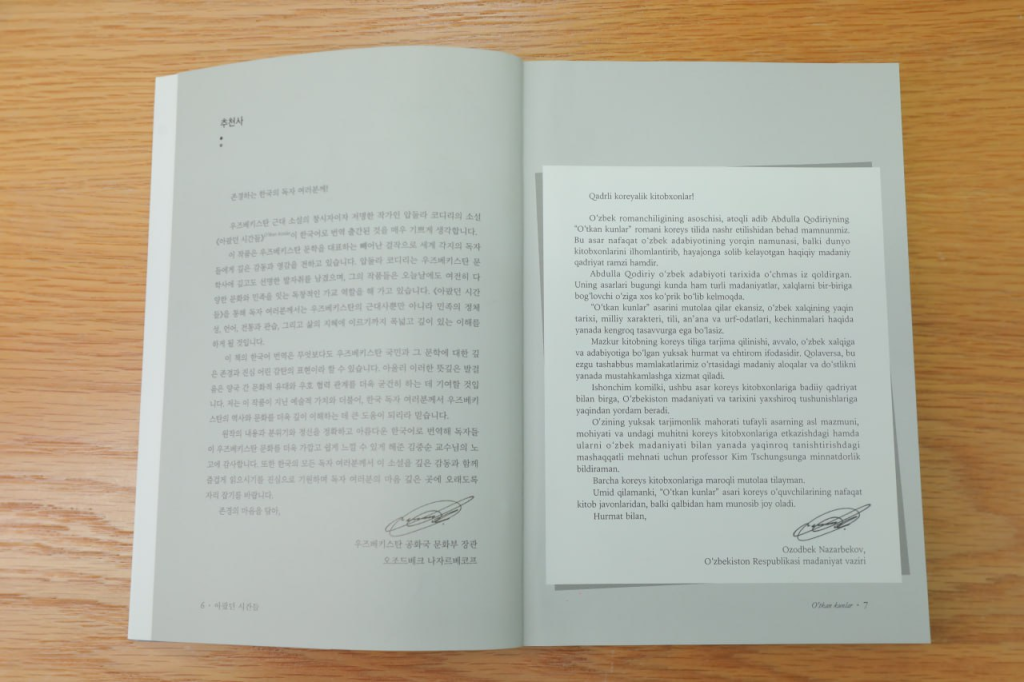
The Minister of Culture of the Republic of Uzbekistan Ozodbek Nazarbekov expressed his opinion about the book, noting that the work of the founder of Uzbek novelism, famous writer Abdulla Qodiriy, “Bygone Days”, is not only a vivid example of domestic literature, but also an actual cultural value that inspires readers all over the world.

Nazokat Usmanova, UzA

English
Chinese
Turkish
Tajik
Kyrgyz
Turkmen
Japanese
Arabic
English
French
Spanish
Русский
German
Ўзбек
Oʻzbek
Қазақ
Abdulla Qodiriy’s “Bygone Days” is translated into Korean

Another significant step has been taken towards preserving the rich cultural heritage of the Uzbek people and promoting it widely on the international stage.

A professor at Keimyung University in the Republic of Korea, Jong-Sung Kim, has translated the famous novel “Bygone Days” by the founder of Uzbek novelism, Abdulla Qodiriy, into Korean.

For two and a half years, the translator has conducted in-depth research to convey the meaning of the work to Korean readers accurately. To gain a more detailed understanding of those historical events, he became acquainted with the cities of Tashkent, Margilan, Kokand, and Fergana, and also exchanged views on the translation process with professors and teachers at the Tashkent State University of Oriental Studies.

Recently, a ceremony was held in Seoul to present a novel in Korean. Representatives from the government, ministries, and agencies of the country, the diplomatic corps, media, and literature enthusiasts attended the event.

The Minister of Culture of the Republic of Uzbekistan Ozodbek Nazarbekov expressed his opinion about the book, noting that the work of the founder of Uzbek novelism, famous writer Abdulla Qodiriy, “Bygone Days”, is not only a vivid example of domestic literature, but also an actual cultural value that inspires readers all over the world.

Nazokat Usmanova, UzA