


Recently, the World Society for the Study, Preservation and Popularization of the Cultural Heritage of Uzbekistan published another album book “Architectural Epigraphy of Uzbekistan”.
A specialist from this organization, Rustam Jabbarov, spoke about the process of preparing the publication:
– The World Society for the Study, Preservation and Popularization of the Cultural Heritage of Uzbekistan has united more than 450 scientists and, with the support of state, public and international organizations, and socially responsible business entities, annually prepares for publication album books of the cycles “Cultural Heritage of Uzbekistan” and “Architectural Epigraphy of Uzbekistan”, organizes and conducts cultural events and media events.
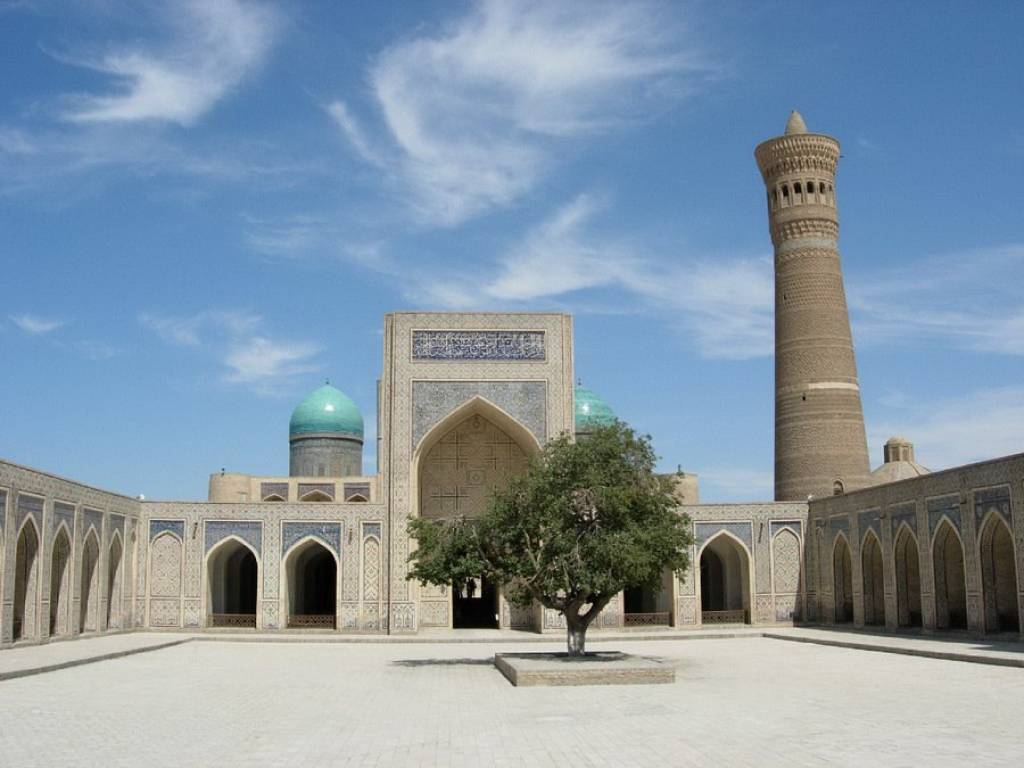
A gratifying fact for us is that the unique examples of medieval architecture created by our ancestors have been preserved. On the ancient walls of the majestic buildings, there are inscriptions made in beautiful calligraphy. Many are probably interested in the question, what wise sayings of our ancestors are hidden in these inscriptions? The answer to this can be found in the series of books “Architectural Epigraphy of Uzbekistan”, published for the first time in our country.
The author of this major project is the Chairman of the Board of the World Society for the Study, Preservation and Popularization of the Cultural Heritage of Uzbekistan, Doctor of Philosophy Firdavs Abdukhalikov.
Twenty volumes of this cycle have been published in Uzbek, Russian, Arabic, and English as a result of tireless years of work. These are album books about epigraphy on architectural structures in Karakalpakstan, Andijan, Bukhara, Kashkadarya, Navoi, Namangan, Surkhandarya, Fergana, Khorezm, Tashkent regions, the city of Tashkent, and historical architectural monuments of Samarkand.
The work on studying unexplored inscriptions on the monuments of Uzbekistan was carried out by a creative group, which included the Vice President of the Academy of Sciences of Uzbekistan Bakhrom Abdukhalimov, scientists Bakhtiyor Bobojonov, Komiljon Rakhimov, Bobur Aminov, Salimakhon Fayziyeva, calligraphers Abdulgafur Razzokov, Makset Karlibayev, Komiljon Khudoyberganov, Abdulatif Turdialiyev, Abdurashid Abdullayev, Elizaveta Nekrasova and others. They translated more than 1,500 inscriptions, including excerpts from poetic and prose works, noble wishes, names of masters and calligraphers, religious and educational instructions, chronograms of historical events, and decrees of rulers. The specialists also corrected and supplemented the previously read and translated Turkic, Arabic, and Persian inscriptions.
Each volume of the series allows the reader to realize the glory of Central Asia. Most of the inscriptions included in the album were studied for the first time and used to restore the history of architectural monuments of Uzbekistan. The inscriptions in Arabic are mainly verses and surahs from the Quran, hadiths, and various prayers. For example, in Bukhara, inscriptions have been preserved to a greater extent on mosques and madrassas. They are made of multiple materials (terracotta, faience, ganch, wood, marble) in different styles (kufi, suls, naskh, etc.) and decorated buildings of the early 12th century. Persian and Old Uzbek texts are mainly poems, chronograms, and dedications.
On the Mirzo Ulugbek madrasah in Samarkand, there is an inscription: “This is a building that adorns the earth and reaches to the sky. This building was erected by a man who supports the best in management and works wisely, combining the art of management and deep knowledge”.
At the first stage of the project, approximately 1.5 thousand inscriptions were read and translated: more than 200 poems, advice, and wise sayings, over 100 names of masters and calligraphers, 300 religious inscriptions, 150 dedications, 150 chronograms, 100 historical dates, 100 decrees of rulers, and others.
Architectural epigraphy is valuable because it allows an idea of a particular historical period.
Interviewed by Nasiba Ziyodullayeva, UzA