Uzbekistan, EDB and EFSD sign MoC
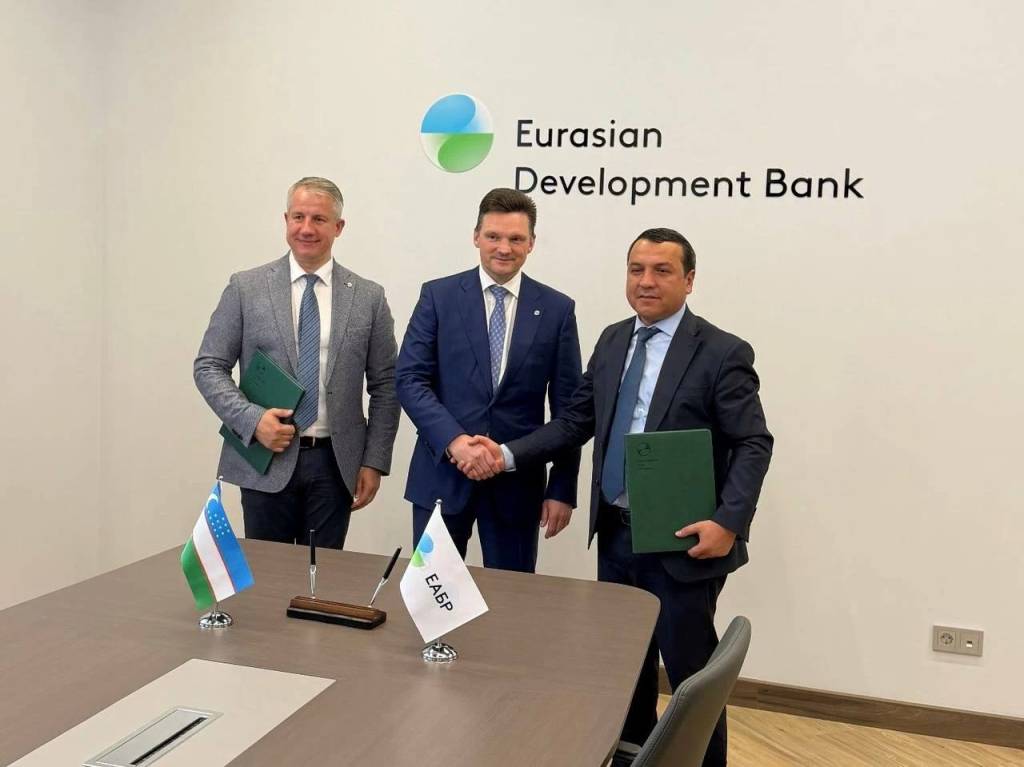
The Ministry of Water Resources of Uzbekistan, the Eurasian Development Bank (EDB) and the Eurasian Fund for Stabilization and Development (EFSD) have signed an MoC to modernize 95 pumping stations in Bukhara, Navoi, Kashkadarya, Samarkand and Surkhandarya regions.
The document was signed by Utkir Sheraliev, Deputy Minister of Water Resources of Uzbekistan, Alexey Skatin, Deputy Chairman of the EDB Management Board, and Yaroslav Mandron, EFSD Managing Director. The ceremony took place on the sidelines of the Tashkent International Investment Forum.
Project deliverables include energy savings through modern energy-efficient technologies that can cut consumption by tens of percent, a reliable water supply for millions of hectares of agricultural land, and digital control systems featuring real-time monitoring and management of pumping stations.
“Pumping stations are the heart of the irrigation system of five regions. Their modernization will directly affect water security and crop yields. The introduction of digital monitoring and energy-efficient technologies represents a new level of water resource management that we aim to achieve with the support of our partners”, said Utkir Sheraliev, Deputy Minister of Water Resources of Uzbekistan.
“A systemic solution for 95 facilities in five regions means thousands of hectares of agricultural land receiving stable water supply, and millions of kilowatt-hours saved. The EDB is ready to be a reliable financial partner in this important initiative for Uzbekistan. Every dollar invested in water infrastructure, by our estimates, generates three dollars in economic effect. And this project is direct evidence of how investment in modernization works for people, for the economy, and for the future of the region”, said Alexey Skatin, Deputy Chairman of the EDB Management Board.
Yaroslav Mandron, EFSD Managing Director, stated that modernizing pumping stations is a vital infrastructure initiative that can improve water resource management and increase the energy efficiency of water facilities. He mentioned that the EFSD is contemplating involvement in the project’s development and welcomed Uzbekistan’s interest in strengthening cooperation with the EFSD.
The problem of deteriorating water management infrastructure is acute in the region. According to the EDB study “Drinking Water Supply and Sanitation in Central Asia” (2024), the wear and tear of water supply networks in Central Asia reaches 80%, and water losses during transportation are as high as 55%. The annual financing gap in the sector is estimated at USD 2 billion.
The project to upgrade 95 pumping stations in five regions of Uzbekistan is a concrete step towards improving the reliability of water supply for agricultural land, reducing energy consumption, and laying the groundwork for the digitalization of water resource management.
Aziza Alimova, UzA