Targeted measures aimed at reducing poverty and unemployment reviewed
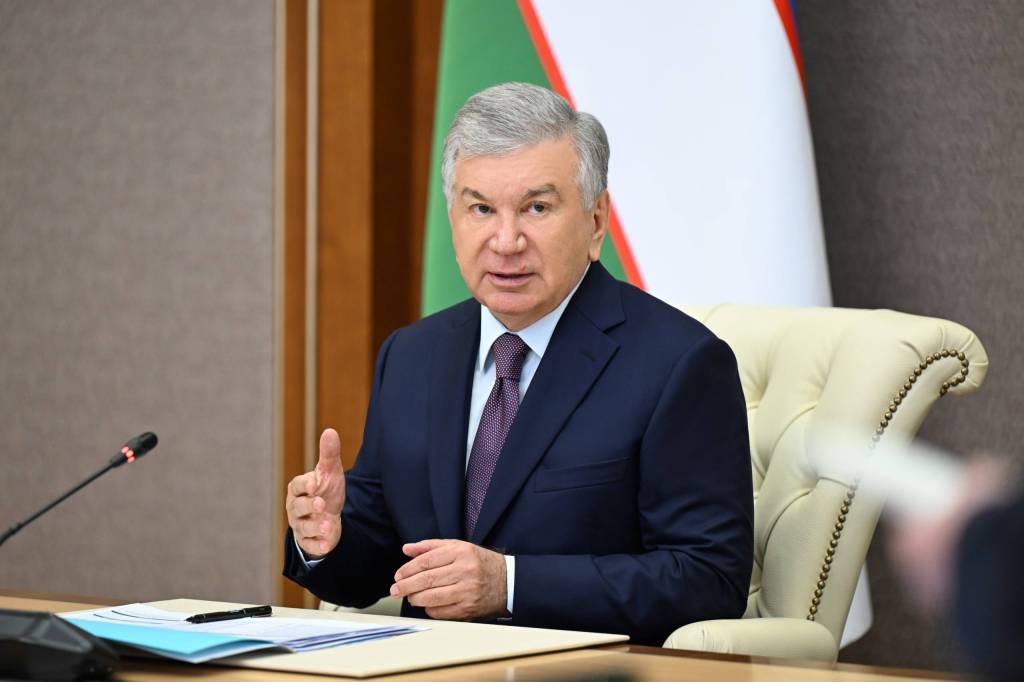
President Shavkat Mirziyoyev reviewed a presentation on further measures to promote employment, increase household incomes, and reduce poverty nationwide, using Khorezm region as an example.
During his visit to Khorezm region, the Head of State issued several directives to transform the region into a zone free of poverty and unemployment.
Plans designed to guarantee the execution of these instructions in each mahalla, along with strategies to turn existing opportunities into tangible projects and lasting employment, were examined.
Since the beginning of this year, 162,000 people in the region have seen income increases, 29,000 have gained permanent jobs, and 37,000 have formalized their informal employment.
To support low-income families, over 40,000 services have been delivered to 126,600 individuals from 28,900 families. Specifically, 12,400 people found permanent employment, 23,600 engaged in entrepreneurial ventures, 3,300 received financial aid, and 1,100 participated in vocational training.
Since the start of the year, 127,000 individuals from 29,000 families listed in the Social Registry have seen improvements in their official incomes and financial well-being. These families have been lifted out of poverty, reducing the regional poverty rate from 6.7% to 3.9%.
Currently, the region has 39,000 unemployed citizens, and an additional 102,000 people are labor migrants.
One of the main employment challenges is the gap between available jobs and job seekers’ qualifications. Although over 50,000 vacancies exist, some remain unfilled because of a lack of qualified personnel.
The Head of State highlighted the need to reform the vocational training system to match labor market demands better.
In surveys, 63 percent of students in higher education reported not gaining enough practical skills during their studies. As a result, measures were recommended to enhance practical training in secondary specialized and vocational schools and to better utilize higher education institutions’ resources for vocational training. Additionally, the importance of organizing afternoon classes at universities to help students develop professional and practical skills was highlighted.
The significance of restructuring poverty reduction initiatives, shifting people’s perspectives on work and entrepreneurship, and promoting their engagement and initiative was emphasized.
A total of 6.4 trillion UZS has been allocated for poverty reduction and employment initiatives. Out of the 2.1 trillion UZS supplied by commercial banks, 1.5 trillion UZS in loans was designated for projects in mahallas. As a result, every mahalla in the region now has access to financial resources.
The President highlighted that banks’ tangible impact on lowering unemployment and poverty should be evident in mahalla outcomes. He noted that banks need to act as “project factories”, turning local opportunities and initiatives into real business projects.
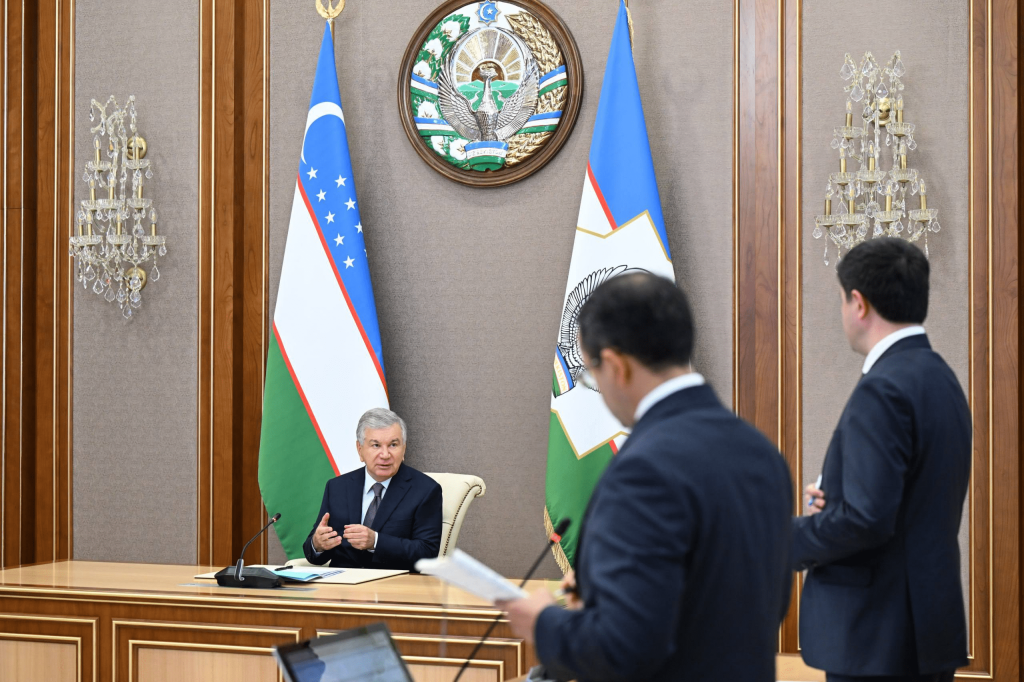
Efforts were made to enhance the effectiveness of the “mahalla of seven” and mahalla bankers, with their performance evaluated using specific indicators. Guidance was provided to create new frameworks for defining their roles, methodologies, and responsibilities in poverty reduction.
The presentation also detailed plans to lift 81,000 people from 18,000 low-income families out of poverty and to secure permanent jobs for 39,000 unemployed citizens by year’s end.
“These are not just figures. We should take an individual approach to each person, understand their capabilities well, and, based on this, find them suitable employment”, the President said.
To accomplish this, investments will be directed towards projects across industry, services, tourism, transport, agriculture, and construction. Additionally, 250 new enterprises will be launched within micro-industrial centers. Projects involving mahalla bankers will be scaled up, along within itiatives to create new jobs and formalize entrepreneurial activities.
A total of 36 cooperatives will be formed across sectors including poultry farming, livestock breeding, fish farming, furniture making, greenhouse farming, and crop production. These cooperatives will include 15,800 low-income families from 201 mahallas.
Additionally, 70 “locomotive” projects will be carried out across 12 hub mahallas and 38 neighboring mahallas, generating 1.1 thousand jobs. A total of 650 billion UZS is allocated for entrepreneurial initiatives, supporting the execution of 2.5 thousand microprojects.
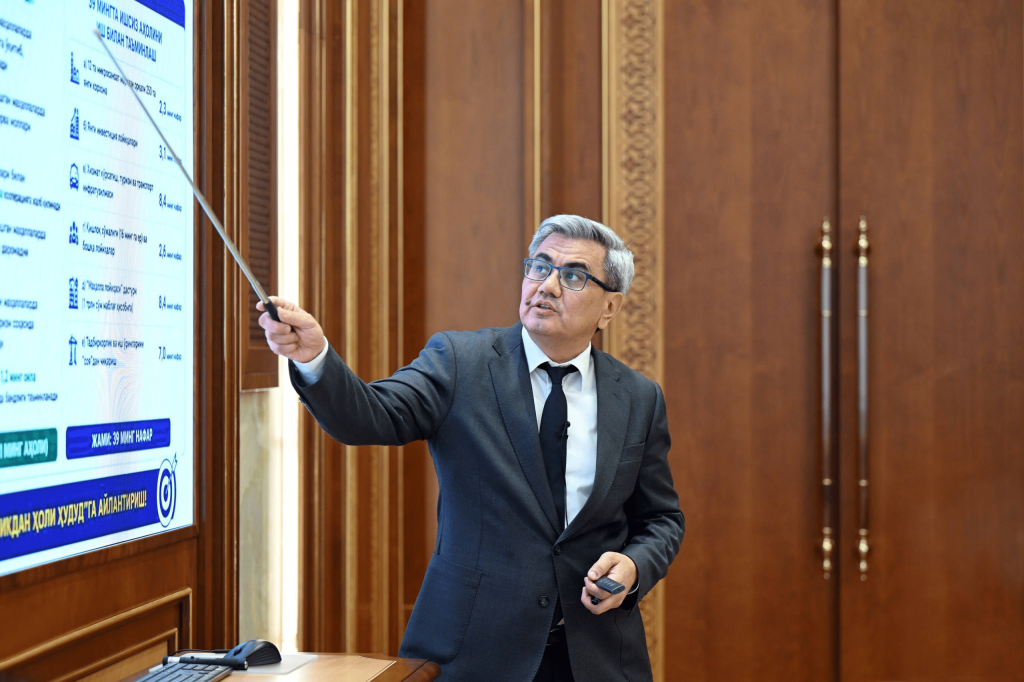
A plan was reviewed to develop the Shikhbogi mahalla in Yangiaryk district as a hub mahalla. The project will also include the Karmish, Sherobod, and Kattabog mahallas, home to 18,200 residents and 319 businesses.
The plans for the hub and neighboring mahallas involve creating an industrial zone, a micro-industrial center, a modern market with service facilities, planting a dense orchard, and developing livestock and poultry complexes. Additionally, internal roads, pedestrian pathways, and electricity and water supply infrastructure will be upgraded.
With the involvement of international consulting firms, a master plan for regional development will be created, and local designers’ skills will be improved. These initiatives are projected to generate 1.5 sustainable jobs, boost household incomes by 20-30 percent, and eliminate poverty and unemployment in the area.
The Head of State noted the importance of overhauling current systems and approaches for engaging with vulnerable groups. Plans will be developed to advance the country’s poverty reduction strategy to a higher level and will be reviewed during a dedicated videoconference.
UzA