New horizons for educational partnership between Uzbekistan and Malaysia outlined
Recently, an international conference titled “The scientific heritage of Islamic civilization: sources, current issues, and potential” was held at the Islamic Civilization Center in Uzbekistan.
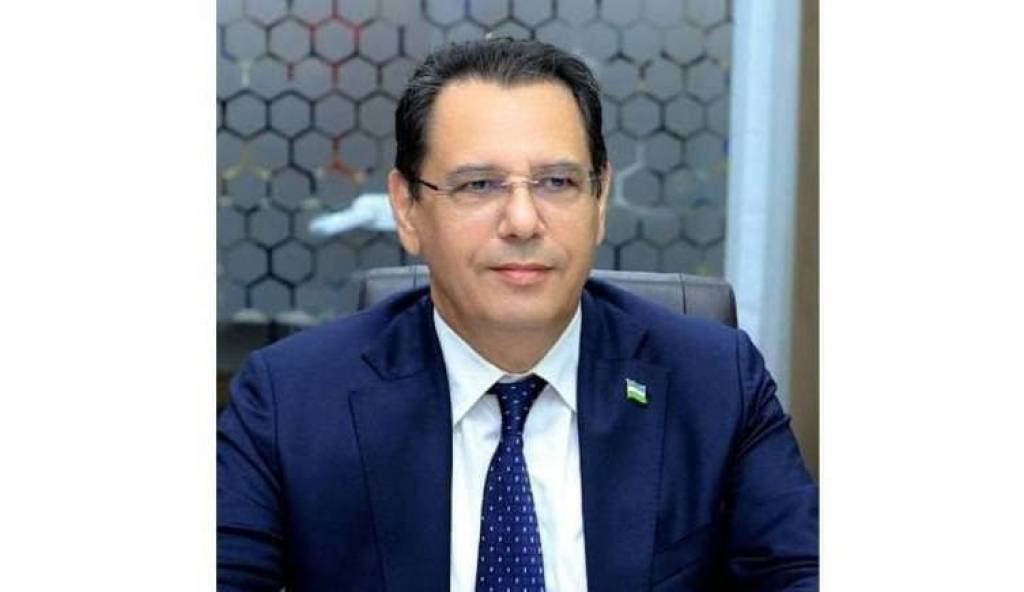
Here is what the Minister of Higher Education, Science and Innovation of the Republic of Uzbekistan Kongratbay Sharipov said about the conference.
– At this international conference, participants gathered to recall the Islamic world’s great contributions to global development and to pay tribute to our great heritage. Our goal was not to limit ourselves to the past but to jointly build the future of the Islamic world and open new paths for development.
Her Majesty Raja Zarith Sofiah, the Queen Consort of Malaysia, personally participated in this prestigious event, which was a great honor for us and an important sign of the conference’s significance.
It should be noted that relations between Uzbekistan and Malaysia are developing based on friendship, mutual respect, and shared values. Malaysia was among the first countries to recognize Uzbekistan’s independence, and diplomatic relations between the two states were established on February 21, 1992.
Over the years, these relations have steadily expanded across political dialogue, trade and economic cooperation, education, tourism, culture, and Islamic enlightenment.
Many factors bring our people closer together. Above all, these include a tradition of respect for knowledge, a commitment to education, devotion to family and social values, tolerance, and harmonious development combined with spirituality.
Malaysia is globally recognized for its achievements in Islamic finance, the halal industry, modern higher education, and technological development. This experience demonstrates that the Islamic world makes a worthy contribution to humanity’s development not only through its historical heritage but also through its modern economy, education, science, and innovation.
Uzbekistan is also entering a new stage by linking its rich historical heritage to the goals of modern development.
The Islamic Civilization Center in Uzbekistan, established at the initiative of our esteemed President Shavkat Mirziyoyev, is not merely an architectural structure but a major educational and cultural space that embodies our people’s memory, our ancestors’ scientific heritage, our spiritual identity, and our responsibility to future generations.
When speaking about Islamic civilization, we must understand it not only within the framework of religious history, but also as a great universal phenomenon connected with science, philosophy, medicine, mathematics, astronomy, law, linguistics, literature, ethics, and statecraft. Indeed, the greatest strength of Islamic civilization lies in its call to knowledge and the values of intellectual inquiry, while establishing justice and responsibility as the principal criteria of society.
In this respect, Uzbekistan holds a special place. For centuries, Mawarannahr, Khorezm, Bukhara, Samarkand, Termez, Nasaf, and the Fergana Valley served as major centers of Islamic scholarship, culture, and spirituality. The great scholars who emerged from this land had a profound influence on the development not only of the Muslim world but also of human intellectual thought as a whole.
Imam al-Bukhari set the highest standards for hadith studies, establishing an unparalleled model of reliable scholarship, fidelity to sources, and academic integrity. Imam Termizi left behind a strong scientific and educational school for the entire Muslim world in hadith studies, while Imam al-Maturidi did so in the science of creed, Burhaniddin Marginani in Islamic law, and Bahauddin Naqshband in spiritual education and moral refinement.
At the same time, Muhammad al-Khwarizmi contributed to the development of modern digital civilization through mathematical concepts and algorithms. Abu Rayhan al-Biruni elevated the culture of scientific observation and analysis in the natural sciences, geography, astronomy, and history. Abu Ali ibn Sina served as a bridge between Eastern and Western scholarship in medicine, philosophy, and logic. Mirzo Ulugbek founded a scientific school in Samarkand and left an indelible mark on the history of world science through the precision of his astronomical observations.
These names are not merely an expression of historical pride. They remind us of a great truth: in Islamic civilization, science was never confined to a narrow field. It encompassed the study of celestial bodies, the purification of the human heart, the establishment of legal justice, and the governance of society through enlightenment, all within a holistic approach. This was precisely the significance of the international conference.
We need to think not only about studying these sources but also about integrating their scientific spirit, research culture, moral responsibility, and respect for knowledge into the modern system of education and science.
Today, the Islamic world faces new challenges. New issues are emerging across artificial intelligence, biotechnology, the digital economy, climate change, food security, energy, medicine, and education.
In this regard, Malaysia’s modern development path is of particular interest. This country’s achievements in the Islamic financial system, the halal industry, international educational programs, scientific research, and the innovation economy serve as an important source of experience for Muslim countries.
In particular, the ability to combine traditional values with modern governance, economic competitiveness, and openness to the global economy is a key strength of Malaysia’s development model.
Uzbekistan is also consistently pursuing its path of development based on openness, cooperation, and enlightenment. Thanks to its geostrategic location, young and promising population, expanding education system, scientific heritage, and active role in regional dialogue, our country is becoming a center of new opportunities.
In recent years, the scale of higher education in the country has been expanding, universities have been actively engaging in international cooperation, and increasing attention has been paid to scientific research and innovation.
In our view, one of the most important tasks facing the Islamic world today is to connect its historical scientific heritage with modern universities, research centers, and innovation ecosystems. To achieve this, it is important to study, digitize, and introduce manuscripts into international academic circulation, organize joint research on the history of Islamic civilization, expand academic exchange programs for young scholars, and strengthen the harmony between spirituality and scientific thought in education.
In this regard, there are significant opportunities to deepen cooperation between Uzbekistan and Malaysia in higher education, Islamic finance, digital education, and innovation. Malaysia’s practical experience and Uzbekistan’s rich scientific and spiritual heritage can complement each other, providing a solid foundation for new joint projects.
I am confident that the ideas, scientific presentations, and proposals presented during the conference will give new meaning to cooperation between our countries in the fields of education and science.
I would like to express my sincere gratitude to Her Majesty Raja Zarith Sofiah, the Queen Consort of Malaysia, all members of the Malaysian delegation, and the local and foreign scholars, researchers, and experts participating in this prestigious event.
I would like to conclude my remarks with a profound hadith narrated by Imam al-Bukhari: “Whomever Allah wishes good for, He grants understanding of the religion”.
This wisdom reminds us of the role of knowledge in human life and of the connection between true progress and knowledge, understanding, and responsibility. I believe the conference will serve this noble purpose – glorifying knowledge, understanding heritage, strengthening cooperation, and paving the way for the enlightenment of future generations.
Interviewed by Nazokat Usmanova, UzA