International scholars explore Termez during the 10th Middlebury Institute International Symposium
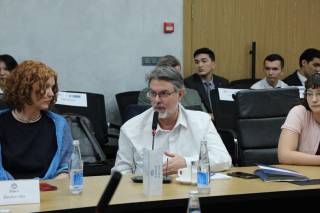
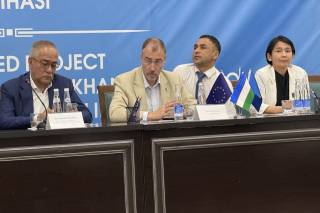
Earlier this week, Uzbekistan hosted the 10th International Symposium of the Middlebury Institute of International Studies (United States), organized in partnership with the Institute for Strategic and Regional Studies under the President of the Republic of Uzbekistan (ISRS) and the University of World Economy and Diplomacy (UWED).
The decision to hold the anniversary forum in Uzbekistan reflects the growing international interest in the country’s ongoing reforms and its expanding role in advancing regional cooperation. The symposium program spans Tashkent, Samarkand, Bukhara and Termez, providing participants with an opportunity to explore both Uzbekistan’s rich historical, cultural and civilizational heritage and the tangible outcomes of the country’s socio-economic transformation.
The distinguished delegation included leading international scholars, researchers, doctoral candidates and graduate students from some of the world’s most prestigious universities, including Harvard University, Yale University, Princeton University, the University of California, Berkeley, the University of Oxford, and the University of Cambridge. The delegation also comprised former officials of the U.S. Department of State and internationally recognized experts in international relations, geopolitics, security, and history. Participants included Anna Vassilieva, Head of the Eurasian Studies Program at the Middlebury Institute; British historian Dominic Lieven; American regional security expert Brianna Todd; Michael Reynolds, Professor at Princeton University; historian and former Professor at the University of California, Berkeley Yuri Slezkine; Dace Dzenovska, Associate Professor at the University of Oxford; and other distinguished specialists.
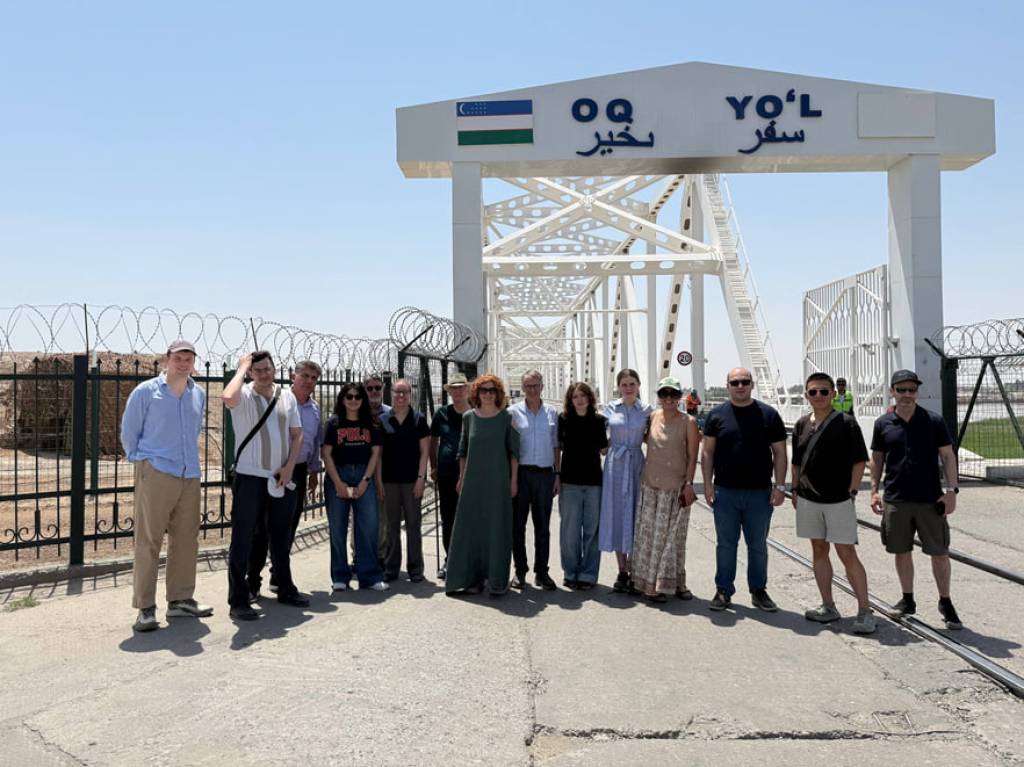
A key component of the symposium program was an academic study tour to Termez, jointly organized by the Institute for Strategic and Regional Studies (ISRS) and the Institute of Advanced International Studies at the University of World Economy and Diplomacy (UWED).
The visit formed part of a series of events held under the auspices of the Termez Dialogue on Connectivity between Central and South Asia– an international initiative launched by Uzbekistan in 2025 to establish a new platform for discussing regional connectivity, promoting Afghanistan’s sustainable development, and strengthening cooperation between the two macro-regions. A major milestone of this initiative was the Second Meeting of the Termez Dialogue, held in Tashkent on 4-6 June this year, which reaffirmed the strong international interest in advancing a practical agenda for regional partnership.
During the visit, international scholars and young researchers explored the unique historical, cultural, and civilizational heritage of ancient Termez – one of the foremost centers of intercivilizational exchange along the Great Silk Road.
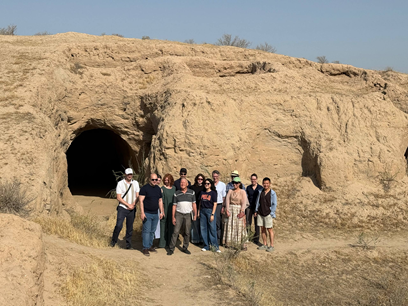
Particular attention was drawn to the world-renowned Buddhist heritage sites of Kara-Tepe and Fayaz-Tepe, whose archaeological remains provide compelling evidence of the spread of Buddhism across Central Asia and the region’s intensive cultural exchanges with South Asia during the early centuries AD. The delegation also visited the Termez State Archaeological Museum, where participants viewed unique archaeological artifacts that illustrate the region’s millennia-long history as a major center of ancient civilizations.
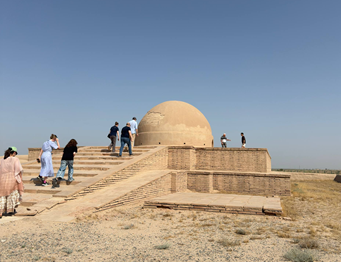
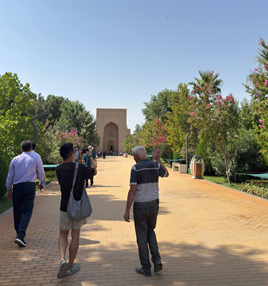
Another highlight of the program was a visit to the Hakim al-Termizi Memorial Complex, dedicated to the eminent ninth-century Islamic philosopher, theologian, and Sufi scholar whose intellectual legacy made a profound contribution to the development of Islamic philosophy, religious thought, and spiritual culture. The international participants learned about his scholarly heritage and Termez’s historical role as a leading intellectual center of Islamic civilization.
Considerable attention was also devoted to the region’s contemporary development as a key hub of regional connectivity. Participants were introduced to the Ayritom International Trade Center, established at the initiative of the President of the Republic of Uzbekistan as a modern platform for promoting cross-border trade, logistics, industrial cooperation and business engagement between Central and South Asian countries, with particular emphasis on Afghanistan. The delegation toured the Center’s trading facilities, manufacturing enterprises and warehousing and logistics infrastructure, and also visited its business school, which provides training for entrepreneurs and professionals engaged in cross-border commerce.
The visit to the modern border customs complex on the Uzbek-Afghan border also attracted considerable interest. Experts were briefed on cargo clearance procedures, the application of digital technologies, and advanced security mechanisms designed to ensure both secure border management and the efficient movement of trade and transport flows.
At the conclusion of the visit, the international experts observed that Termez today serves not only as a strategic point of convergence between Central and South Asia, but also as one of the principal platforms for shaping a new architecture of interregional cooperation.
In the participants’ assessment, Uzbekistan’s policy represents an effective and pragmatic approach to promoting sustainable regional development, based not on Afghanistan’s isolation but on its gradual integration into regional economic, transport and logistics, educational and humanitarian processes. They emphasized that expanding trade, modernizing infrastructure, developing a skilled workforce and strengthening human capital constitute the most realistic pathway towards long-term stability and security across the region.
The experts concluded that the projects being implemented in Termez provide a compelling demonstration of the practical implementation of the Central and South Asia connectivity concept and reaffirm Uzbekistan’s growing role as a driver of a constructive regional agenda aimed at fostering a shared space of peace, stability and mutually beneficial cooperation.
UzA