How is the New Uzbekistan being built?
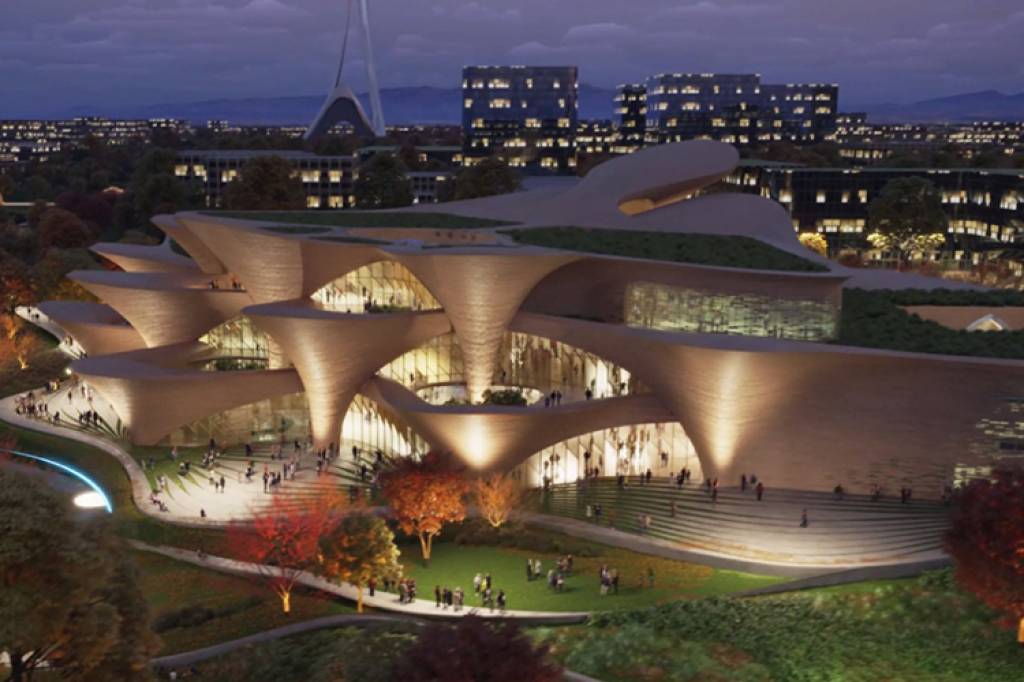
Today, more than 100 projects of varying scale are underway in New Tashkent, and by the end of 2025, the total area under construction had reached 3 million square meters. Several residential complexes have already reached the final stage of construction.
The first phase covers 6,000 hectares and is designed to accommodate 600,000 people who will live and work there. In the long term, the city is planned to have a population of 2 million. Tunnels and underground parking facilities are being built to ensure convenient mobility. The project also incorporates smart solutions. According to the designers, water-saving technologies will make it possible to halve water consumption.
Particular attention in the new city is being paid to education, science, and culture. Campuses are under construction for New Uzbekistan University, Nizami National Pedagogical University, and other higher education institutions. The New Uzbekistan University campus is estimated to cost $200 million. The University of Law plans to relocate there by 2029. In late July 2026, it was reported that construction of the university campuses was nearing completion. A new $100 million football stadium is also being built nearby. In addition, the city is building administrative buildings for more than 60 government institutions, as well as hotels, restaurants, service centers, business complexes, tourist facilities, research laboratories, multimedia centers, museums, sports facilities, and a student campus.
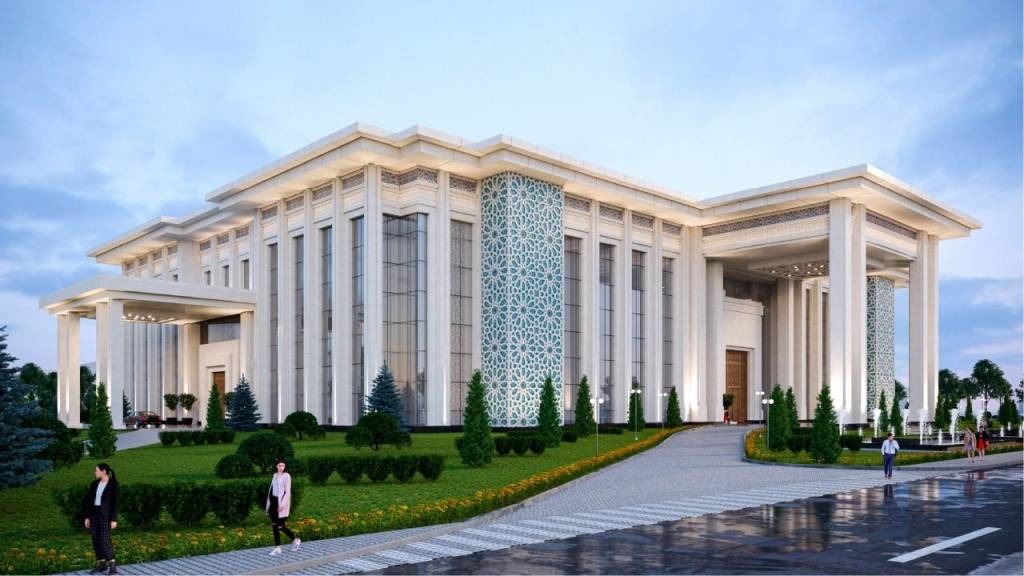
One of the most significant facilities will be the new National Library of Uzbekistan building. The four-story complex, with a total area of more than 30,000 square meters, will accommodate 1,420 readers at a time. The building is being constructed on a site of approximately four hectares, and its design combines the traditions of national architecture with modern architectural solutions. As of late July 2026, construction was 90% complete. The library is being built as part of the first phase of New Tashkent, where educational and cultural projects occupy a central place. It will be located next to university campuses, research laboratories, and multimedia centers, together forming an integrated scientific, educational, and cultural district. Future staff have already been tasked with gaining an in-depth command of information technologies and international standards to make full use of a modern library's capabilities.
The new city needs fast, convenient transport links to the capital, and a metro line is under construction for this purpose. By the end of 2026, an eight-kilometer section with three stations is scheduled for completion. It will be part of the route connecting Dustlik station with New Tashkent. The project is estimated to cost $110 million, with a Turkish company serving as the investor. Tashkent itself is also undergoing modernization. Construction of a modern transport interchange between the capital and Nurafshan has been completed, and bus stops and roads are being upgraded, while new public spaces are being created.
Construction in the energy sector is equally impressive. According to the Ministry of Energy, as of the end of 2025, Uzbekistan’s power plants had a total installed capacity of 24,700 megawatts. The combined capacity of solar and wind power plants exceeded 6,300 megawatts, while hydropower capacity reached nearly 2,500 megawatts. These figures are reflected in electricity generation: by February 13 this year, solar and wind power plants had generated 1 billion kilowatt-hours of electricity, with wind farms accounting for 604 million kilowatt-hours. By 2030, Uzbekistan plans to increase the installed capacity of wind power plants to 12,000 megawatts and solar power plants to at least 7,000 megawatts, and to introduce energy storage systems in all regions. New wind power projects are being developed in Karakalpakstan and Navoi, Bukhara, Jizzakh, and Samarkand regions. The European Bank for Reconstruction and Development notes that Uzbekistan has become one of the main destinations for new foreign direct investment in Central Asia’s energy sector, meaning that international investors and companies are increasingly involved in these projects.
Perhaps the most compelling thing about this development is that its results are already visible firsthand: a university campus where students will study, a library designed for around 1,500 readers, a new metro line, a terminal serving flights from Saudi Arabia, wind turbines in Navoi region’s desert, and residential complexes that will soon welcome their first families.
Orash Akaboyev, UzA