Germany and Central Asia: Expert calls for equal partnership and rejection of stereotypes
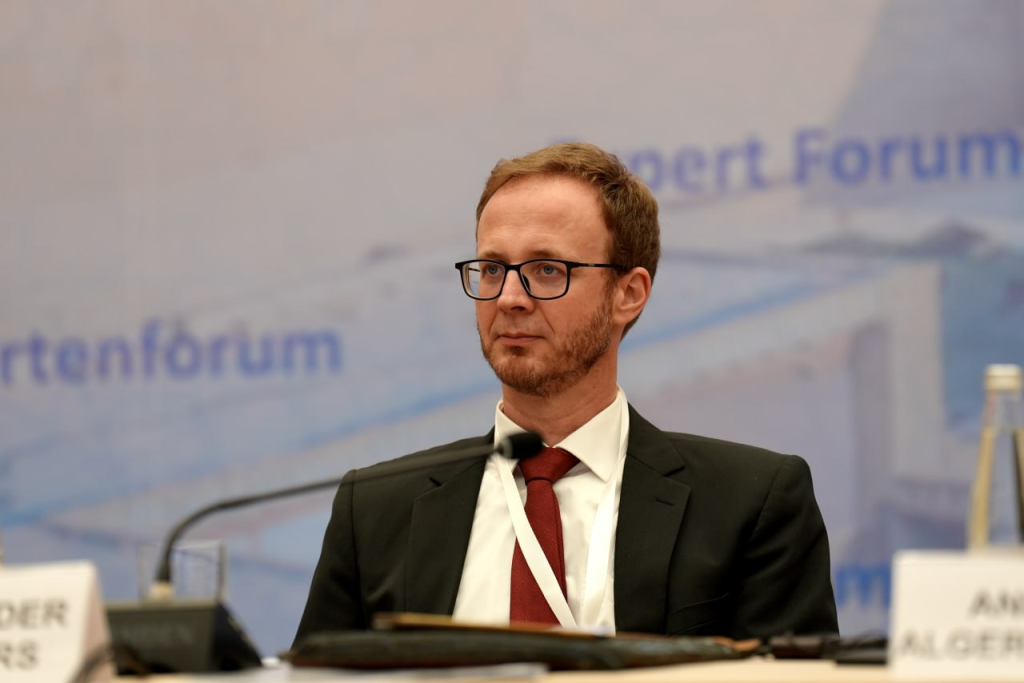
On April 16-17 this year, the Central Asia – Germany Experts Forum is taking place in Khiva with the participation of representatives of academia, business, and analytical centers. The event covers a wide range of topics – from political dialogue and security to the economy, transport, energy, and human capital development.
The forum is being held within the framework of President Shavkat Mirziyoyev’s initiative to strengthen expert support for the strategic partnership between Central Asia and Germany, as outlined at the 2023 summit in Berlin.
Speaking at the first session, expert Alexander Wolters noted that Europe and Germany are undergoing a profound transformation in their foreign policy approaches. According to him, the guarantees of the post-Cold War era no longer hold, and a new system of international relations is taking shape today.
Against this backdrop, Central Asia, as the expert emphasized, is no longer seen as a periphery and is increasingly viewed as an independent and important hub of Eurasian politics and the economy. He noted that the region is strengthening its internal coordination and becoming a more consolidated actor.
According to Alexander Wolters, this lays the groundwork for more pragmatic and equal cooperation between Europe and Central Asia. Such an approach implies rejecting outdated stereotypes and transitioning to interaction based on mutual interests.
He also emphasized the importance of Central Asia for security and regional stability, including the Afghan direction.
According to him, the integration of Afghanistan into the region’s economic and transport networks is already underway and may help reduce the risk of instability.
In practical terms, Alexander Wolters identified the development of transport corridors, primarily Trans-Caspian routes, strengthening energy and logistics connectivity, and expanding educational and scientific exchanges as priority areas of cooperation between the countries of Central Asia and Germany.
In conclusion, he noted that Germany can play an important role in supporting regional integration in Central Asia and in developing infrastructure and humanitarian projects. In his assessment, the future of EU – Central Asia relations will depend on the transition to a more sustainable model of equal, multilateral cooperation.
UzA