Akramjon Nematov: “Central Asia is becoming an independent center of interaction in the emerging polycentric world”
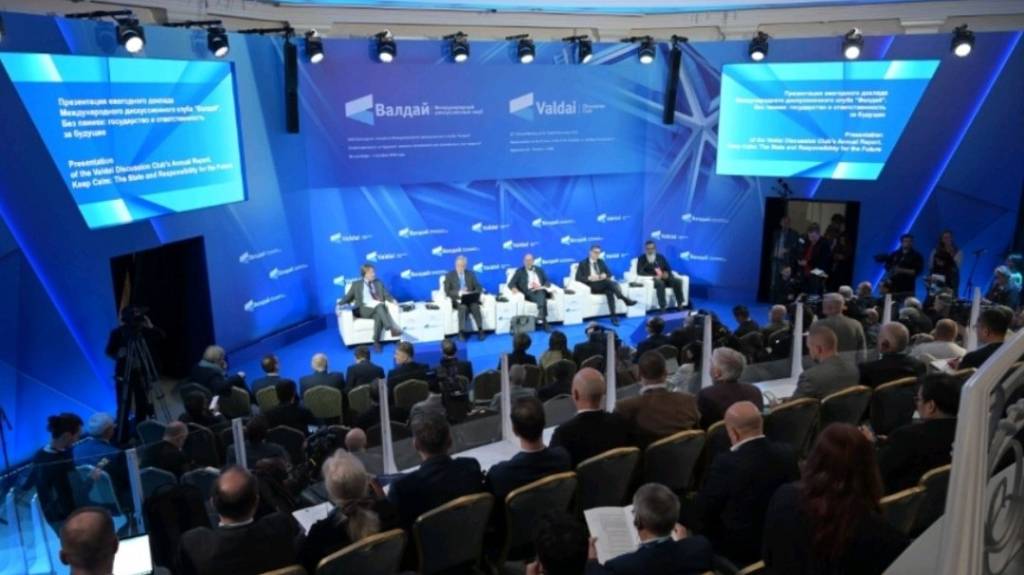
From September 28 to October 1, 2026, the 23rd Annual Meeting of the Valdai Discussion Club titled “Responsibility for the Future: Limits of the Possible, or Limitless Possibilities?” took place in Istra, Russia. It was attended by Akramjon Nematov, First Deputy Director of the Institute for Strategic and Regional Studies under the President of the Republic of Uzbekistan.
The forum gathered 120 participants from 40 countries. Representatives from China, India, Iran, Pakistan, Türkiye, Saudi Arabia, the United Arab Emirates, European countries, North and South America, Africa, and Southeast Asia attended the meeting, along with Russian experts.
The meeting’s agenda covered a wide range of issues in modern global development. The club presented its annual report, “No Panic: The State and Responsibility for the Future”, at the opening.
During the meeting, participants met with Sergey Lavrov, Minister of Foreign Affairs of the Russian Federation, and Mikhail Oreshkin, Deputy Head of the Presidential Administration of the Russian Federation. The meeting concluded with a separate plenary session featuring the President of the Russian Federation Vladimir Putin.
One of the central themes of the discussions was the profound transformation of the global system driven by several interconnected processes. On the one hand, rapid technological development, digitalization, and artificial intelligence are reshaping the economy, the labor market, the security system, and the very structure of societies. On the other hand, climate change, demographic shifts, migration, and pandemic risks pose new long-term challenges, the consequences of which extend far beyond national borders.
Against the backdrop of multiple crises and new opportunities, particular importance is attached to states’ responsibility, respect for sovereignty and national interests, strengthening trust, and the search for mutually acceptable solutions. Participants emphasized that responding to a more complex world should not mean isolation and uncontrolled rivalry, but dialogue, cooperation, and the ability to reach agreement despite differences.
Particular interest was drawn to the session titled “What Kind of Sun Will Rise in the East? A Portrait of an Asia-Centered World”. The discussion highlighted the ongoing shift of economic activity toward the broader Asian region. The Pacific and Indian Oceans were considered primary engines of global economic growth and a crucial arena for processes that will define international dynamics in the decades ahead.
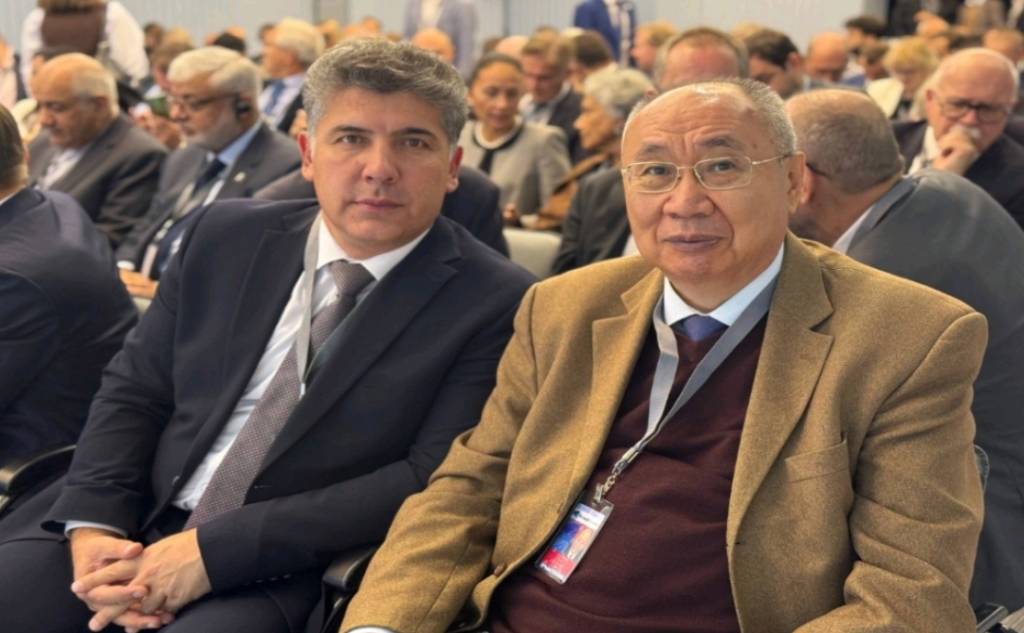
Commenting on the meeting’s outcomes, Mr. Nematov noted: “Against the backdrop of ongoing global changes, Central Asia is demonstrating a fundamentally new dynamic. The era when the region was primarily associated with contradictions and unresolved issues is being left behind. A space for joint development is emerging, fostering mutual trust, expanding economic ties, and generating more shared projects and long-term interests”.
The ISRS representative emphasized that Central Asia is gradually taking a more prominent place in the emerging Asian space. “Geographically, our region is at the center of the most important routes connecting East and South Asia, Europe, Russia, the Caucasus, and the Middle East. However, Central Asia’s significance is no longer determined solely by its location. Growing internal connectivity allows the region to act with increasing confidence as one of Eurasia’s vital hubs – a space through which transport corridors, trade flows, energy, investment, and humanitarian ties can pass”.
According to Mr. Nematov, global turbulence has given recent years’ experience broader significance. “The emerging polycentric world will objectively consist not only of major powers. Stable regions capable of independently determining their priorities, reaching internal agreements, and simultaneously building a broad system of external relations will play a key role in this process. Central Asia today demonstrates precisely this model, not through opposition to anyone, but by strengthening its own connectivity, seeking mutually acceptable compromises, and turning shared interests into concrete projects”.
According to him, this is also a key feature of the new phase of regional development: “Cooperation in Central Asia now has its own internal momentum. Settling complex issues over the past few years has shown that the region’s nations can find mutually acceptable solutions based on their long-term interests. Consequently, Central Asia is shifting from a space that was often viewed through the prism of risks and conflicts to one of opportunities and mutual development”.
Mr. Nematov noted that the ongoing processes are particularly important for Uzbekistan. The consistent course of the President of Uzbekistan Shavkat Mirziyoyev aimed at strengthening good-neighborliness, mutual trust, and economic connectivity, contributes not only to the development of bilateral relations but also to enhancing the subjectivity of the entire Central Asian region.
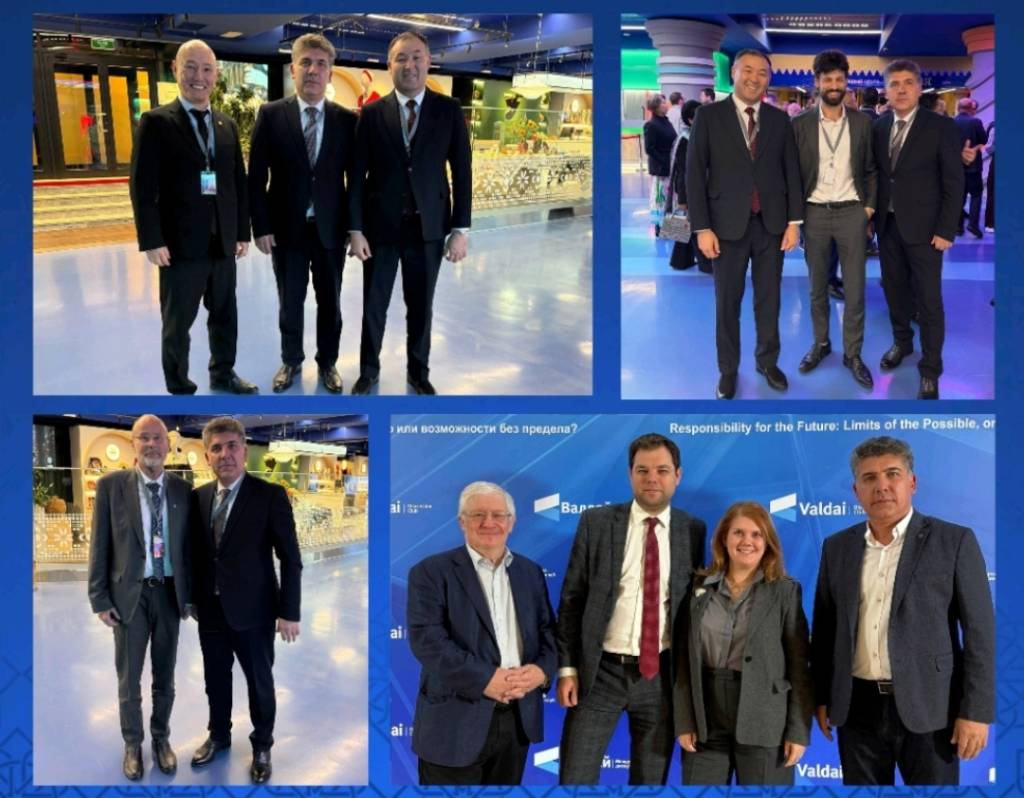
On the sidelines of the Valdai Club meeting, Mr. Nematov also held several meetings with representatives of foreign think tanks and scientific and research centers. The parties exchanged views on key trends in international and regional development, prospects for Central Asia, the expansion of transport and economic connectivity, and further development of expert cooperation.
The meetings resulted in the identification of promising areas of cooperation, the establishment of new professional contacts, and agreements to continue joint expert and analytical work and to develop new projects.
UzA