35 years of the CIS: What does the Commonwealth mean for Uzbekistan today?

December 2026 will mark 35 years since the establishment of the Commonwealth of Independent States (CIS). Since then, both the Commonwealth and the nature of relations among its member states have changed significantly.
Today, the CIS remains a platform for cooperation in the economic, humanitarian and transport sectors, as well as in security. However, its declining political influence and the increasing overlap between some of its activities and the agendas of other regional organizations cannot be ignored.
Nevertheless, Uzbekistan’s participation in the CIS has grown in significance in recent years. Since 2017, Tashkent has substantially expanded its engagement with all CIS bodies, becoming involved in all 66 areas of the Commonwealth’s activities. During this period, Uzbekistan has advanced 90 practical initiatives within the CIS framework, 80 of which have already been implemented. Uzbekistan will assume the organization’s chairmanship in 2027.
To discuss the Commonwealth’s current state, Uzbekistan’s role in the region, the challenges it faces, and the country’s priorities during its 2027 CIS chairmanship, we spoke with Professor Sayfiddin Jurayev, Doctor of Political Science.
– The CIS celebrates its 35th anniversary in December. How well has the organization achieved its objectives over the past three and a half decades?
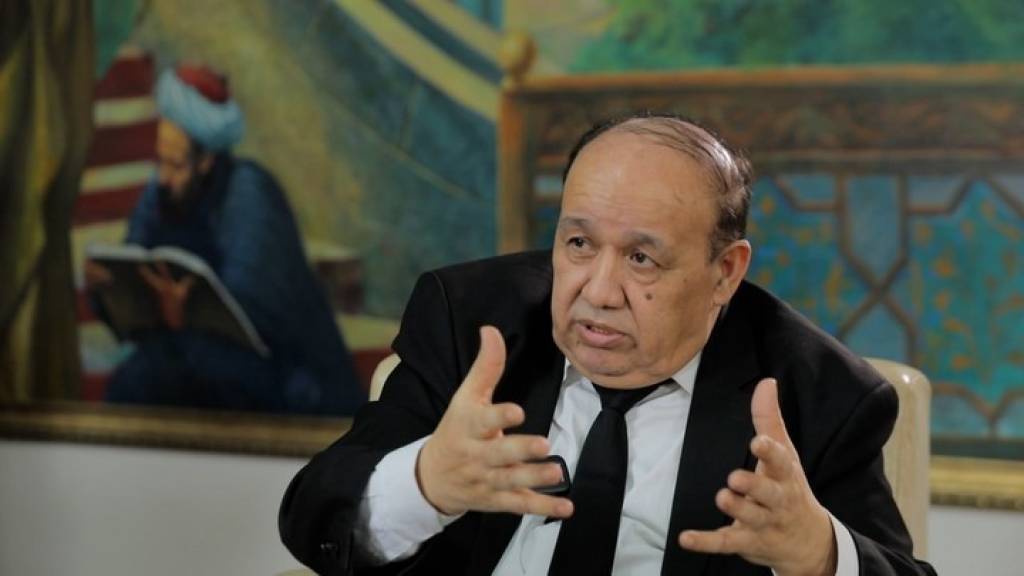
– It would be wrong to assess the CIS solely based on its current state. Looking back over the past 35 years, we can see that the Commonwealth has gone through several stages of development. Initially, it played an important role in providing a legal framework for the former Soviet republics’ transition to independence and ensuring that the process unfolded peacefully. Over time, the focus gradually shifted towards practical areas of cooperation, including the economy, humanitarian ties, transport and security.
In my view, the CIS should be assessed not so much by whether it has succeeded in becoming a fully fledged integration organization, but by its ability to preserve mechanisms for dialogue and cooperation amid complex geopolitical circumstances.
Today, more than 80 bodies and 67 sectoral structures operate within the Commonwealth’s institutional framework. Some tangible results have been achieved in economic and humanitarian cooperation.
– How has Uzbekistan’s role within the CIS changed in recent years?
– Uzbekistan’s approach to the CIS can broadly be divided into two periods. From 1991 to 2016, our country participated selectively in Commonwealth activities, prioritizing bilateral relations.
Since 2017, this approach has changed fundamentally, with Uzbekistan actively participating in the work of all bodies established under the organization’s Charter. Today, our country regularly puts forward concrete initiatives to strengthen practical cooperation within the CIS.
This intensified engagement is also reflected in economic indicators. From January to October 2025, Uzbekistan’s trade turnover with CIS member states totaled $21.9 billion. In the first half of 2026, Commonwealth countries accounted for 37.8% of Uzbekistan’s total foreign trade turnover. In addition, the number of joint ventures with partners from CIS countries has exceeded 6,000.
– Uzbekistan is often seen as one of the CIS’s key driving forces. What additional responsibilities and obligations does this role place on the country?
– Indeed, Uzbekistan has become one of the countries actively shaping the CIS agenda and proposing new initiatives.
At Uzbekistan’s initiative, the CIS Economic Development Strategy until 2030, the Concept for the Development of Industrial Cooperation, and a document to improve transport infrastructure were adopted. Practical initiatives have also been proposed in areas such as deradicalization, border security, humanitarian cooperation, innovation, and energy.
– What tangible outcomes can be expected from Uzbekistan’s 2027 CIS chairmanship?
– For Uzbekistan, this is an opportunity not only to coordinate the organization’s activities but also to propose initiatives to adapt the CIS to new circumstances. The chairmanship is expected to focus primarily on achieving tangible results.
The top priority is deepening economic cooperation. This includes improving the mechanisms governing the free trade area, expanding mutual trade and the services market, and ensuring broader access to public procurement markets.
The second priority is technological cooperation. This includes establishing venture capital platforms and innovation centers, developing artificial intelligence and big data processing technologies, digitalization, and promoting green energy.
The third priority is strengthening transport connectivity. Developing the international North – South and East – West transport corridors, along with digitalizing the transport system, will help strengthen Uzbekistan’s position as a regional transport and logistics hub.
The fourth priority is human capital development. Key objectives include expanding academic mobility for students, promoting mutual recognition of qualifications and protecting the rights of migrant workers.
At the same time, deradicalization, cybersecurity and border security remain pressing issues.
Thus, the main criterion for assessing the effectiveness of Uzbekistan’s CIS chairmanship in 2027 will not be the number of documents adopted, but the tangible results achieved through implementing agreed decisions.
– Considering the CIS’s 35-year history and Uzbekistan’s active role today, how do you assess the prospects for the Commonwealth’s future development?
– The CIS is likely to remain an important platform for practical cooperation, but it must adapt to new geopolitical and economic realities to do so.
The Commonwealth’s future will depend less on major political declarations than on concrete projects that deliver tangible benefits to its member states. If cooperation mechanisms in areas such as the economy, transport, technology, energy, education, migration, healthcare, and culture work effectively and produce practical results, the CIS could become considerably more significant.
Interviewed by Musulmon Ziyo, UzA