Ways to ensure the sustainability of Central Asia’s regional rapprochement discussed in Cadenabbia
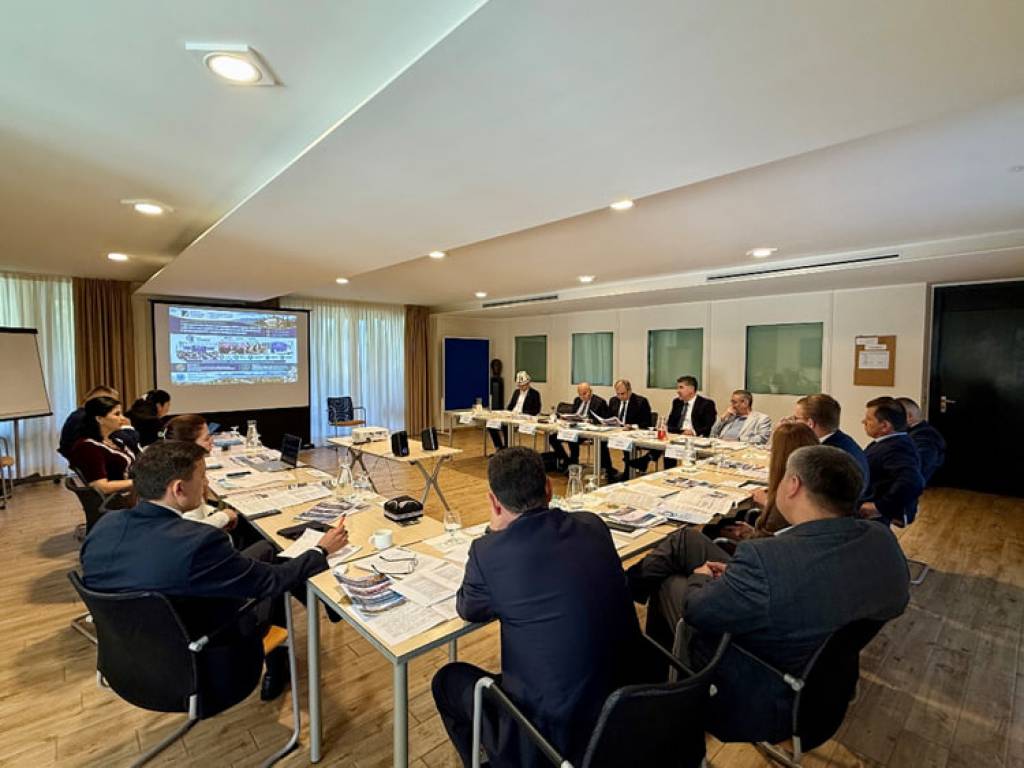
On September 18, the international expert meeting titled “Central Asia amid global shifts: national strategies, regional security and building new cooperation” continued in Cadenabbia, Italy, at the Konrad Adenauer Foundation’s International Conference Centre for Politics, Economics and the Arts.
The event brought together delegations from Uzbekistan, Kyrgyzstan and Tajikistan, including representatives of parliaments, foreign ministries, analytical centers, the expert community and the media.
While the first day focused primarily on the transformation of the international order, diversification of external relations, transport connectivity, and regional security, the second day explored ways to make Central Asia’s rapprochement sustainable and irreversible and to broaden its public support.
Discussions focused on the human dimension of integration, confidence-building and the development of a shared regional identity. Particular attention was given to the initiative put forward by the President of Uzbekistan Shavkat Mirziyoyev to develop the Fergana Peace Forum into a permanent international platform for strengthening trust and good-neighborly relations.
The Forum is intended to promote a culture of dialogue, expand people-to-people and interregional ties, and unlock the potential of the Fergana Valley as a region of peace and sustainable development.
Delivering a presentation entitled “Fergana Peace Forum: a new permanent platform for strengthening trust and good-neighborly relations in Fergana Valley”, First Deputy Director of the Institute for Strategic and Regional Studies under the President of the Republic of Uzbekistan (ISRS) Akramjon Nematov noted that, alongside the further development of interstate cooperation, it was important to embed the new atmosphere of good-neighborliness within the societies of the region, deepen and broaden regional cooperation, and reinforce its public foundations.
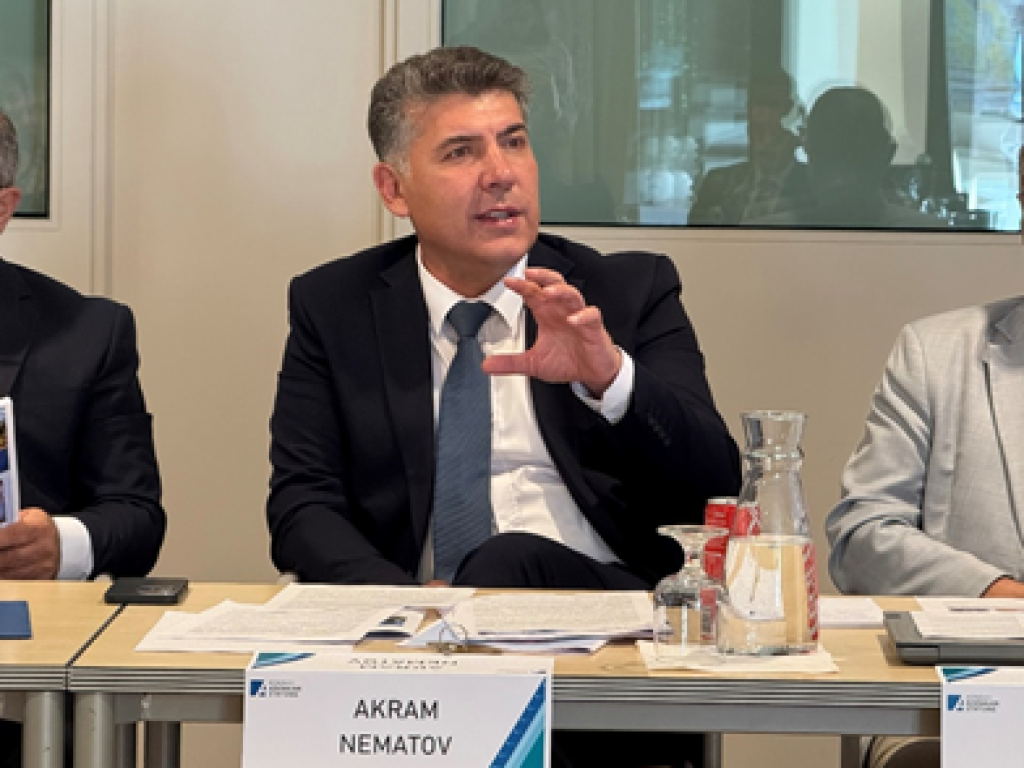
He stressed that the Forum should become an inclusive platform to expand practical cooperation and jointly identify new sources of growth and drivers of sustainable development in Fergana Valley.
The inaugural meeting of the Fergana Peace Forum was held in Fergana on 15-16 October 2025 and brought together more than 300 participants. The participants adopted a joint communiqué calling for the Forum to be institutionalized as a permanent international platform with a rotating host country.
“The Fergana Peace Forum should become not a one-off event but a continuous process that translates the trust achieved at the political level into sustainable cooperation among societies and border regions”, Mr. Nematov emphasized.
This work has already received practical follow-up. In 2026, Fergana hosted an international youth seminar on peacebuilding under the auspices of the Forum, where young people from Central Asian countries developed skills in mediation, negotiation, and conflict prevention.
The United Nations, the Organization for Security and Co-operation in Europe, and peacebuilding organizations such as PeaceNexus, the Centre for Humanitarian Dialogue, the CMI – Martti Ahtisaari Peace Foundation, the Berghof Foundation and other international institutions are becoming involved in the platform’s activities.
The next stage will be another Forum meeting, to be held in Khujand later this month. The choice of venue carries particular symbolic significance: on 31 March 2025, leaders of Uzbekistan, Kyrgyzstan and Tajikistan reached historic agreements that completed the settlement of the most complex border issues.
Mr. Nematov also highlighted the UN General Assembly resolution entitled “Peaceful Settlement of Border Disputes”, adopted on 20 May 2026. Kyrgyzstan initiated the resolution jointly with Tajikistan and Uzbekistan, and 40 co-sponsoring states supported it.
“The significance of this document extends far beyond border issues. It confirms that Central Asia’s accumulated experience in peacefully resolving the most complex issues has gained international recognition and is regarded as a successful model for resolving interstate disputes”, the ISRS representative noted.
The expert emphasized that the changes in Fergana Valley were not an isolated local phenomenon, but reflected a region-wide trend toward good-neighborliness and shared development. Border settlements, the restoration of transport links, and the expansion of trade and people-to-people contacts form part of a broader process of strengthening trust and connectivity throughout Central Asia.
This transformation is particularly evident in Fergana Valley itself, which is increasingly evolving from a formerly fragmented and complex area into a region of shared development and practical good-neighborliness.
Another important contribution by the Uzbekistan delegation was the presentation of the draft Concept for the Formation and Strengthening of a Central Asian Regional Identity.
ISRS Senior Research Fellow Shakhlo Khamrakhodjaeva emphasized that the document was not a finalized national model but rather a joint intellectual product of the entire region.
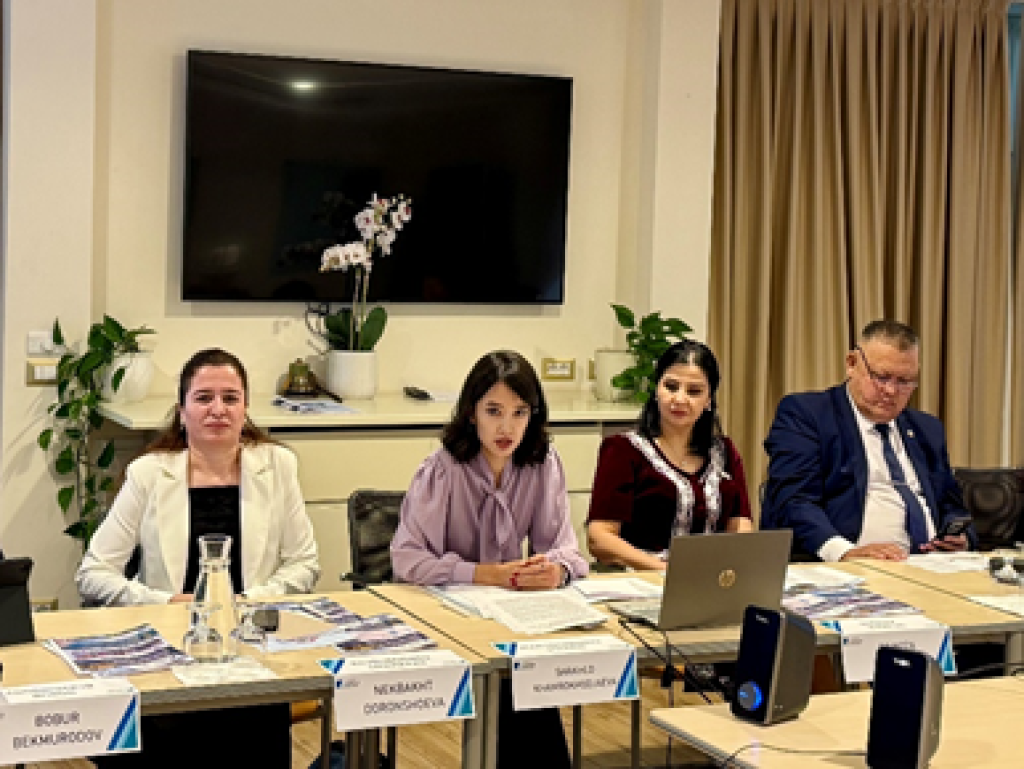
Experts from all Central Asian states have been involved in its preparation, including representatives of government bodies, think tanks, universities, academia, and civil society. The draft has been discussed at the Central Asian Expert Forum, the Termez Dialogue, working meetings in Tashkent and Bishkek, and with young people through the Fergana Peace Forum.
“It is essential for us that the Concept should be co-authored by the countries and societies of Central Asia, and that every state should recognize within it its own values, interests and vision of the future”, Sh. Khamrakhodjaeva noted.
The Concept’s principal objective is to build broad public support for regional cooperation, ensuring that the rapprochement achieved is reinforced not only through interstate agreements but also through people’s everyday experience.
Regional identity is understood as a sense of belonging and shared responsibility for Central Asia’s peace, prosperity and future, with full respect for the sovereignty, national identities, cultural diversity and independent choices of each state.
At the same time, according to Sh. Khamrakhodjaeva, a shared regional identity should become a practical resource for collective action. It should help unite the intellectual, human, and social potential of the region’s countries in responding jointly to common challenges and realizing the strategic opportunities emerging for Central Asia.
The Concept is built around three interconnected pillars: a shared cultural and historical heritage, the contemporary experience of cooperation, and a common vision of the future.
It was emphasized that the centuries-long interconnected history of the region’s peoples, their experience of coexistence and mutual assistance, and the current process of rapprochement have already shaped common values: mutual respect, good-neighborliness, solidarity, responsibility for a shared future, openness and recognition of diversity. These values should form the foundation of a common vision for Central Asia’s future.
The emphasis is therefore placed not on standardization, but on expanding tangible educational, youth, cultural, interregional and economic ties.
“Regional identity does not mean that we must become alike. Its formula is simple: a strong national identity combined with collective responsibility for the region. A more cohesive Central Asia expands the opportunities available to every state”, the ISRS representative emphasized.
Participants noted during the discussion that developing the Concept should draw on the experience of the European Union and other regions of the world, not by copying external models, but by adapting useful practices to Central Asia’s historical, cultural and political characteristics.
Overall, the two-day discussions demonstrated that a common understanding of the next stage of regional cooperation is emerging in Central Asia. Alongside the continued strengthening of political trust and economic connectivity, the societal dimension is becoming increasingly important, including the involvement of people, regions and civil society in the rapprochement process.
The participants agreed that the combination of political trust, economic connectivity, shared responsibility, and public support could not only make regional cooperation sustainable and irreversible, but also unite the resources of Central Asian countries to respond jointly to common challenges and pursue new development opportunities.
This, in turn, reinforces Central Asia’s agency as an independent region of peace, good-neighborliness and shared development.
UzA